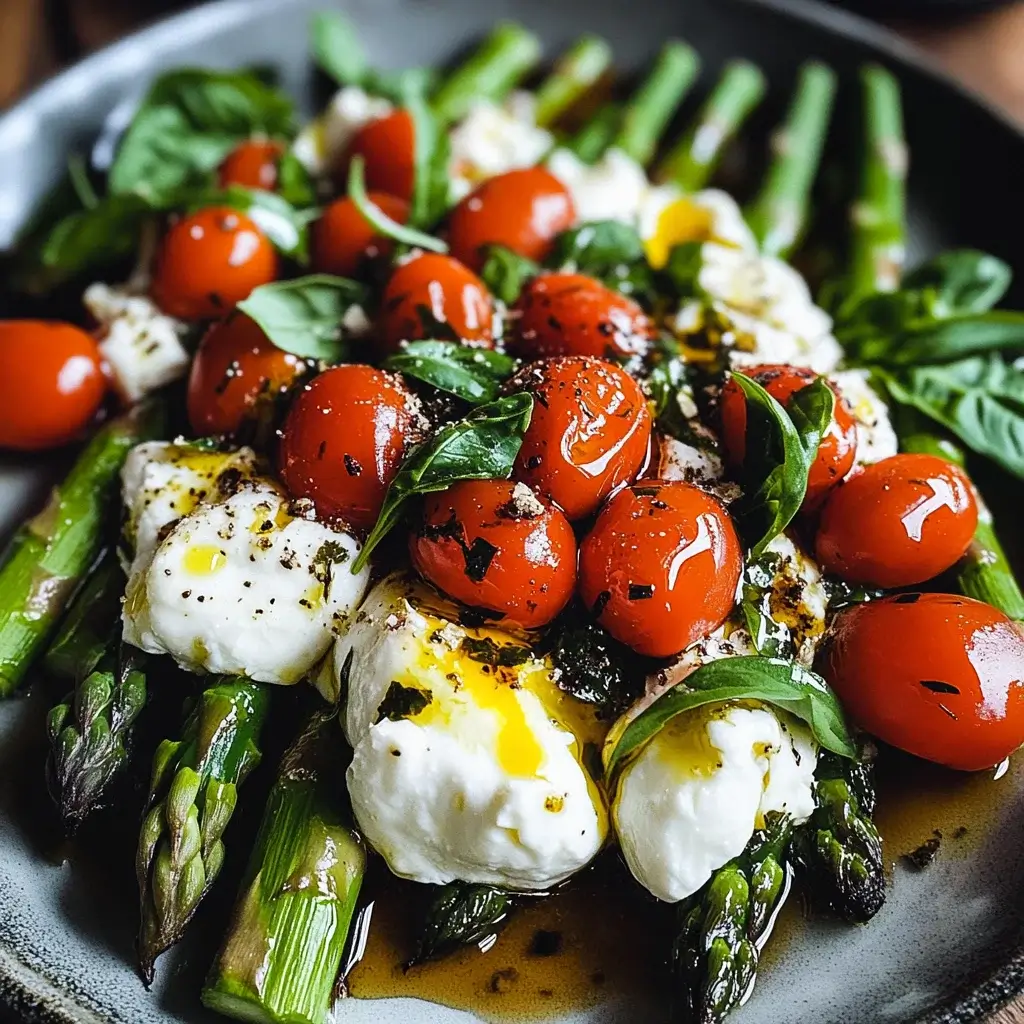
The first time I made this Asparagus and Burrata Salad, it was a spontaneous affair. Spring had just sprung, and the farmer’s market was overflowing with vibrant green asparagus. Burrata, with its creamy heart, had been calling my name from the cheese shop window all week. Combining these two seemed like a match made in culinary heaven, and boy, was I right! The simplicity of the ingredients belies the explosion of flavor and textures in every bite. My family, usually quite critical of anything too “green,” devoured it. Even my youngest, who typically avoids vegetables with the tenacity of a seasoned negotiator, asked for seconds. The fresh, bright flavors, the creamy richness of the burrata against the tender-crisp asparagus, and the zesty lemon dressing – it’s a symphony on a plate. This salad has quickly become a staple in our spring and summer rotation, perfect for a light lunch, a sophisticated appetizer, or even a vibrant side dish at a barbecue. It’s a testament to how simple, high-quality ingredients can come together to create something truly extraordinary. This recipe is more than just a salad; it’s an experience, a celebration of fresh, seasonal produce, and an ode to the joy of simple, delicious food. Get ready to fall in love with your new favorite way to enjoy asparagus and burrata!
Ingredients for Asparagus and Burrata Salad
- Fresh Asparagus: One pound, choose firm, bright green spears, about medium thickness for best texture and cooking.
- Burrata Cheese: 8 ounces, one ball, creamy Italian cheese with a mozzarella shell and a soft, stracciatella and cream filling.
- Extra Virgin Olive Oil: High quality, for roasting asparagus and making the dressing, providing richness and flavor.
- Fresh Lemon: One large, for its zest and juice, adding brightness and acidity to balance the richness.
- Garlic: One clove, minced, for a subtle pungent flavor in the dressing, enhancing the savory notes.
- Fresh Basil: A small bunch, for garnishing, providing a fresh, aromatic, and slightly peppery flavor.
- Fresh Mint: A small bunch, for garnishing, adding a cool, refreshing, and slightly sweet counterpoint to the basil.
- Pine Nuts or Toasted Almonds (optional): For added texture and nutty flavor, providing a pleasant crunch.
- Red Pepper Flakes (optional): A pinch, for a subtle hint of heat, adding complexity and depth of flavor.
- Balsamic Glaze (optional): For drizzling, adding a touch of sweetness and tangy depth, visually appealing and flavor enhancing.
- Sea Salt and Freshly Ground Black Pepper: To taste, essential for seasoning and enhancing all the flavors.
Instructions for Asparagus and Burrata Salad
- Prepare the Asparagus: Begin by washing the asparagus thoroughly under cold running water. Snap off the tough woody ends of the asparagus spears. You can do this by holding the spear at each end and gently bending it – it will naturally break at the point where the tender part begins. Alternatively, you can trim the bottom inch or two with a knife. Pat the asparagus dry with a clean kitchen towel or paper towels. This is important as dry asparagus will roast or grill better.
- Roast or Grill the Asparagus (Option 1: Roasting): Preheat your oven to 400°F (200°C). On a baking sheet, toss the asparagus spears with about 1-2 tablespoons of extra virgin olive oil, a pinch of sea salt, and freshly ground black pepper. Spread the asparagus in a single layer on the baking sheet, ensuring they are not overcrowded. Roast in the preheated oven for 8-12 minutes, or until the asparagus is tender-crisp and lightly browned. The roasting time will depend on the thickness of your asparagus spears – thinner spears will cook faster. Check for doneness by piercing a spear with a fork; it should be easily pierced but still have a slight bite. Remove from the oven and let cool slightly.
- Roast or Grill the Asparagus (Option 2: Grilling): Preheat your grill to medium-high heat. Toss the asparagus spears as described above with olive oil, salt, and pepper. Place the asparagus on the hot grill grates, perpendicular to the grates to prevent them from falling through. Grill for 3-5 minutes per side, or until tender-crisp and nicely grill-marked. Turn them occasionally to ensure even cooking. Grilling imparts a lovely smoky flavor to the asparagus. Remove from the grill and let cool slightly.
- Blanch the Asparagus (Option 3: Blanching – for a brighter green and crisper texture): Bring a large pot of salted water to a rolling boil. Prepare an ice bath by filling a bowl with cold water and ice cubes. Add the asparagus to the boiling water and blanch for 2-3 minutes, or until bright green and tender-crisp. Immediately transfer the blanched asparagus to the ice bath to stop the cooking process and preserve its vibrant color and crisp texture. Once cooled, drain the asparagus well and pat dry.
- Prepare the Lemon Dressing: While the asparagus is cooking or cooling, prepare the lemon dressing. In a small bowl, whisk together 3 tablespoons of extra virgin olive oil, the juice of half a lemon (about 2-3 tablespoons), the zest of half a lemon, and the minced garlic clove. Season with salt and freshly ground black pepper to taste. Adjust the lemon juice and olive oil ratio to your preference – for a tangier dressing, add more lemon juice; for a richer dressing, add more olive oil. Whisk until the dressing is emulsified and slightly thickened.
- Assemble the Salad: On a serving platter or individual plates, arrange the cooked asparagus spears. Gently place the burrata ball in the center or tear it into halves or quarters and distribute it amongst the asparagus. Drizzle the prepared lemon dressing generously over the asparagus and burrata.
- Garnish and Serve: Garnish the salad generously with fresh basil leaves and fresh mint leaves. You can tear the herbs or leave them whole. If using, sprinkle with pine nuts or toasted almonds and a pinch of red pepper flakes for a little heat. For an extra touch of elegance and sweetness, drizzle a small amount of balsamic glaze over the salad. Serve immediately or shortly after assembling for the best flavor and texture. Burrata is best enjoyed fresh and at room temperature.
Nutrition Facts for Asparagus and Burrata Salad
Servings: 4
Calories per Serving (estimated): 320
- Calories: 320 kcal
- Fat: 28g
- Saturated Fat: 12g
Note: Nutritional values are estimates and can vary based on specific ingredients and portion sizes. This is based on an average serving size and standard ingredient quantities.
Preparation Time for Asparagus and Burrata Salad
Total Preparation Time: 20-25 minutes
This Asparagus and Burrata Salad is wonderfully quick and easy to prepare. From washing and prepping the asparagus to assembling the final salad, you can have this delightful dish ready in under 25 minutes. The cooking time for the asparagus is minimal, whether you choose to roast, grill, or blanch them, ensuring that you can enjoy a fresh, flavorful, and healthy salad without spending hours in the kitchen. It’s perfect for a last-minute lunch, a quick dinner side, or an impromptu appetizer when guests arrive. The simplicity of the preparation is part of its charm!
How to Serve Asparagus and Burrata Salad
This versatile salad can be served in numerous ways, making it perfect for various occasions:
- As a Starter or Appetizer: Serve smaller portions as a refreshing and elegant starter to a meal, especially for dinner parties or special occasions. The vibrant colors and flavors are sure to impress your guests.
- As a Light Lunch: Enjoy a larger portion as a satisfying and healthy light lunch. It’s packed with flavor and nutrients, making it a perfect midday meal.
- As a Side Dish: Pair it as a side dish with grilled chicken, fish, steak, or vegetarian main courses. It complements richer dishes beautifully, adding freshness and balance.
- On Bruschetta or Crostini: Spoon the salad mixture (especially the asparagus and burrata pieces) onto toasted slices of baguette or crostini for a delightful appetizer or snack.
- With Crusty Bread: Serve alongside crusty bread or focaccia to soak up the delicious lemon dressing and creamy burrata.
- As part of an Antipasto Platter: Include it as part of a larger Italian antipasto platter, alongside olives, cured meats, and other cheeses for a stunning spread.
- In a Salad Bowl for Sharing: Prepare a large bowl of the salad for family-style dining or potlucks, allowing everyone to serve themselves.
- Elevate with Protein: Add grilled shrimp, chicken, or chickpeas to make it a more substantial and protein-rich meal.
Additional Tips for the Best Asparagus and Burrata Salad
- Use the Freshest Ingredients: The beauty of this salad lies in the quality of its ingredients. Use the freshest, in-season asparagus and the highest quality burrata you can find. Fresh, ripe lemons and good quality extra virgin olive oil will also make a significant difference in flavor.
- Don’t Overcook the Asparagus: Whether roasting, grilling, or blanching, aim for tender-crisp asparagus. Overcooked asparagus will become mushy and lose its vibrant color and pleasant texture. Keep a close eye on it while cooking and test for doneness frequently.
- Bring Burrata to Room Temperature: Allow the burrata to sit at room temperature for about 15-20 minutes before serving. This will enhance its creamy texture and flavor. Serving it too cold can dull its taste and make the center less oozy.
- Customize the Dressing: Feel free to adjust the lemon dressing to your liking. Add a pinch of Dijon mustard for extra tang, a drizzle of honey or maple syrup for a touch of sweetness, or a shallot finely minced for a more pronounced oniony flavor. Taste and adjust seasonings until it is perfect for you.
- Toast the Nuts (Optional but Recommended): Toasting pine nuts or almonds in a dry pan over medium heat for a few minutes until lightly golden and fragrant enhances their nutty flavor and adds a delightful crunch to the salad. Watch them carefully as they can burn quickly.
- Add Other Vegetables: Experiment with adding other fresh spring vegetables to the salad. Grilled or roasted bell peppers, zucchini ribbons, shaved fennel, or artichoke hearts can add extra layers of flavor and texture.
- Make it Ahead (Partially): You can roast or blanch the asparagus ahead of time and store it in the refrigerator. The lemon dressing can also be made in advance and stored separately. Assemble the salad just before serving to ensure the burrata is fresh and the asparagus is at its best texture.
- Consider Different Herbs: While basil and mint are classic pairings, feel free to experiment with other fresh herbs like parsley, chives, or tarragon. Each herb will impart a slightly different flavor profile to the salad, allowing you to customize it to your taste.
Frequently Asked Questions (FAQ) about Asparagus and Burrata Salad
Q1: Can I make this salad vegan?
A1: Burrata is a dairy cheese and therefore not vegan. To make this salad vegan, you would need to substitute the burrata. You could try using a creamy vegan cheese alternative or even marinated white beans for a creamy element. However, the distinctive creamy center of burrata is a key element of this salad’s character.
Q2: Can I use frozen asparagus?
A2: Fresh asparagus is highly recommended for this salad as it provides the best flavor and texture. Frozen asparagus can become quite soft and watery when cooked. If you must use frozen asparagus, thaw it completely, pat it very dry, and consider roasting it at a higher temperature for a shorter time to prevent it from becoming too mushy.
Q3: How long does Asparagus and Burrata Salad last?
A3: This salad is best enjoyed immediately after assembly. The burrata is freshest when just opened, and the asparagus is best eaten shortly after cooking. If you have leftovers, they can be stored in the refrigerator for up to a day, but the burrata’s texture may change, and the asparagus may lose some of its crispness. It is best to dress only the portion you plan to eat immediately.
Q4: Can I grill the burrata?
A4: Grilling burrata directly is not recommended as it is very soft and likely to melt and lose its shape. It’s best served fresh and creamy. However, you can grill the asparagus and then serve it alongside fresh burrata.
Q5: What if I don’t have pine nuts or almonds?
A5: Pine nuts and almonds add a nice textural element, but they are optional. You can omit them entirely or substitute with other nuts like toasted hazelnuts, walnuts, or even sunflower seeds for a nut-free option.
Q6: Can I use bottled lemon juice instead of fresh?
A6: Freshly squeezed lemon juice is always preferred for the best flavor in the dressing. Bottled lemon juice can sometimes have a slightly metallic or less vibrant taste. However, if you don’t have fresh lemons, bottled lemon juice can be used as a substitute.
Q7: Is this salad gluten-free?
A7: Yes, Asparagus and Burrata Salad is naturally gluten-free as it is made with fresh vegetables, cheese, and a simple lemon dressing. Ensure any balsamic glaze you use is also certified gluten-free if you are strictly following a gluten-free diet.
Q8: What wine pairs well with Asparagus and Burrata Salad?
A8: A crisp, dry white wine pairs beautifully with this salad. Consider a Sauvignon Blanc, Pinot Grigio, or Vermentino. The acidity and freshness of these wines complement the bright flavors of the salad and cut through the richness of the burrata. A light-bodied rosé would also be a lovely pairing.
Asparagus and Burrata Salad
Ingredients
- Fresh Asparagus: One pound, choose firm, bright green spears, about medium thickness for best texture and cooking.
- Burrata Cheese: 8 ounces, one ball, creamy Italian cheese with a mozzarella shell and a soft, stracciatella and cream filling.
- Extra Virgin Olive Oil: High quality, for roasting asparagus and making the dressing, providing richness and flavor.
- Fresh Lemon: One large, for its zest and juice, adding brightness and acidity to balance the richness.
- Garlic: One clove, minced, for a subtle pungent flavor in the dressing, enhancing the savory notes.
- Fresh Basil: A small bunch, for garnishing, providing a fresh, aromatic, and slightly peppery flavor.
- Fresh Mint: A small bunch, for garnishing, adding a cool, refreshing, and slightly sweet counterpoint to the basil.
- Pine Nuts or Toasted Almonds (optional): For added texture and nutty flavor, providing a pleasant crunch.
- Red Pepper Flakes (optional): A pinch, for a subtle hint of heat, adding complexity and depth of flavor.
- Balsamic Glaze (optional): For drizzling, adding a touch of sweetness and tangy depth, visually appealing and flavor enhancing.
- Sea Salt and Freshly Ground Black Pepper: To taste, essential for seasoning and enhancing all the flavors.
Instructions
- Prepare the Asparagus: Begin by washing the asparagus thoroughly under cold running water. Snap off the tough woody ends of the asparagus spears. You can do this by holding the spear at each end and gently bending it – it will naturally break at the point where the tender part begins. Alternatively, you can trim the bottom inch or two with a knife. Pat the asparagus dry with a clean kitchen towel or paper towels. This is important as dry asparagus will roast or grill better.
- Roast or Grill the Asparagus (Option 1: Roasting): Preheat your oven to 400°F (200°C). On a baking sheet, toss the asparagus spears with about 1-2 tablespoons of extra virgin olive oil, a pinch of sea salt, and freshly ground black pepper. Spread the asparagus in a single layer on the baking sheet, ensuring they are not overcrowded. Roast in the preheated oven for 8-12 minutes, or until the asparagus is tender-crisp and lightly browned. The roasting time will depend on the thickness of your asparagus spears – thinner spears will cook faster. Check for doneness by piercing a spear with a fork; it should be easily pierced but still have a slight bite. Remove from the oven and let cool slightly.
- Roast or Grill the Asparagus (Option 2: Grilling): Preheat your grill to medium-high heat. Toss the asparagus spears as described above with olive oil, salt, and pepper. Place the asparagus on the hot grill grates, perpendicular to the grates to prevent them from falling through. Grill for 3-5 minutes per side, or until tender-crisp and nicely grill-marked. Turn them occasionally to ensure even cooking. Grilling imparts a lovely smoky flavor to the asparagus. Remove from the grill and let cool slightly.
- Blanch the Asparagus (Option 3: Blanching – for a brighter green and crisper texture): Bring a large pot of salted water to a rolling boil. Prepare an ice bath by filling a bowl with cold water and ice cubes. Add the asparagus to the boiling water and blanch for 2-3 minutes, or until bright green and tender-crisp. Immediately transfer the blanched asparagus to the ice bath to stop the cooking process and preserve its vibrant color and crisp texture. Once cooled, drain the asparagus well and pat dry.
- Prepare the Lemon Dressing: While the asparagus is cooking or cooling, prepare the lemon dressing. In a small bowl, whisk together 3 tablespoons of extra virgin olive oil, the juice of half a lemon (about 2-3 tablespoons), the zest of half a lemon, and the minced garlic clove. Season with salt and freshly ground black pepper to taste. Adjust the lemon juice and olive oil ratio to your preference – for a tangier dressing, add more lemon juice; for a richer dressing, add more olive oil. Whisk until the dressing is emulsified and slightly thickened.
- Assemble the Salad: On a serving platter or individual plates, arrange the cooked asparagus spears. Gently place the burrata ball in the center or tear it into halves or quarters and distribute it amongst the asparagus. Drizzle the prepared lemon dressing generously over the asparagus and burrata.
- Garnish and Serve: Garnish the salad generously with fresh basil leaves and fresh mint leaves. You can tear the herbs or leave them whole. If using, sprinkle with pine nuts or toasted almonds and a pinch of red pepper flakes for a little heat. For an extra touch of elegance and sweetness, drizzle a small amount of balsamic glaze over the salad. Serve immediately or shortly after assembling for the best flavor and texture. Burrata is best enjoyed fresh and at room temperature.
Nutrition
- Serving Size: one normal portion
- Calories: 320
- Fat: 28g
- Saturated Fat: 12g