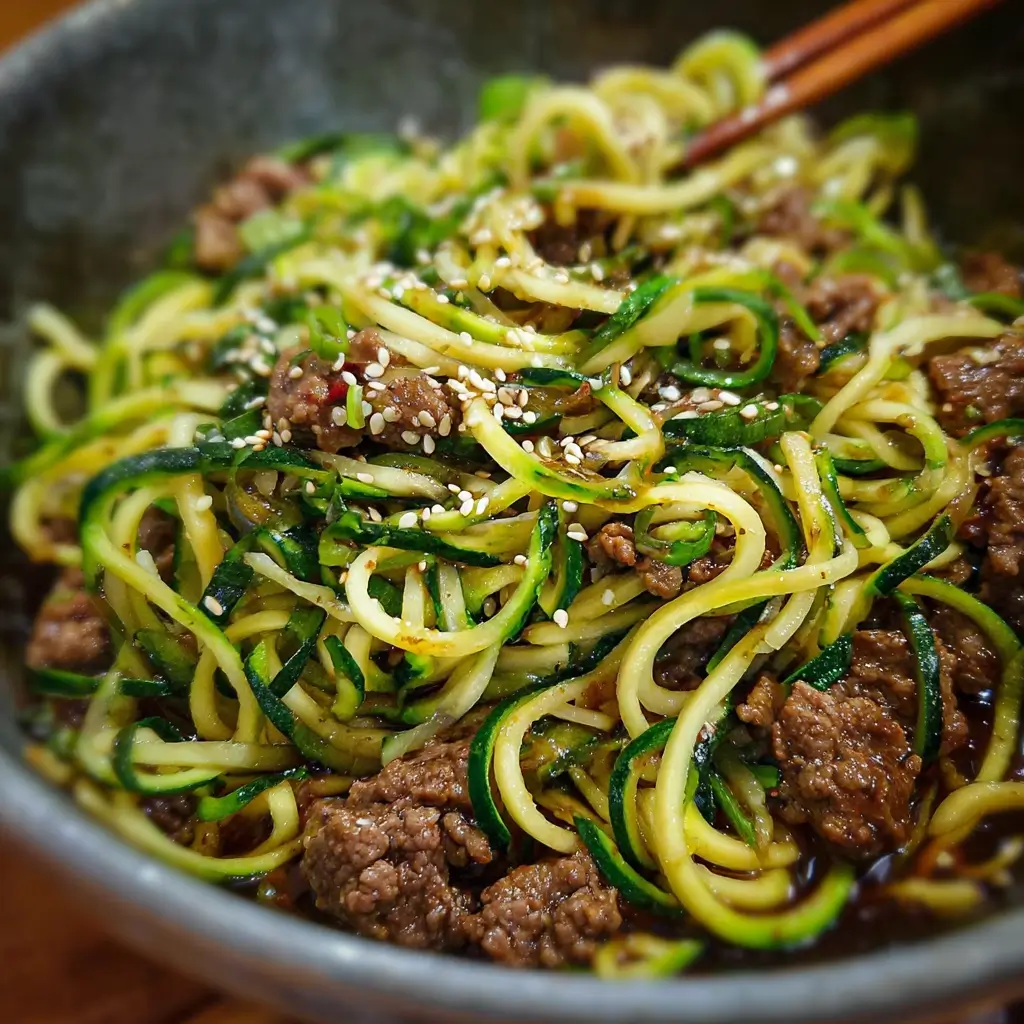
Finding a weeknight meal that ticks all the boxes can feel like a quest for the holy grail. It needs to be fast, something my family will actually eat without complaint, and healthy enough that I feel good serving it. For the longest time, this felt like an impossible trifecta. We’d fall into ruts of the same old rotation, and the excitement for dinner would wane. Then, this Beef and Zucchini Noodle Bowl entered our lives, and everything changed. The first time I made it, the aroma alone was enough to draw everyone to the kitchen. The sound of the beef sizzling in the pan, the vibrant colors of the fresh vegetables, and the rich, savory scent of the Asian-inspired sauce created an incredible sense of anticipation. When I finally placed the bowls on the table, I was met with a moment of stunned silence, followed by the enthusiastic clatter of forks. My husband, typically a man of few words when it comes to food, looked up and said, “This is a keeper.” The kids, who I thought might be skeptical of the “green spaghetti,” devoured every last bite. This dish has become our go-to solution for busy evenings. It’s a powerhouse of flavor, packed with tender, marinated beef, crisp-tender vegetables, and delightful zucchini noodles that soak up the incredible sauce. It feels indulgent and satisfying, yet it’s light, packed with protein, and brimming with nutrients. It’s the kind of meal that leaves you feeling energized, not weighed down. It has single-handedly solved our dinner dilemma, transforming hectic weeknights into an opportunity to enjoy a delicious, restaurant-quality meal together at home. This recipe isn’t just about food; it’s about creating a moment of shared joy and satisfaction, one delicious bowl at a time.
Ingredients
Here is everything you will need to create this vibrant and flavorful dish. Each component is chosen to build layers of savory, sweet, and tangy notes for a perfectly balanced meal.
For the Marinated Beef:
- 1.5 lbs Flank Steak (or Sirloin): Sliced thinly against the grain. This cut is lean yet flavorful, becoming incredibly tender when sliced thin and cooked quickly.
- 1/4 cup Low-Sodium Soy Sauce (or Tamari for gluten-free): This is the umami-rich backbone of the marinade, providing savory depth.
- 2 tablespoons Toasted Sesame Oil: Adds a distinctive nutty, aromatic flavor that is essential to many Asian cuisines.
- 1 tablespoon Honey (or Maple Syrup): Provides a touch of sweetness to balance the salty and savory elements of the marinade.
- 2 cloves Garlic, minced: Offers a pungent, aromatic base that infuses the beef with flavor.
- 1 teaspoon Ginger, freshly grated: Adds a warm, zesty spice that brightens the entire marinade.
- 1/2 teaspoon Black Pepper, freshly ground: For a subtle, lingering heat.
For the Zucchini Noodle Bowl:
- 4 medium Zucchini (about 2 lbs): These will be transformed into our light, healthy “noodles,” the perfect vessel for the sauce.
- 1 tablespoon Avocado Oil (or other high-heat oil): A neutral oil with a high smoke point, ideal for searing the beef perfectly.
- 1 Red Bell Pepper, thinly sliced: Adds a pop of color, sweetness, and a pleasant, crisp texture.
- 1 cup Shredded Carrots: Lends another layer of color, subtle sweetness, and nutrients.
- 4 Green Onions, sliced (whites and greens separated): The white parts are sautéed for a mild onion flavor, while the green tops are used as a fresh, sharp garnish.
- 1/4 cup Water or Beef Broth: Used to deglaze the pan and create the base of the pan sauce, capturing all the flavorful bits.
For Garnish (Optional but Recommended):
- 1 tablespoon Sesame Seeds (toasted): Adds a final nutty crunch and visual appeal.
- Fresh Cilantro, chopped: Provides a bright, citrusy, and herbaceous note.
- Red Pepper Flakes: For those who enjoy an extra kick of heat.
- Lime Wedges: A squeeze of fresh lime juice at the end brightens all the flavors.
Instructions
Follow these step-by-step instructions carefully to ensure your Beef and Zucchini Noodle Bowl is a culinary success. The key is in the preparation and the quick-cooking process to keep the vegetables crisp and the beef tender.
Step 1: Marinate the Beef
First, prepare your beef. It’s crucial to slice the flank steak very thinly against the grain. This technique shortens the muscle fibers, which is the secret to ensuring the beef is tender and not chewy. Place the thinly sliced beef in a medium-sized bowl. In a separate, smaller bowl, whisk together the marinade ingredients: low-sodium soy sauce, toasted sesame oil, honey, minced garlic, grated ginger, and black pepper. Pour this mixture over the sliced beef. Use tongs or your hands to toss everything together, ensuring every piece of beef is coated in the flavorful marinade. Cover the bowl with plastic wrap and let it marinate in the refrigerator for at least 30 minutes. For an even more profound flavor, you can marinate it for up to 4 hours. Do not marinate for longer than 8 hours, as the acidity in the marinade can start to break down the texture of the beef too much.
Step 2: Prepare the Zucchini Noodles and Vegetables
While the beef is marinating, it’s the perfect time to prepare your vegetables. Wash and dry the zucchini thoroughly. Using a spiralizer, process the zucchini to create your “zoodles.” If you don’t own a spiralizer, you can use a julienne peeler or a standard vegetable peeler to create long, thin ribbons. Once spiralized, place the zucchini noodles in a colander set over a bowl or in the sink. Sprinkle them lightly with a pinch of salt and toss gently. Let them sit for about 20-30 minutes. This process, known as “sweating,” draws out excess water from the zucchini, which is the key to preventing a watery final dish. After they have sweated, gently pat them dry with paper towels. Next, prepare your other vegetables: thinly slice the red bell pepper, and slice your green onions, keeping the white/light green parts separate from the dark green tops.
Step 3: Cook the Beef
Place a large skillet, wok, or cast-iron pan over high heat. It’s essential for the pan to be very hot to achieve a proper sear. Add the avocado oil and let it shimmer. Carefully remove the beef from the marinade, letting any excess drip off (reserve the leftover marinade in the bowl). Add the beef to the hot pan in a single layer. Do not overcrowd the pan; cook in two batches if necessary. Let the beef cook undisturbed for 1-2 minutes per side, until it develops a deep brown crust. This high-heat searing locks in the juices and creates immense flavor. Once seared, remove the beef from the skillet and set it aside on a plate.
Step 4: Sauté the Vegetables
Reduce the heat to medium-high. To the same skillet, add the sliced red bell pepper, shredded carrots, and the white parts of the green onions. Sauté for 3-4 minutes, stirring frequently, until the vegetables are crisp-tender. You want them to retain a slight bite, which adds a wonderful textural contrast to the tender beef.
Step 5: Create the Sauce and Combine
Pour the reserved beef marinade into the skillet with the vegetables. Add the 1/4 cup of water or beef broth. Bring the mixture to a simmer, scraping the bottom of the pan with a wooden spoon or spatula to release all the browned, flavorful bits (this is called deglazing). Let the sauce simmer and bubble for about 2-3 minutes, allowing it to reduce slightly and thicken.
Step 6: Finish with Zucchini Noodles and Beef
Add the patted-dry zucchini noodles to the skillet with the sauce and vegetables. Toss everything together gently for just 1-2 minutes. The goal is only to heat the zucchini noodles through, not to cook them for a long time, as they will become soft and release more water. Finally, return the cooked beef to the skillet. Toss everything one last time to coat the beef in the sauce and reheat it slightly. Remove from the heat immediately.
Step 7: Serve and Garnish
Divide the Beef and Zucchini Noodle Bowl mixture evenly among four bowls. Garnish generously with your chosen toppings. Sprinkle with toasted sesame seeds, the reserved green tops of the scallions, and fresh cilantro. Add a pinch of red pepper flakes for heat, if desired. Serve immediately with a lime wedge on the side for squeezing over the top.
Nutrition Facts
This recipe is designed to be as nutritious as it is delicious, offering a balanced macronutrient profile perfect for a healthy lifestyle.
- Servings: 4
- Calories per serving: Approximately 450 kcal
- High in Protein (Approx. 38g per serving): The significant amount of protein from the flank steak is crucial for muscle building and repair. It also promotes a feeling of fullness and satiety, helping to prevent overeating.
- Low in Carbohydrates (Approx. 15g per serving): By swapping traditional pasta for zucchini noodles, this dish drastically cuts down on carbohydrates and empty calories. This makes it an excellent choice for those following a low-carb, keto, or diabetic-friendly diet.
- Rich in Vitamins and Minerals: This bowl is a powerhouse of nutrients. Zucchini provides Vitamin C and potassium, carrots are high in Vitamin A, and bell peppers offer a fantastic source of antioxidants and Vitamin C.
- Source of Healthy Fats (Approx. 25g per serving): The use of avocado oil and toasted sesame oil provides monounsaturated and polyunsaturated fats, which are beneficial for heart health. The beef itself also contributes to the fat content.
- Excellent Source of Iron: Beef is one of the best dietary sources of heme iron, a type of iron that is more easily absorbed by the body. Iron is essential for carrying oxygen in the blood and preventing fatigue.
Preparation Time
This meal comes together surprisingly quickly, making it a fantastic option for busy weeknights.
- Marinating Time: 30 minutes (minimum)
- Preparation Time: 20 minutes (for spiralizing zucchini and chopping vegetables)
- Cooking Time: 15 minutes
- Total Time (including marinating): Approximately 1 hour and 5 minutes
How to Serve
Presentation enhances the dining experience. Here are a few ways to serve your Beef and Zucchini Noodle Bowl to make it look as good as it tastes.
- Classic Bowl Presentation:
- Use wide, shallow bowls to best display all the colorful ingredients.
- Twirl a portion of the zucchini noodles and vegetables in the center of the bowl to create a nest-like base.
- Arrange the slices of seared beef attractively on top or around the noodles.
- Drizzle any extra pan sauce over the top of the entire dish.
- Garnish Generously: Garnishes are not just for looks; they add critical layers of flavor and texture.
- For Crunch: A liberal sprinkle of toasted white or black sesame seeds. You could also add crushed peanuts or cashews.
- For Freshness: A scattering of chopped fresh cilantro or Thai basil. The bright green tops of the sliced green onions are also essential.
- For Heat: A pinch of red pepper flakes or finely sliced fresh red chili.
- For Acidity: Always serve with a fresh lime wedge on the side. The final squeeze of lime juice right before eating awakens all the flavors.
- Family-Style Platter:
- For a more casual, shared meal, arrange the entire recipe on a large platter.
- Create a bed of the zucchini noodles and vegetables, top with the beef, and then sprinkle all the garnishes over the entire platter.
- Set it in the middle of the table with tongs and let everyone build their own bowl.
Additional Tips
Elevate your recipe from great to unforgettable with these eight professional tips and tricks.
- The Secret to Non-Soggy Zoodles: The biggest complaint about zucchini noodles is their tendency to become watery. The salting step mentioned in the instructions is non-negotiable. For extra insurance, after patting them dry, you can lightly squeeze them in a clean kitchen towel to remove even more moisture. Most importantly, do not overcook them. A mere 60-90 seconds in the hot pan is all they need to warm through.
- Mastering the Beef Slice: For the most tender beef, your knife skills are key. Place the flank steak in the freezer for 15-20 minutes before slicing. This firms up the meat, making it significantly easier to slice into paper-thin strips. Always identify the direction of the muscle fibers (the grain) and slice perpendicular to them.
- Get Your Pan Screaming Hot: To get that beautiful, dark brown restaurant-quality sear on your beef, your pan must be extremely hot before the meat touches it. This allows the Maillard reaction to occur, which is the chemical process that creates hundreds of delicious flavor compounds. If the pan isn’t hot enough, the beef will simply steam in its own juices and turn a sad gray color.
- Don’t Crowd the Pan: This tip goes hand-in-hand with the one above. Cooking the beef in a single, uncrowded layer is crucial. Overcrowding the pan lowers the temperature and causes the meat to steam instead of sear. Cook in two or even three batches if your skillet isn’t large enough. It’s a small extra step that makes a world of difference in the final texture and flavor.
- Customize Your Sauce: The sauce is easily adaptable. For a spicier kick, add a teaspoon of sriracha or gochujang to the marinade. For a tangier profile, add a splash of rice vinegar to the pan sauce at the end. If you prefer a thicker sauce, create a slurry by mixing 1 teaspoon of cornstarch with 2 teaspoons of cold water and whisk it into the simmering sauce until it thickens.
- Vary Your Vegetables: This bowl is a fantastic canvas for other vegetables you may have on hand. Feel free to substitute or add others. Broccoli florets, snap peas, sliced mushrooms, edamame, or baby bok choy would all be delicious additions. Just be sure to adjust the cooking time based on the density of the vegetable.
- Meal Prep for a Super-Fast Dinner: You can do most of the work ahead of time. Slice the beef and prepare the marinade, storing them together in an airtight container in the fridge. Chop all the vegetables (except the zucchini) and store them in a separate container. When you’re ready to cook, all you need to do is spiralize the zucchini and follow the cooking steps for a meal that’s ready in under 20 minutes.
- Make it Kid-Friendly: If your children are wary of zucchini noodles, a great strategy is to mix them half-and-half with regular cooked spaghetti or udon noodles. This “transitional” approach can help them get accustomed to the new texture. You can also serve the components separately—a pile of beef, a pile of veggies, and a pile of zoodles—and let them build their own bowl, which often increases their willingness to try new things.
FAQ Section
Here are answers to some of the most common questions about making this Beef and Zucchini Noodle Bowl.
1. My zucchini noodles were still watery. What went wrong?
This is the most common issue with zoodles. The primary culprits are skipping the “sweating” step (salting and resting) or overcooking. Zucchini is over 90% water, and heat causes it to release that moisture. Ensure you salt and pat them dry thoroughly. When cooking, just toss them in the hot sauce for 1-2 minutes until they are barely warmed through. They should still have a slight crunch.
2. Can I use a different cut of beef?
Absolutely. While flank steak is ideal, sirloin steak is an excellent, readily available substitute. Skirt steak also works beautifully, though it has a slightly more robust flavor and texture. For a more budget-friendly option, you could even use thinly sliced top round. The key for any cut is to slice it thinly against the grain.
3. I don’t have a spiralizer. What are my alternatives for the zucchini?
No spiralizer, no problem! You have several options. A julienne peeler will create thin, spaghetti-like strands. You can also use a standard vegetable peeler to create wider, fettuccine-style ribbons. Lastly, you can simply use a sharp knife to cut the zucchini into thin matchsticks (a classic julienne).
4. How do I store and reheat leftovers?
Store leftovers in an airtight container in the refrigerator for up to 3 days. Be aware that the zucchini noodles will soften and release more water upon storage. To reheat, it’s best to use a skillet over medium heat for a few minutes until warmed through. Microwaving can work but may result in softer, more watery noodles.
5. Is this recipe gluten-free and/or keto-friendly?
Yes, it can easily be both! To make it gluten-free, simply substitute the soy sauce with tamari or coconut aminos, which are gluten-free alternatives. To ensure it is keto-friendly, use a sugar-free sweetener like monk fruit or erythritol instead of honey in the marinade. With these simple swaps, the dish fits perfectly into both dietary plans.
6. Can I use ground beef instead of steak?
Yes, you can. It will change the texture of the dish, but it will still be delicious. To adapt the recipe, brown the ground beef with the garlic and ginger first, breaking it apart with a spoon. Drain off any excess fat. Then, add the soy sauce, honey, and pepper directly to the pan with the cooked ground beef to create the flavor base before proceeding with the vegetable steps.
7. Can I make the sauce ahead of time?
Yes, making the sauce (the marinade portion) ahead of time is a great time-saver. You can whisk together all the marinade ingredients and store them in an airtight jar in the refrigerator for up to a week. This makes the marinating process as simple as pouring it over the beef when you’re ready.
8. Can I freeze this dish?
It is not recommended to freeze the fully assembled dish. Zucchini does not freeze well; it becomes very mushy and watery upon thawing. However, you can freeze the marinated, uncooked beef. Place the sliced beef and marinade in a freezer-safe zip-top bag, remove as much air as possible, and freeze for up to 3 months. Thaw it in the refrigerator overnight before cooking as directed.
Beef and Zucchini Noodle Bowl
Ingredients
Here is everything you will need to create this vibrant and flavorful dish. Each component is chosen to build layers of savory, sweet, and tangy notes for a perfectly balanced meal.
For the Marinated Beef:
- 1.5 lbs Flank Steak (or Sirloin): Sliced thinly against the grain. This cut is lean yet flavorful, becoming incredibly tender when sliced thin and cooked quickly.
- 1/4 cup Low-Sodium Soy Sauce (or Tamari for gluten-free): This is the umami-rich backbone of the marinade, providing savory depth.
- 2 tablespoons Toasted Sesame Oil: Adds a distinctive nutty, aromatic flavor that is essential to many Asian cuisines.
- 1 tablespoon Honey (or Maple Syrup): Provides a touch of sweetness to balance the salty and savory elements of the marinade.
- 2 cloves Garlic, minced: Offers a pungent, aromatic base that infuses the beef with flavor.
- 1 teaspoon Ginger, freshly grated: Adds a warm, zesty spice that brightens the entire marinade.
- 1/2 teaspoon Black Pepper, freshly ground: For a subtle, lingering heat.
For the Zucchini Noodle Bowl:
- 4 medium Zucchini (about 2 lbs): These will be transformed into our light, healthy “noodles,” the perfect vessel for the sauce.
- 1 tablespoon Avocado Oil (or other high-heat oil): A neutral oil with a high smoke point, ideal for searing the beef perfectly.
- 1 Red Bell Pepper, thinly sliced: Adds a pop of color, sweetness, and a pleasant, crisp texture.
- 1 cup Shredded Carrots: Lends another layer of color, subtle sweetness, and nutrients.
- 4 Green Onions, sliced (whites and greens separated): The white parts are sautéed for a mild onion flavor, while the green tops are used as a fresh, sharp garnish.
- 1/4 cup Water or Beef Broth: Used to deglaze the pan and create the base of the pan sauce, capturing all the flavorful bits.
For Garnish (Optional but Recommended):
- 1 tablespoon Sesame Seeds (toasted): Adds a final nutty crunch and visual appeal.
- Fresh Cilantro, chopped: Provides a bright, citrusy, and herbaceous note.
- Red Pepper Flakes: For those who enjoy an extra kick of heat.
- Lime Wedges: A squeeze of fresh lime juice at the end brightens all the flavors.
Instructions
Follow these step-by-step instructions carefully to ensure your Beef and Zucchini Noodle Bowl is a culinary success. The key is in the preparation and the quick-cooking process to keep the vegetables crisp and the beef tender.
Step 1: Marinate the Beef
First, prepare your beef. It’s crucial to slice the flank steak very thinly against the grain. This technique shortens the muscle fibers, which is the secret to ensuring the beef is tender and not chewy. Place the thinly sliced beef in a medium-sized bowl. In a separate, smaller bowl, whisk together the marinade ingredients: low-sodium soy sauce, toasted sesame oil, honey, minced garlic, grated ginger, and black pepper. Pour this mixture over the sliced beef. Use tongs or your hands to toss everything together, ensuring every piece of beef is coated in the flavorful marinade. Cover the bowl with plastic wrap and let it marinate in the refrigerator for at least 30 minutes. For an even more profound flavor, you can marinate it for up to 4 hours. Do not marinate for longer than 8 hours, as the acidity in the marinade can start to break down the texture of the beef too much.
Step 2: Prepare the Zucchini Noodles and Vegetables
While the beef is marinating, it’s the perfect time to prepare your vegetables. Wash and dry the zucchini thoroughly. Using a spiralizer, process the zucchini to create your “zoodles.” If you don’t own a spiralizer, you can use a julienne peeler or a standard vegetable peeler to create long, thin ribbons. Once spiralized, place the zucchini noodles in a colander set over a bowl or in the sink. Sprinkle them lightly with a pinch of salt and toss gently. Let them sit for about 20-30 minutes. This process, known as “sweating,” draws out excess water from the zucchini, which is the key to preventing a watery final dish. After they have sweated, gently pat them dry with paper towels. Next, prepare your other vegetables: thinly slice the red bell pepper, and slice your green onions, keeping the white/light green parts separate from the dark green tops.
Step 3: Cook the Beef
Place a large skillet, wok, or cast-iron pan over high heat. It’s essential for the pan to be very hot to achieve a proper sear. Add the avocado oil and let it shimmer. Carefully remove the beef from the marinade, letting any excess drip off (reserve the leftover marinade in the bowl). Add the beef to the hot pan in a single layer. Do not overcrowd the pan; cook in two batches if necessary. Let the beef cook undisturbed for 1-2 minutes per side, until it develops a deep brown crust. This high-heat searing locks in the juices and creates immense flavor. Once seared, remove the beef from the skillet and set it aside on a plate.
Step 4: Sauté the Vegetables
Reduce the heat to medium-high. To the same skillet, add the sliced red bell pepper, shredded carrots, and the white parts of the green onions. Sauté for 3-4 minutes, stirring frequently, until the vegetables are crisp-tender. You want them to retain a slight bite, which adds a wonderful textural contrast to the tender beef.
Step 5: Create the Sauce and Combine
Pour the reserved beef marinade into the skillet with the vegetables. Add the 1/4 cup of water or beef broth. Bring the mixture to a simmer, scraping the bottom of the pan with a wooden spoon or spatula to release all the browned, flavorful bits (this is called deglazing). Let the sauce simmer and bubble for about 2-3 minutes, allowing it to reduce slightly and thicken.
Step 6: Finish with Zucchini Noodles and Beef
Add the patted-dry zucchini noodles to the skillet with the sauce and vegetables. Toss everything together gently for just 1-2 minutes. The goal is only to heat the zucchini noodles through, not to cook them for a long time, as they will become soft and release more water. Finally, return the cooked beef to the skillet. Toss everything one last time to coat the beef in the sauce and reheat it slightly. Remove from the heat immediately.
Step 7: Serve and Garnish
Divide the Beef and Zucchini Noodle Bowl mixture evenly among four bowls. Garnish generously with your chosen toppings. Sprinkle with toasted sesame seeds, the reserved green tops of the scallions, and fresh cilantro. Add a pinch of red pepper flakes for heat, if desired. Serve immediately with a lime wedge on the side for squeezing over the top.
Nutrition
- Serving Size: one normal portion
- Calories: 450
- Fat: 25g
- Carbohydrates: 15g
- Protein: 38g