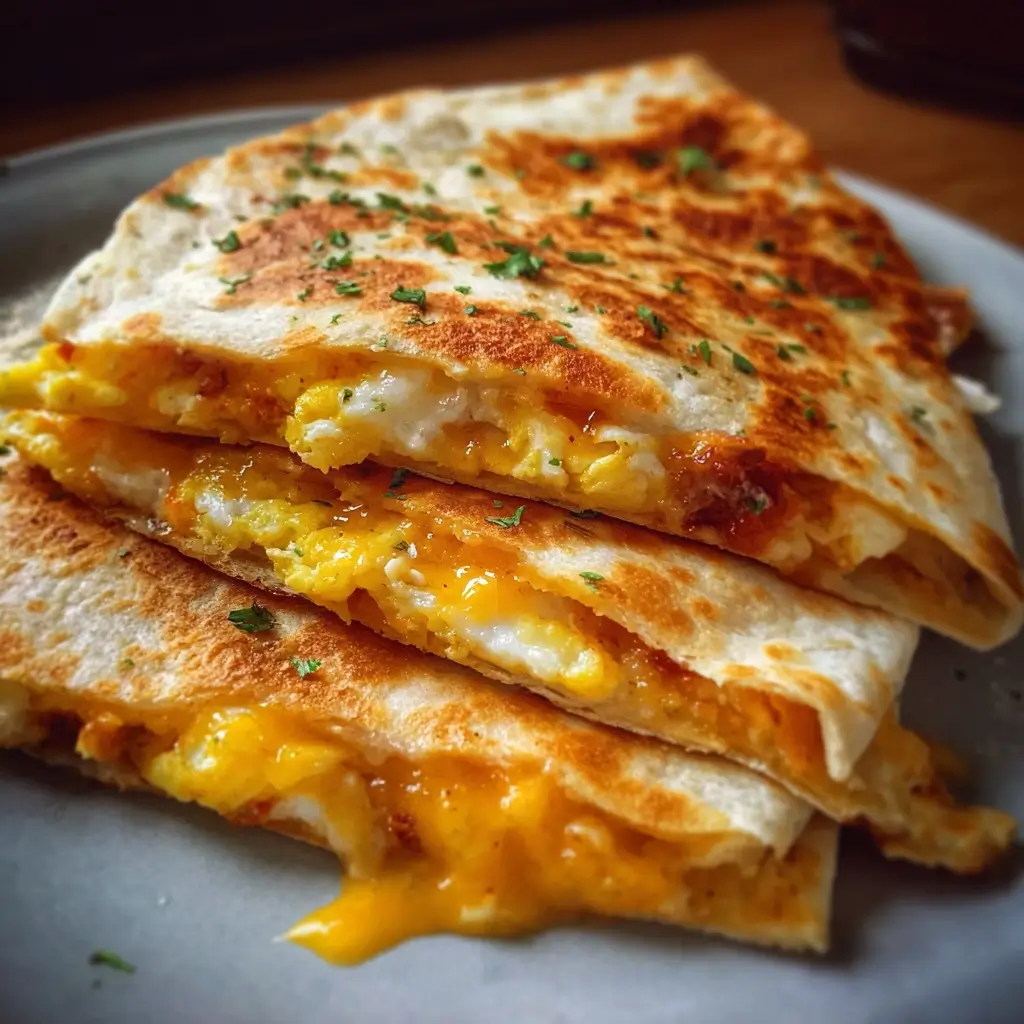
Of all the battles waged in my kitchen, the one against the chaotic morning rush is the most relentless. For years, I searched for the perfect breakfast: something quick enough for a school day, satisfying enough to prevent the dreaded 10 AM “I’m hungry” chorus, and delicious enough that no one would complain. Cereal was too simple, pancakes were a weekend-only affair, and oatmeal was met with mixed reviews. Then, one particularly frantic Tuesday, inspiration struck in the form of tortillas, eggs, and a block of cheddar cheese. The result was this Cheddar Egg Quesadilla, a recipe so simple yet so profoundly perfect that it has since become the undisputed champion of our breakfast table. It’s the kind of meal that makes my family feel like they’re getting a special treat, while I’m secretly celebrating a 15-minute, one-pan victory. The beauty of this dish lies in its golden, crispy exterior that gives way to a warm, fluffy scramble of eggs and a glorious, gooey river of melted cheddar. It’s savory, comforting, and endlessly customizable, making it a true culinary hero in our home.
Ingredients
- 4 Large Flour Tortillas (8-10 inch): These will be the vessel for our delicious filling. Flour tortillas are ideal as they become wonderfully crisp on the outside while remaining soft and pliable. Whole wheat or low-carb tortillas also work beautifully.
- 8 Large Eggs: The star of our breakfast filling. Using large, fresh eggs will yield the fluffiest, most flavorful scramble.
- 2 Tablespoons Milk or Heavy Cream: This is the secret to rich, tender scrambled eggs. The extra fat and liquid create steam as the eggs cook, preventing them from becoming dry or rubbery.
- 2 Cups Shredded Sharp Cheddar Cheese: The heart and soul of the quesadilla. Sharp cheddar provides a robust, tangy flavor that stands up to the rich eggs. For the best melt, shred your own cheese from a block.
- 2 Tablespoons Unsalted Butter: Used for cooking the eggs and toasting the quesadillas. Butter adds a rich flavor and helps create that perfectly golden-brown, crispy exterior. You can substitute with a neutral oil if preferred.
- ½ Teaspoon Salt: To enhance all the flavors. Adjust to your personal taste.
- ¼ Teaspoon Black Pepper: Adds a gentle, warming spice that complements the eggs and cheese perfectly. Freshly ground pepper is always recommended for the best flavor.
Instructions
- Prepare the Egg Mixture: In a medium-sized bowl, crack all 8 eggs. Add the milk (or cream), salt, and black pepper. Whisk vigorously with a fork or a whisk for about 30 seconds, or until the yolks and whites are completely combined and the mixture is light yellow and slightly frothy. This step is crucial for incorporating air, which leads to a fluffier final scramble.
- Scramble the Eggs: Place a large non-stick skillet over medium-low heat and add one tablespoon of the butter. Once the butter is melted and sizzling gently, pour in the whisked egg mixture. Let the eggs sit undisturbed for about 20-30 seconds until the edges just begin to set. Using a rubber spatula, gently push the eggs from the edges toward the center of the pan. Continue this gentle pushing and folding motion until the eggs are about 80% cooked. They should still look slightly wet and glossy. Immediately remove the skillet from the heat and transfer the eggs to a separate plate. They will continue to cook from the residual heat and will cook further inside the quesadilla, so undercooking them slightly at this stage is key to avoiding dry, rubbery eggs.
- Assemble the First Quesadilla: Carefully wipe out the skillet with a paper towel and return it to medium-low heat. Add ½ tablespoon of butter to the pan. Once melted, place one tortilla flat in the skillet. Sprinkle ½ cup of the shredded cheddar cheese evenly over the entire surface of the tortilla.
- Add Filling and Fold: Spoon half of the scrambled eggs (from the plate) onto one half of the tortilla. Be careful not to overfill, as this can cause the filling to spill out during cooking. Using your spatula, carefully fold the empty half of the tortilla over the half with the eggs and cheese, pressing down gently to seal it.
- Cook and Flip: Allow the quesadilla to cook for 2-3 minutes per side. The goal is a deep golden-brown crust and fully melted, gooey cheese on the inside. The low and slow heat is important here; too high, and the tortilla will burn before the cheese has a chance to melt. When the bottom is golden, carefully slide your spatula underneath and flip it to cook the other side.
- Repeat and Serve: Once the first quesadilla is perfectly cooked, slide it out of the skillet onto a cutting board. Repeat steps 3 through 5 with the remaining butter, tortillas, cheese, and eggs to make the second quesadilla. Let them rest for a minute before slicing into wedges and serving warm.
Nutrition Facts
- Servings: 2 large quesadillas (can be cut into 4-6 servings)
- Calories Per Serving: Approximately 650-750 calories per full quesadilla (depending on tortilla size and cheese amount).
- Protein: An excellent source of high-quality protein from the eggs and cheese, crucial for muscle repair and keeping you feeling full and energized throughout the morning.
- Calcium: The generous amount of cheddar cheese provides a significant portion of your daily calcium needs, essential for strong bones and teeth.
- Carbohydrates: The tortillas provide complex carbohydrates, which are your body’s primary source of energy to kickstart your day.
- Fat: Contains a good amount of fat from the cheese, eggs, and butter, which aids in vitamin absorption and contributes to a feeling of satiety.
- Vitamin D: Eggs are one of the few natural food sources of Vitamin D, which is important for immune function and bone health.
Preparation Time
This Cheddar Egg Quesadilla is the definition of a quick and efficient meal. The entire process, from cracking the first egg to slicing the final product, is remarkably fast.
- Prep Time: 5 Minutes. This includes gathering your ingredients, shredding the cheese (if using a block), and whisking the egg mixture.
- Cook Time: 10 Minutes. This covers the time it takes to scramble the eggs and then cook both quesadillas until they are golden and the cheese is perfectly melted.
- Total Time: 15 Minutes. In just a quarter of an hour, you can have a hot, hearty, and incredibly satisfying breakfast ready to serve.
How to Serve
While this Cheddar Egg Quesadilla is delicious on its own, serving it with the right accompaniments can elevate it from a simple breakfast to a full-blown feast. Here are some fantastic ways to serve it:
- Classic Dips and Sauces:
- Salsa: A scoop of your favorite red or green salsa provides a bright, acidic contrast to the rich cheese and eggs.
- Sour Cream or Greek Yogurt: A dollop of cool, tangy sour cream or plain Greek yogurt adds a creamy texture and balances the savory flavors.
- Guacamole: The ultimate pairing. Creamy, fresh guacamole adds healthy fats and a burst of lime and cilantro flavor.
- Pico de Gallo: This fresh, chunky salsa made from diced tomatoes, onions, cilantro, and jalapeño adds texture and a vibrant kick.
- Hot Sauce: For those who like a bit of heat, a few dashes of your preferred hot sauce can add a welcome spicy element.
- Fresh Side Dishes:
- Sliced Avocado: A few slices of fresh avocado on the side or on top provide a creamy, nutritious element.
- Fresh Fruit Salad: A bowl of mixed berries, melon, or citrus fruits offers a sweet and refreshing counterpoint to the savory quesadilla.
- Simple Green Salad: For a breakfast-for-lunch or brunch scenario, a simple salad with a light vinaigrette is a perfect, light accompaniment.
- Presentation and Garnish:
- Cut into Wedges: Use a pizza cutter or a sharp knife to slice each quesadilla into three or four wedges for easy handling.
- Garnish: Sprinkle the top with freshly chopped cilantro or sliced green onions for a pop of color and a fresh, herbaceous flavor before serving.
Additional Tips
- The Secret to Melty Cheese: For the absolute best “cheese pull,” grate your own cheese from a block of sharp cheddar. Pre-shredded cheeses are often coated in starches like potato starch or cellulose to prevent clumping, which can inhibit a smooth, perfect melt.
- Don’t Overcook the Eggs: This is the most important tip for a perfect texture. Scramble the eggs until they are just set but still look moist and glossy. They will continue to cook inside the hot, sealed quesadilla. Overcooking them initially will result in a dry, rubbery filling.
- Low and Slow is the Way to Go: Cook your quesadilla over medium-low heat. This allows the cheese to melt completely and become gooey at the same rate that the tortilla becomes golden brown and crispy. If the heat is too high, the tortilla will burn before the filling is properly heated through.
- Master the Flip: Flipping a loaded quesadilla can be intimidating. For a foolproof flip, slide the quesadilla onto a large plate. Place the empty skillet upside down over the plate, and then, holding the plate and skillet handle firmly together, invert them in one swift motion. The quesadilla will land perfectly in the pan, ready to cook on the second side.
- Get Creative with Add-ins: This recipe is a fantastic base for customization. Consider adding cooked, diced ham, crumbled cooked beef, sautéed bell peppers and onions, black beans, or sliced jalapeños to the egg filling for extra flavor and texture. Just be sure any additions are pre-cooked and you don’t overstuff the tortilla.
- Don’t Overstuff the Quesadilla: It can be tempting to load up your quesadilla with as much filling as possible, but this is a common mistake. Overstuffing makes the quesadilla difficult to fold and flip, and the filling is more likely to ooze out and burn in the pan. A modest, even layer is all you need.
- Batch Cooking for a Crowd: If you’re making breakfast for a larger group, you can use a sheet pan! Lightly oil a large baking sheet. Assemble the quesadillas as instructed and place them on the pan. Bake in a preheated oven at 400°F (200°C) for 8-10 minutes, flipping halfway through, until golden and crispy.
- Choosing the Right Tortilla: While standard flour tortillas are a great choice, don’t be afraid to experiment. Whole wheat tortillas add a nutty flavor and extra fiber. Corn tortillas can also be used for a more authentic, gluten-free option, though they are smaller and more prone to cracking, so it’s best to warm them slightly before folding.
Frequently Asked Questions (FAQ)
1. Can I make my Cheddar Egg Quesadilla in an air fryer or microwave?
Yes, you can! For an air fryer, assemble the quesadilla and cook it at 370°F (185°C) for about 6-8 minutes, flipping halfway through, until it’s crispy and golden. For a microwave, it’s a bit different. The result will be soft, not crispy. Place the assembled quesadilla on a microwave-safe plate and heat for 60-90 seconds, or until the cheese is melted. The microwave is great for a super-fast, soft version, while the air fryer excels at creating a crispy finish.
2. How do I keep my quesadilla from getting soggy?
Sogginess is usually caused by two things: overly wet fillings or condensation. To prevent this, make sure your scrambled eggs aren’t watery and that any additions (like sautéed vegetables or salsa) have been drained of excess liquid. Also, let the cooked quesadilla rest on a cutting board or a wire rack for a minute before slicing. This allows the steam to escape rather than being trapped inside, which keeps the tortilla crisp.
3. How can I make this recipe gluten-free?
It’s very simple to make this a gluten-free breakfast. The filling of eggs and cheese is naturally gluten-free. The only substitution you need to make is to use certified gluten-free corn tortillas or a specialty gluten-free flour tortilla wrap. Corn tortillas will give it a more authentic, slightly nuttier flavor.
4. Can I use egg whites instead of whole eggs?
Absolutely. If you’re looking for a lower-fat, lower-cholesterol version, you can substitute egg whites. A good rule of thumb is to use two egg whites for every one whole egg. So for this recipe, you would use 16 egg whites. Note that the texture will be slightly less rich and tender, but it will still be a delicious, high-protein meal.
5. What is the best way to store and reheat leftover quesadillas?
To store leftovers, allow the quesadilla to cool completely, then wrap it tightly in plastic wrap or aluminum foil, or place it in an airtight container. It will keep in the refrigerator for up to 3 days. The best way to reheat it and revive its crispy texture is in a dry, non-stick skillet over medium-low heat for a couple of minutes per side. You can also use a toaster oven or an air fryer. While you can use a microwave, be aware that it will make the tortilla soft rather than crispy.
6. Besides cheddar, what other cheeses work well in a breakfast quesadilla?
Cheddar is a classic for a reason, but many other cheeses are fantastic. For a great “cheese pull,” use a good melting cheese like Monterey Jack, Colby, or Fontina. For a bit of a spicy kick, Pepper Jack is an excellent choice. You could even use a blend, such as a mix of cheddar and mozzarella, for the perfect combination of flavor and meltiness.
7. My scrambled eggs always turn out rubbery. What am I doing wrong?
The most common cause of rubbery eggs is high heat. Eggs are delicate and cook very quickly. For fluffy, tender scrambled eggs, always use medium-low heat and cook them gently. Remove them from the pan when they are still slightly glossy and wet, as the residual heat will finish the job. Remember, in this recipe, they get a second round of cooking inside the quesadilla, so undercooking them slightly at first is essential.
8. I need to add some vegetables. When should I add them?
Vegetables are a wonderful addition! The key is to cook them before you add them to the quesadilla. Finely dice vegetables like bell peppers, onions, mushrooms, or spinach. Sauté them in the skillet until tender and any excess water has evaporated. You can either scramble them along with the eggs or layer them on top of the eggs before you fold the quesadilla. This prevents them from releasing water and making the final product soggy.
Cheddar Egg Quesadilla Recipe
Ingredients
- 4 Large Flour Tortillas (8–10 inch): These will be the vessel for our delicious filling. Flour tortillas are ideal as they become wonderfully crisp on the outside while remaining soft and pliable. Whole wheat or low-carb tortillas also work beautifully.
- 8 Large Eggs: The star of our breakfast filling. Using large, fresh eggs will yield the fluffiest, most flavorful scramble.
- 2 Tablespoons Milk or Heavy Cream: This is the secret to rich, tender scrambled eggs. The extra fat and liquid create steam as the eggs cook, preventing them from becoming dry or rubbery.
- 2 Cups Shredded Sharp Cheddar Cheese: The heart and soul of the quesadilla. Sharp cheddar provides a robust, tangy flavor that stands up to the rich eggs. For the best melt, shred your own cheese from a block.
- 2 Tablespoons Unsalted Butter: Used for cooking the eggs and toasting the quesadillas. Butter adds a rich flavor and helps create that perfectly golden-brown, crispy exterior. You can substitute with a neutral oil if preferred.
- ½ Teaspoon Salt: To enhance all the flavors. Adjust to your personal taste.
- ¼ Teaspoon Black Pepper: Adds a gentle, warming spice that complements the eggs and cheese perfectly. Freshly ground pepper is always recommended for the best flavor.
Instructions
- Prepare the Egg Mixture: In a medium-sized bowl, crack all 8 eggs. Add the milk (or cream), salt, and black pepper. Whisk vigorously with a fork or a whisk for about 30 seconds, or until the yolks and whites are completely combined and the mixture is light yellow and slightly frothy. This step is crucial for incorporating air, which leads to a fluffier final scramble.
- Scramble the Eggs: Place a large non-stick skillet over medium-low heat and add one tablespoon of the butter. Once the butter is melted and sizzling gently, pour in the whisked egg mixture. Let the eggs sit undisturbed for about 20-30 seconds until the edges just begin to set. Using a rubber spatula, gently push the eggs from the edges toward the center of the pan. Continue this gentle pushing and folding motion until the eggs are about 80% cooked. They should still look slightly wet and glossy. Immediately remove the skillet from the heat and transfer the eggs to a separate plate. They will continue to cook from the residual heat and will cook further inside the quesadilla, so undercooking them slightly at this stage is key to avoiding dry, rubbery eggs.
- Assemble the First Quesadilla: Carefully wipe out the skillet with a paper towel and return it to medium-low heat. Add ½ tablespoon of butter to the pan. Once melted, place one tortilla flat in the skillet. Sprinkle ½ cup of the shredded cheddar cheese evenly over the entire surface of the tortilla.
- Add Filling and Fold: Spoon half of the scrambled eggs (from the plate) onto one half of the tortilla. Be careful not to overfill, as this can cause the filling to spill out during cooking. Using your spatula, carefully fold the empty half of the tortilla over the half with the eggs and cheese, pressing down gently to seal it.
- Cook and Flip: Allow the quesadilla to cook for 2-3 minutes per side. The goal is a deep golden-brown crust and fully melted, gooey cheese on the inside. The low and slow heat is important here; too high, and the tortilla will burn before the cheese has a chance to melt. When the bottom is golden, carefully slide your spatula underneath and flip it to cook the other side.
- Repeat and Serve: Once the first quesadilla is perfectly cooked, slide it out of the skillet onto a cutting board. Repeat steps 3 through 5 with the remaining butter, tortillas, cheese, and eggs to make the second quesadilla. Let them rest for a minute before slicing into wedges and serving warm.
Nutrition
- Serving Size: one normal portion
- Calories: 750