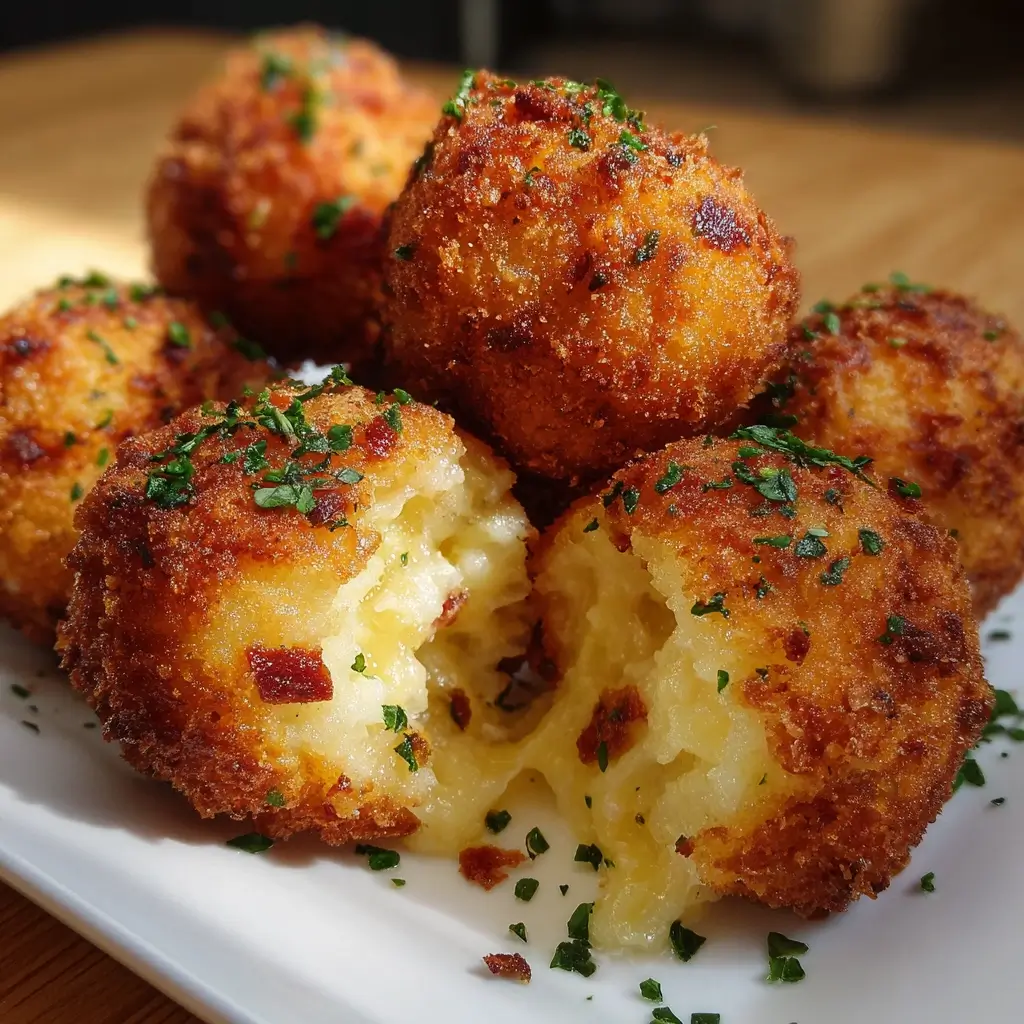
There are few things in the culinary world that scream “comfort” quite like a potato. But when my family and I found ourselves staring at a mountain of leftover mashed potatoes after a big Sunday dinner, I knew I needed to do something more exciting than just reheating them. That’s when the idea for these Cheesy Mashed Potato Balls was born. I remember the first time I made them; the kids were skeptical at first, watching me roll what looked like simple potato mounds. But the moment I pulled that first batch out of the fryer—perfectly golden, impossibly crispy, and smelling of toasted goodness—their eyes lit up. The real magic happened with the first bite. The audible crunch of the shell giving way to a warm, fluffy potato interior, followed by the glorious, molten river of melted cheese was a game-changer. They were gone in minutes, vanished from the platter with a flurry of happy hands reaching for “just one more.” Since that day, this Cheesy Mashed Potato Balls recipe has become a legend in our house. It’s our go-to for using up leftovers, a star appetizer for game day, and the one thing everyone requests for holiday gatherings. They are a simple concept, but the result is a symphony of textures and flavors that feels both nostalgic and wonderfully indulgent. This recipe isn’t just about food; it’s about transforming the ordinary into the extraordinary and creating delicious memories, one cheesy, crispy bite at a time.
Ingredients
- 4 cups Cold Mashed Potatoes: It’s crucial that the mashed potatoes are cold and firm. This is the perfect recipe for leftovers. If making them fresh, allow them to cool completely in the refrigerator for at least 2-3 hours, or even overnight. Russet or Yukon Gold potatoes yield the best results due to their high starch content.
- 1 ½ cups Shredded Cheddar Cheese: A sharp or medium cheddar provides a classic, tangy cheese pull. For best melting, shred your own from a block, as pre-shredded cheese often contains anti-caking agents that can affect its meltiness. You can also use mozzarella for a stretchier pull or pepper jack for a spicy kick.
- 2 Large Eggs: These will be divided. One egg is mixed into the potato mixture to act as a binder, helping everything hold together. The second egg will be used for the breading station to help the coating adhere.
- ¼ cup All-Purpose Flour: This is mixed into the potatoes to absorb any excess moisture and ensure the balls are firm enough to be shaped without becoming sticky.
- 2 tablespoons Chopped Fresh Chives or Green Onions: These add a subtle, fresh, oniony flavor that cuts through the richness of the cheese and potato. Dried chives can be substituted in a pinch (use 2 teaspoons).
- 1 teaspoon Garlic Powder: Adds a savory, aromatic depth to the potato base.
- ½ teaspoon Onion Powder: Complements the garlic powder and fresh chives, building a more complex savory flavor profile.
- Salt and Black Pepper to Taste: The amount needed will depend heavily on how seasoned your original mashed potatoes were. Be sure to taste the mixture before forming the balls and adjust accordingly.
- 1 cup All-Purpose Flour (for dredging): This is the first layer of our three-part breading station. It gives the egg wash something to cling to, ensuring a complete and even coating.
- 1 ½ cups Panko Breadcrumbs: Panko breadcrumbs are the secret to an extra-crispy, crunchy exterior that stays crisp long after frying. Their larger, flakier texture creates a lighter, airier crust than standard breadcrumbs.
- 4-6 cups Neutral Frying Oil: A neutral oil with a high smoke point, such as canola, vegetable, or peanut oil, is essential for deep-frying without burning. The amount you need will depend on the size of your pot or deep fryer.
Instructions
- Prepare the Potato Mixture: In a large mixing bowl, combine the 4 cups of cold mashed potatoes, 1 cup of the shredded cheddar cheese (reserving the other ½ cup for the centers), one of the large eggs (lightly beaten), ¼ cup of all-purpose flour, the chopped chives, garlic powder, and onion powder.
- Season and Mix: Using a sturdy spatula or your hands, mix all the ingredients together until they are just combined. Be careful not to overmix, as this can make the potatoes gummy. Taste the mixture and season generously with salt and black pepper. Remember, potatoes need a good amount of salt to bring out their flavor. The mixture should be firm and easy to handle. If it feels too wet or sticky, add another tablespoon of flour.
- Chill the Mixture (Crucial Step): Cover the bowl with plastic wrap and refrigerate for at least 30-60 minutes. Chilling the potato mixture is a non-negotiable step. It allows the starches and flour to firm up, making the balls much easier to roll and preventing them from falling apart during the frying process. For best results, you can even chill it for a few hours.
- Set Up the Breading Station: While the potato mixture is chilling, prepare your three-part breading station. You will need three shallow dishes or plates. In the first dish, place the 1 cup of all-purpose flour. In the second dish, whisk the remaining large egg with a tablespoon of water to create an egg wash. In the third dish, spread out the 1 ½ cups of Panko breadcrumbs. Season the flour and the breadcrumbs with a pinch of salt and pepper for extra flavor. Arrange the dishes in an assembly line: flour, egg wash, then Panko.
- Form and Stuff the Potato Balls: Remove the chilled potato mixture from the refrigerator. Scoop out about 2-3 tablespoons of the mixture and roll it into a ball with your hands (about the size of a golf ball). Use your thumb to create a deep indentation in the center of the ball. Fill this pocket with a generous pinch of the reserved ½ cup of shredded cheddar cheese. Carefully pinch the potato mixture around the cheese to seal it completely, ensuring no cheese is exposed. Roll the ball between your palms again to make it smooth and round. Repeat with the remaining potato mixture.
- Coat the Potato Balls: Working one at a time, take a stuffed potato ball and gently roll it in the first dish of flour, tapping off any excess. Next, dip it into the egg wash, making sure it’s fully coated on all sides. Allow any excess egg to drip off. Finally, transfer the ball to the Panko breadcrumbs, pressing gently and rolling it around to ensure a thick, even crust. Place the fully coated ball on a baking sheet lined with parchment paper. Repeat this process for all the potato balls.
- Heat the Frying Oil: Pour your neutral frying oil into a large, heavy-bottomed pot or Dutch oven until it’s about 2-3 inches deep. Heat the oil over medium-high heat until it reaches a temperature of 350-375°F (175-190°C). Using a cooking thermometer is highly recommended for accuracy. If you don’t have one, you can test the oil by dropping a small cube of bread into it; it should turn golden brown in about 30-45 seconds.
- Fry the Potato Balls: Carefully place 4-5 coated potato balls into the hot oil, being sure not to overcrowd the pot. Frying in small batches is key to maintaining the oil temperature and achieving a crispy crust. Fry the balls for about 3-4 minutes, turning them occasionally with a slotted spoon or spider strainer, until they are a deep golden brown and crispy on all sides.
- Drain and Serve: Once perfectly golden, use a slotted spoon to remove the potato balls from the oil. Let any excess oil drip off before transferring them to a wire rack set over a baking sheet. Draining on a wire rack allows air to circulate, keeping the bottoms just as crispy as the tops. Sprinkling them with a tiny pinch of salt while they are still hot is a great pro tip. Let them cool for a few minutes before serving, as the cheesy center will be extremely hot.
Nutrition Facts
Disclaimer: The following nutritional information is an estimate and can vary based on specific ingredients, portion sizes, and cooking methods used.
Servings: This recipe makes approximately 20-24 potato balls.
Serving Size: 3 potato balls
Calories per serving: Approximately 350-420 kcal
- Fat: This dish contains a significant amount of fat, primarily from the cheese and the deep-frying process. Using an air fryer or baking method can substantially reduce the fat content.
- Carbohydrates: As the main ingredient is potatoes, this recipe is rich in carbohydrates, which are the body’s primary source of energy.
- Protein: The eggs and cheese contribute a moderate amount of protein, which is essential for building and repairing tissues in the body.
- Sodium: The sodium content can be high depending on how much salt is added and the saltiness of the original mashed potatoes and cheese. Be mindful of seasoning if you are monitoring your sodium intake.
- Fiber: Potatoes provide a decent amount of dietary fiber, which is important for digestive health, especially when the skins are included in the mashed potatoes.
Preparation Time
- Prep Time: 25 minutes (if using leftover mashed potatoes)
- Chilling Time: 30-60 minutes (essential)
- Cook Time: 20 minutes (frying in batches)
- Total Time: Approximately 1 hour 15 minutes – 1 hour 45 minutes
The preparation time can be significantly longer if you are making mashed potatoes from scratch. Using pre-made, cold mashed potatoes from a previous meal is the most efficient way to make this recipe, turning it into a quick and easy snack or appetizer.
How to Serve
These Cheesy Mashed Potato Balls are incredibly versatile. They can be the star of an appetizer platter or a delicious companion to a main course. Here are some fantastic ways to serve them:
- With a Dipping Sauce Bar: The best way to elevate these potato balls is with an array of dipping sauces.
- Classic Sour Cream & Chives: A cool, tangy classic that never fails.
- Ranch Dressing: Creamy, herby, and a universal crowd-pleaser.
- Spicy Aioli: Mix mayonnaise with sriracha, garlic, and a squeeze of lime for a fiery kick.
- Marinara Sauce: The combination of cheesy potato and warm tomato sauce is reminiscent of a mozzarella stick.
- Honey Mustard: A sweet and tangy option that pairs surprisingly well.
- Garlic Butter Sauce: For ultimate indulgence, serve them with a small bowl of melted garlic butter for dipping.
- As a Party Appetizer:
- Arrange them on a large platter for parties, game days, or holiday gatherings.
- Use fun cocktail picks to make them easy for guests to grab and eat without getting their fingers greasy.
- Garnish the platter with fresh parsley or chives for a pop of color.
- As a Creative Side Dish:
- Move beyond french fries and serve these alongside a juicy steak or grilled chicken breast.
- Pair them with a simple green salad with a vinaigrette dressing to balance their richness.
- They are a fantastic and kid-friendly side for burgers or hearty beef dishes.
- For a Fun Family Meal:
- Serve them as part of a “tapas night” with other small plates like meatballs, shrimp, and stuffed mushrooms.
- They make a great addition to a brunch menu, served alongside scrambled eggs and sausage.
Additional Tips
- The Perfect Potato is Key: For the best texture, use starchy potatoes like Russets or Yukon Golds. They break down into a fluffy, dry mash that is ideal for forming balls. Avoid waxy potatoes (like red potatoes), as they can become gluey when mashed and hold too much moisture, leading to soggy results.
- Dry Potatoes are Your Best Friend: The enemy of a good potato ball is moisture. If you’re making mashed potatoes from scratch for this recipe, make sure to drain them thoroughly after boiling. You can even return the drained potatoes to the hot pot for a minute to steam off any remaining water before mashing. The drier the initial mash, the firmer your balls will be.
- Upgrade Your Breading: While Panko is excellent, you can take your crust to the next level by seasoning it. Mix your Panko breadcrumbs with a teaspoon of smoked paprika, a pinch of cayenne pepper, or some grated Parmesan cheese for an extra layer of flavor that gets toasted during frying.
- Customize Your Fillings: The cheese center is just the beginning! Feel free to get creative. Consider adding finely diced and fully cooked meats like ham or crumbled ground beef. You could also mix in finely chopped jalapeños for a spicy kick, caramelized onions for a sweet and savory depth, or different herbs like dill or parsley.
- Master the Oil Temperature: Using a thermometer is the best way to ensure your oil is at the perfect temperature (350-375°F / 175-190°C). If the oil is too cool, the potato balls will absorb too much oil and become greasy. If it’s too hot, the breading will burn before the cheesy center has a chance to melt.
- Don’t Overcrowd the Pan: Frying in small batches is essential. Adding too many potato balls to the pot at once will cause the oil temperature to drop dramatically. This leads to a longer cooking time and a less crispy, more oil-logged final product. Give them space to swim and fry to a perfect golden brown.
- Make-Ahead and Freezing Instructions: These are fantastic for making ahead. You can prepare and coat the balls, then arrange them on a baking sheet and freeze them until solid. Once frozen, transfer them to a freezer-safe bag or container. You can fry them directly from frozen, just add an extra 2-3 minutes to the cooking time. This is a lifesaver for party prep.
- Healthier Cooking Methods (Baking & Air Frying):
- For Baking: Preheat your oven to 400°F (200°C). Prepare the balls as directed. Before coating in Panko, lightly spray the breadcrumbs with cooking spray and toss to combine. This helps them brown. Place the coated balls on a baking sheet lined with parchment paper and spray the tops lightly with more cooking spray. Bake for 20-25 minutes, flipping halfway through, until golden and crispy.
- For Air Frying: Preheat your air fryer to 375°F (190°C). Place the coated balls in the air fryer basket in a single layer, ensuring they don’t touch. Spray the tops lightly with cooking spray. Air fry for 10-15 minutes, shaking the basket or flipping the balls halfway through, until they are golden brown and crisp.
FAQ Section
1. Q: Why are my mashed potato balls falling apart in the fryer?
A: This is the most common issue and usually has one of three causes. First, your mashed potatoes were too wet or warm. They must be cold and firm. Second, you skipped the crucial chilling step after mixing all the ingredients. Chilling solidifies the mixture. Third, the ball wasn’t sealed properly after stuffing it with cheese, causing the melting cheese to leak out and break the ball’s structure.
2. Q: Can I use instant mashed potatoes for this recipe?
A: Yes, you can use instant mashed potatoes in a pinch, but you’ll need to prepare them to be much thicker and drier than you normally would for eating. Use less liquid (milk or water) than the package calls for to create a stiff, dense mash. Most importantly, you must let them cool completely in the refrigerator before proceeding with the recipe.
3. Q: What is the absolute best cheese for a perfect cheese pull?
A: For that epic, stretchy cheese pull you see in videos, low-moisture mozzarella is the champion. However, it has a very mild flavor. For the best of both worlds—great flavor and a good stretch—try a blend of shredded low-moisture mozzarella and a flavorful sharp cheddar or Gruyère.
4. Q: How do I store and reheat leftover Cheesy Mashed Potato Balls?
A: Store any leftovers in an airtight container in the refrigerator for up to 3-4 days. The key to reheating is to restore the crispiness. The microwave will make them soft and soggy. Instead, reheat them in an oven or toaster oven at 375°F (190°C) for 10-15 minutes, or in an air fryer at 350°F (175°C) for 5-7 minutes until hot and crispy again.
5. Q: How can I make this recipe gluten-free?
A: This recipe is easily adaptable for a gluten-free diet. Simply substitute the all-purpose flour (both in the mixture and for dredging) with a good quality gluten-free all-purpose flour blend. For the coating, use gluten-free Panko or standard gluten-free breadcrumbs. The results will be just as delicious and crispy.
6. Q: My breading keeps sliding off. What am I doing wrong?
A: A flawless breading relies on the three-step process. Ensure your potato ball isn’t too moist to begin with. The first light coat of flour is essential; it acts like a primer for the egg wash to stick to. Make sure the entire surface is covered in egg wash, as any dry spots will cause the breadcrumbs to fall off. Finally, press the Panko breadcrumbs on firmly to create a durable crust.
7. Q: Can I use different herbs or spices in the potato mixture?
A: Absolutely! This recipe is a wonderful canvas for your favorite flavors. Try adding smoked paprika for a smoky flavor, a pinch of cayenne for heat, or finely chopped fresh herbs like parsley, dill, or rosemary. You could even add a tablespoon of grated Parmesan cheese directly into the potato mix for an extra savory, nutty flavor.
8. Q: Are these the same as potato croquettes?
A: While they are very similar, there is a technical difference. Traditional European potato croquettes often start with a base of potatoes mixed with a thick béchamel sauce (a white sauce made from butter, flour, and milk), egg yolks, and seasonings. This Cheesy Mashed Potato Balls recipe is a simpler, more direct version that relies purely on mashed potatoes as the base, making them a bit denser and more potato-forward, which many people prefer.

Cheesy Mashed Potato Balls Recipe
Ingredients
- 4 cups Cold Mashed Potatoes: It’s crucial that the mashed potatoes are cold and firm. This is the perfect recipe for leftovers. If making them fresh, allow them to cool completely in the refrigerator for at least 2-3 hours, or even overnight. Russet or Yukon Gold potatoes yield the best results due to their high starch content.
- 1 ½ cups Shredded Cheddar Cheese: A sharp or medium cheddar provides a classic, tangy cheese pull. For best melting, shred your own from a block, as pre-shredded cheese often contains anti-caking agents that can affect its meltiness. You can also use mozzarella for a stretchier pull or pepper jack for a spicy kick.
- 2 Large Eggs: These will be divided. One egg is mixed into the potato mixture to act as a binder, helping everything hold together. The second egg will be used for the breading station to help the coating adhere.
- ¼ cup All-Purpose Flour: This is mixed into the potatoes to absorb any excess moisture and ensure the balls are firm enough to be shaped without becoming sticky.
- 2 tablespoons Chopped Fresh Chives or Green Onions: These add a subtle, fresh, oniony flavor that cuts through the richness of the cheese and potato. Dried chives can be substituted in a pinch (use 2 teaspoons).
- 1 teaspoon Garlic Powder: Adds a savory, aromatic depth to the potato base.
- ½ teaspoon Onion Powder: Complements the garlic powder and fresh chives, building a more complex savory flavor profile.
- Salt and Black Pepper to Taste: The amount needed will depend heavily on how seasoned your original mashed potatoes were. Be sure to taste the mixture before forming the balls and adjust accordingly.
- 1 cup All-Purpose Flour (for dredging): This is the first layer of our three-part breading station. It gives the egg wash something to cling to, ensuring a complete and even coating.
- 1 ½ cups Panko Breadcrumbs: Panko breadcrumbs are the secret to an extra-crispy, crunchy exterior that stays crisp long after frying. Their larger, flakier texture creates a lighter, airier crust than standard breadcrumbs.
- 4–6 cups Neutral Frying Oil: A neutral oil with a high smoke point, such as canola, vegetable, or peanut oil, is essential for deep-frying without burning. The amount you need will depend on the size of your pot or deep fryer.
Instructions
- Prepare the Potato Mixture: In a large mixing bowl, combine the 4 cups of cold mashed potatoes, 1 cup of the shredded cheddar cheese (reserving the other ½ cup for the centers), one of the large eggs (lightly beaten), ¼ cup of all-purpose flour, the chopped chives, garlic powder, and onion powder.
- Season and Mix: Using a sturdy spatula or your hands, mix all the ingredients together until they are just combined. Be careful not to overmix, as this can make the potatoes gummy. Taste the mixture and season generously with salt and black pepper. Remember, potatoes need a good amount of salt to bring out their flavor. The mixture should be firm and easy to handle. If it feels too wet or sticky, add another tablespoon of flour.
- Chill the Mixture (Crucial Step): Cover the bowl with plastic wrap and refrigerate for at least 30-60 minutes. Chilling the potato mixture is a non-negotiable step. It allows the starches and flour to firm up, making the balls much easier to roll and preventing them from falling apart during the frying process. For best results, you can even chill it for a few hours.
- Set Up the Breading Station: While the potato mixture is chilling, prepare your three-part breading station. You will need three shallow dishes or plates. In the first dish, place the 1 cup of all-purpose flour. In the second dish, whisk the remaining large egg with a tablespoon of water to create an egg wash. In the third dish, spread out the 1 ½ cups of Panko breadcrumbs. Season the flour and the breadcrumbs with a pinch of salt and pepper for extra flavor. Arrange the dishes in an assembly line: flour, egg wash, then Panko.
- Form and Stuff the Potato Balls: Remove the chilled potato mixture from the refrigerator. Scoop out about 2-3 tablespoons of the mixture and roll it into a ball with your hands (about the size of a golf ball). Use your thumb to create a deep indentation in the center of the ball. Fill this pocket with a generous pinch of the reserved ½ cup of shredded cheddar cheese. Carefully pinch the potato mixture around the cheese to seal it completely, ensuring no cheese is exposed. Roll the ball between your palms again to make it smooth and round. Repeat with the remaining potato mixture.
- Coat the Potato Balls: Working one at a time, take a stuffed potato ball and gently roll it in the first dish of flour, tapping off any excess. Next, dip it into the egg wash, making sure it’s fully coated on all sides. Allow any excess egg to drip off. Finally, transfer the ball to the Panko breadcrumbs, pressing gently and rolling it around to ensure a thick, even crust. Place the fully coated ball on a baking sheet lined with parchment paper. Repeat this process for all the potato balls.
- Heat the Frying Oil: Pour your neutral frying oil into a large, heavy-bottomed pot or Dutch oven until it’s about 2-3 inches deep. Heat the oil over medium-high heat until it reaches a temperature of 350-375°F (175-190°C). Using a cooking thermometer is highly recommended for accuracy. If you don’t have one, you can test the oil by dropping a small cube of bread into it; it should turn golden brown in about 30-45 seconds.
- Fry the Potato Balls: Carefully place 4-5 coated potato balls into the hot oil, being sure not to overcrowd the pot. Frying in small batches is key to maintaining the oil temperature and achieving a crispy crust. Fry the balls for about 3-4 minutes, turning them occasionally with a slotted spoon or spider strainer, until they are a deep golden brown and crispy on all sides.
- Drain and Serve: Once perfectly golden, use a slotted spoon to remove the potato balls from the oil. Let any excess oil drip off before transferring them to a wire rack set over a baking sheet. Draining on a wire rack allows air to circulate, keeping the bottoms just as crispy as the tops. Sprinkling them with a tiny pinch of salt while they are still hot is a great pro tip. Let them cool for a few minutes before serving, as the cheesy center will be extremely hot.
Nutrition
- Serving Size: one normal portion
- Calories: 420