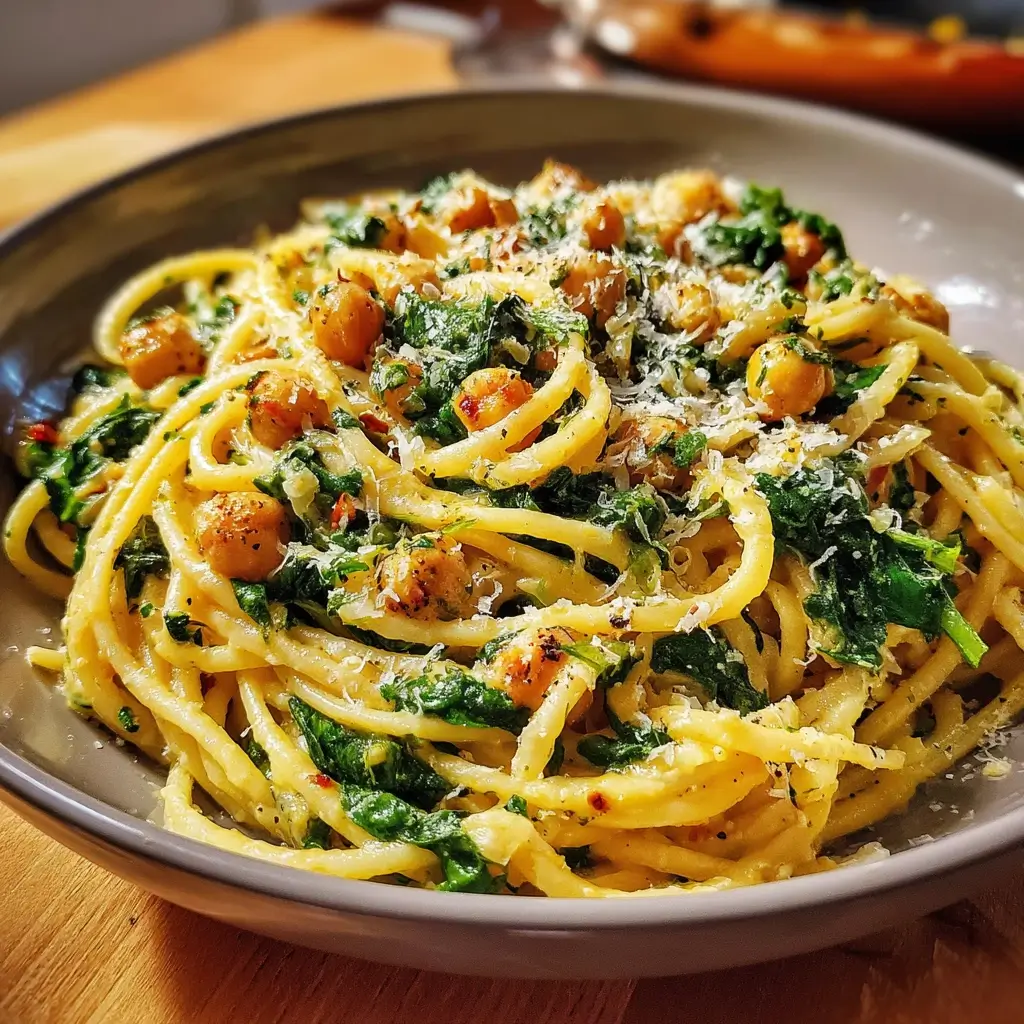
Of all the recipes that have graced my family’s dinner table, few have achieved the legendary status of this Chickpea and Spinach Pasta. It started as an experiment on a frantic Tuesday night, a “what’s-in-the-pantry” kind of meal. I was staring at a can of chickpeas, a bag of spinach on its last legs, and a box of pasta, wondering if I could create something that wasn’t just edible, but genuinely enjoyable. My expectations were modest. Yet, what emerged from the pot that evening was nothing short of a culinary revelation. The sauce was impossibly creamy without a drop of heavy cream, the chickpeas provided a satisfying, hearty bite, and the spinach wilted into silky green ribbons, adding a touch of freshness and virtue. The kids, who usually approach anything green with suspicion, devoured their bowls without a single complaint. My partner, a tough critic, looked up from his plate and declared, “You can make this again. Anytime.” Since that night, this dish has become our go-to comfort meal, our reliable weeknight wonder, and the recipe I share most often with friends. It’s a testament to the magic of simple, wholesome ingredients coming together to create something truly special, proving that you don’t need a complicated process or a long list of fancy items to put a spectacular, nourishing dinner on the table.
Ingredients
- 1 pound (450g) short pasta: Penne, fusilli, or rigatoni work beautifully as their shapes are perfect for catching the creamy sauce.
- 2 tablespoons extra virgin olive oil: The foundational flavor for our sauce, used to sauté the aromatics.
- 1 large yellow onion, finely chopped: Provides a sweet, aromatic base that deepens the overall flavor profile.
- 4-5 cloves garlic, minced: A crucial aromatic that adds a pungent, savory kick. Don’t be shy with the amount.
- 1 (15-ounce) can chickpeas, rinsed and drained: These are the protein-packed stars of the dish, adding a hearty texture and nutty flavor.
- 1 teaspoon dried oregano: Lends a classic, earthy Mediterranean flavor that pairs wonderfully with the other ingredients.
- 1/2 teaspoon red pepper flakes (optional): For those who enjoy a gentle warmth in the background. Adjust to your personal heat preference.
- 1/2 cup dry white wine (like Sauvignon Blanc or Pinot Grigio): This is for deglazing the pan, adding a complex acidity that brightens the sauce. You can substitute with vegetable broth.
- 1 (28-ounce) can crushed tomatoes: Forms the rich, vibrant body of our sauce. Look for a high-quality brand for the best flavor.
- 1 teaspoon sugar or a pinch of baking soda: A secret weapon to balance the acidity of the tomatoes, resulting in a smoother, more rounded sauce.
- Salt and freshly ground black pepper to taste: Essential for seasoning every layer of the dish.
- 5 ounces (about 5 packed cups) fresh baby spinach: Wilts down beautifully into the sauce, adding essential nutrients and a lovely splash of color.
- 1/2 cup grated Parmesan cheese, plus more for serving: The key to our sauce’s creamy finish and a salty, nutty flavor.
- 1/4 cup fresh basil or parsley, chopped: Adds a final burst of freshness and herbaceous aroma before serving.
Instructions
- Cook the Pasta: Bring a large pot of heavily salted water to a rolling boil. Add the pasta and cook according to package directions until it reaches al dente (firm to the bite). Before draining, carefully reserve about 1.5 cups of the starchy pasta water. This water is liquid gold and will be essential for creating a silky, emulsified sauce. Drain the pasta and set it aside.
- Sauté the Aromatics: While the pasta is cooking, heat the olive oil in a large, deep skillet or Dutch oven over medium heat. Once the oil shimmers, add the finely chopped onion. Sauté for 5-7 minutes, stirring occasionally, until the onion has softened and become translucent. Add the minced garlic, dried oregano, and red pepper flakes (if using). Cook for another minute until the garlic is fragrant, being careful not to let it burn.
- Build the Sauce Base: Pour in the dry white wine to deglaze the pan. Use a wooden spoon to scrape up any browned bits stuck to the bottom of the pan—this is where a ton of flavor is. Let the wine simmer and reduce by about half, which should take about 2-3 minutes.
- Simmer the Sauce: Add the rinsed and drained chickpeas and the can of crushed tomatoes to the skillet. Stir in the sugar (or baking soda), a generous pinch of salt, and several grinds of black pepper. Bring the mixture to a gentle simmer. Reduce the heat to low, cover the skillet, and let the sauce cook for at least 10-15 minutes. This simmering time allows the flavors to meld together and the chickpeas to soften slightly and absorb the taste of the sauce.
- Combine and Create Creaminess: Uncover the skillet. Add the fresh spinach to the sauce in batches, stirring until it wilts down completely. This should only take a couple of minutes. Once all the spinach is incorporated, add the cooked pasta to the skillet.
- Emulsify the Sauce: Add the grated Parmesan cheese and 1/2 cup of the reserved starchy pasta water to the skillet. Stir vigorously and continuously until the cheese melts and the sauce clings beautifully to the pasta, becoming glossy and creamy. If the sauce seems too thick, add more reserved pasta water, one tablespoon at a time, until it reaches your desired consistency.
- Final Touches and Serving: Turn off the heat. Stir in the chopped fresh basil or parsley. Taste the pasta one last time and adjust seasoning with more salt and pepper if needed. Serve immediately, garnished with an extra sprinkle of Parmesan cheese and a drizzle of good quality olive oil.
Nutrition Facts
- Servings: 6
- Calories per serving: Approximately 480 kcal
This recipe offers a well-rounded nutritional profile, making it as nourishing as it is delicious.
- Protein (approx. 18g): A fantastic plant-based source of protein from the chickpeas and cheese, crucial for muscle repair and keeping you feeling full and satisfied.
- Fiber (approx. 10g): High in dietary fiber from the chickpeas, spinach, and whole-grain pasta (if used), promoting healthy digestion and stable blood sugar levels.
- Vitamin K (High): Spinach is a powerhouse of Vitamin K, an essential nutrient for bone health and proper blood clotting.
- Iron (Good Source): This dish provides a significant amount of iron, primarily from the spinach and chickpeas, which is vital for energy production and transporting oxygen in the blood.
- Complex Carbohydrates (approx. 75g): The pasta provides sustained energy, making this a perfect meal to refuel after a long day or before physical activity.
Preparation Time
This recipe is a true weeknight champion, designed to be on your table with minimal fuss.
- Prep Time: 10 minutes (chopping onion and garlic, measuring ingredients).
- Cook Time: 20-25 minutes.
- Total Time: Approximately 35 minutes from start to finish, making it an ideal choice for busy evenings when you crave a wholesome, home-cooked meal without spending hours in the kitchen.
How to Serve
Serving this Chickpea and Spinach Pasta is all about enhancing its comforting and rustic qualities. Here are some ideas to present it beautifully:
- In a Bowl, Not a Plate: Serve the pasta in wide, shallow bowls. This not only looks more appealing but also helps to pool the delicious sauce at the bottom, ensuring every bite is perfect.
- Garnish Generously: A great garnish elevates a dish from simple to stunning.
- Cheese: A final, generous grating of Parmesan or Pecorino Romano right before serving.
- Herbs: A sprinkle of fresh, roughly chopped parsley or basil adds a pop of color and fresh flavor.
- Olive Oil: A finishing drizzle of high-quality, peppery extra virgin olive oil.
- Black Pepper: A few extra cracks of fresh black pepper.
- Accompaniments and Side Dishes: While this pasta is a complete meal on its own, a few simple sides can round it out, especially for a larger crowd or a more formal dinner.
- Crusty Bread: A warm loaf of crusty Italian bread or garlic bread is non-negotiable for sopping up any leftover sauce in the bowl.
- Simple Green Salad: A lightly dressed salad with a simple vinaigrette provides a crisp, fresh contrast to the rich pasta. Think arugula, lemon juice, and shaved Parmesan.
- Roasted Vegetables: A side of simple roasted broccoli or asparagus seasoned with salt, pepper, and lemon juice complements the flavors of the pasta perfectly.
- Wine Pairing:
- White Wine: Continue with the dry white wine you used for cooking, like a crisp Sauvignon Blanc or a light Pinot Grigio. Their acidity cuts through the richness of the sauce.
- Red Wine: A light-bodied red wine with low tannins, such as a Chianti or a Barbera, would also work well, complementing the tomato base without overpowering the dish.
Additional Tips
- Master the Creaminess: For an even richer, more decadent sauce without adding cream, try this trick: before adding all the chickpeas to the sauce, take about 1/2 cup of them, along with a splash of the crushed tomatoes or pasta water, and blend them into a smooth purée. Stir this purée back into the sauce. It will thicken the sauce beautifully and add a luxurious, creamy texture.
- Unlock More Flavor by Roasting: For a deeper, nuttier flavor, try roasting your chickpeas before adding them to the sauce. Toss the rinsed and dried chickpeas with a bit of olive oil, salt, and smoked paprika. Roast at 400°F (200°C) for 15-20 minutes until slightly crispy. Add them to the sauce during the last 5 minutes of simmering.
- Protein Variations: While vegetarian, this recipe is a fantastic base for adding other proteins if you wish. Sautéed shrimp, grilled chicken breast, or crumbled Italian sausage (beef or turkey) can be stirred in along with the pasta to create a heartier meal.
- Experiment with Greens: Don’t limit yourself to spinach! This recipe is wonderful with other leafy greens. Heartier greens like kale (Tuscan or curly) or chard work well, but they need a little more cooking time. Add them to the sauce about 5 minutes before the spinach would normally go in to give them time to soften. Arugula can also be used, stirred in right at the end for a peppery bite.
- Cheese Choices Matter: Parmesan is classic, but other cheeses can change the dish’s character entirely. Crumbled feta or goat cheese added at the end will provide a tangy, briny flavor. For a dairy-free/vegan version, use a high-quality vegan Parmesan alternative or a tablespoon or two of nutritional yeast for that cheesy, umami flavor.
- Make-Ahead Sauce: The tomato and chickpea sauce can be made up to 3 days in advance and stored in an airtight container in the refrigerator. When you’re ready to eat, simply reheat the sauce on the stovetop while you boil the pasta. This turns a 35-minute meal into a 15-minute one!
- Don’t Discard the Pasta Water: This tip is so important it’s worth repeating. The starchy, salty water left over from cooking pasta is the key to a restaurant-quality sauce. The starch helps to emulsify the fat (olive oil) and water (tomato juice) in the sauce, creating a smooth, creamy consistency that coats every piece of pasta instead of leaving a watery pool at the bottom of your bowl. Always reserve more than you think you’ll need.
- Choose Your Pasta Wisely: The shape of your pasta can dramatically affect the eating experience. Short, tubular shapes like penne and rigatoni have hollows that get filled with the sauce. Spiraled shapes like fusilli or cavatappi have nooks and crannies that trap the sauce and bits of chickpea and spinach. Experiment with different shapes to see which you prefer.
FAQ Section
1. Can I make this Chickpea and Spinach Pasta recipe vegan?
Absolutely! This recipe is very easy to adapt for a vegan diet. Simply make two swaps: first, omit the Parmesan cheese or replace it with a high-quality store-bought vegan Parmesan. Alternatively, you can stir in 2-3 tablespoons of nutritional yeast at the end of cooking to replicate that cheesy, savory flavor. Second, ensure the dry white wine you use is certified vegan, as some wines use animal-derived fining agents.
2. How can I make this recipe gluten-free?
Making this dish gluten-free is incredibly simple. Just substitute the regular wheat pasta with your favorite brand of gluten-free pasta. Popular choices made from corn, rice, quinoa, or even chickpeas themselves work wonderfully. Cook the gluten-free pasta according to its specific package instructions, and remember to reserve the starchy cooking water, which is just as effective for creating a creamy sauce.
3. What is the best way to store and reheat leftovers?
Store any leftover pasta in an airtight container in the refrigerator for up to 3-4 days. Pasta tends to absorb sauce as it sits, so it may be a bit dry when reheating. The best way to reheat is in a skillet over medium-low heat. Add a splash of water, vegetable broth, or even milk to the skillet to loosen the sauce and create some steam. Gently stir until the pasta is warmed through. Avoid the microwave if possible, as it can make the pasta rubbery and heat it unevenly.
4. Can I use frozen spinach instead of fresh?
Yes, frozen spinach is a great and convenient substitute. Use about 1 cup of frozen chopped spinach to replace the 5 ounces of fresh. It’s crucial that you thaw the frozen spinach completely and then squeeze out as much water as possible before adding it to the sauce. You can do this by placing the thawed spinach in a clean kitchen towel or cheesecloth and wringing it out. This prevents your sauce from becoming watery. Add the squeezed spinach to the sauce at the same time you would add the fresh spinach.
5. My sauce seems too thin (or too thick). How can I fix it?
This is a common and easily fixable issue. If your sauce is too thin, simply let it simmer for a few more minutes uncovered to allow some of the excess liquid to evaporate and the sauce to reduce and thicken. If your sauce is too thick, especially after adding the pasta, stir in some of your reserved starchy pasta water a tablespoon at a time until it reaches the perfect consistency.
6. What other vegetables would work well in this pasta?
This recipe is a fantastic canvas for other vegetables. Sautéed mushrooms, roasted red peppers (from a jar for convenience), sun-dried tomatoes, or even small florets of steamed or roasted broccoli would be delicious additions. You could also add diced zucchini or yellow squash along with the onions to let them soften and become part of the sauce base.
7. Can I use dried chickpeas instead of canned ones?
You certainly can, but it requires some advance planning. You will need to soak the dried chickpeas overnight (for at least 8 hours) and then cook them until tender before using them in the recipe. To cook, drain the soaked chickpeas, cover them with fresh water in a pot, bring to a boil, then simmer for 1-1.5 hours or until tender. Using dried chickpeas can result in a superior flavor and texture, but canned chickpeas are perfect for a quick weeknight meal.
8. Is this recipe kid-friendly?
Yes, this recipe is generally very popular with kids. The creamy tomato sauce is familiar and comforting. If your children are sensitive to spice, you can easily omit the red pepper flakes. If they are wary of “green bits,” you can try chopping the spinach very finely before adding it, or even blending the spinach into the tomato sauce with an immersion blender to hide it completely while still getting the nutritional benefits. The mild flavor and satisfying texture make it a great family meal.
Chickpea and Spinach Pasta
Ingredients
- 1 pound (450g) short pasta: Penne, fusilli, or rigatoni work beautifully as their shapes are perfect for catching the creamy sauce.
- 2 tablespoons extra virgin olive oil: The foundational flavor for our sauce, used to sauté the aromatics.
- 1 large yellow onion, finely chopped: Provides a sweet, aromatic base that deepens the overall flavor profile.
- 4–5 cloves garlic, minced: A crucial aromatic that adds a pungent, savory kick. Don’t be shy with the amount.
- 1 (15-ounce) can chickpeas, rinsed and drained: These are the protein-packed stars of the dish, adding a hearty texture and nutty flavor.
- 1 teaspoon dried oregano: Lends a classic, earthy Mediterranean flavor that pairs wonderfully with the other ingredients.
- 1/2 teaspoon red pepper flakes (optional): For those who enjoy a gentle warmth in the background. Adjust to your personal heat preference.
- 1/2 cup dry white wine (like Sauvignon Blanc or Pinot Grigio): This is for deglazing the pan, adding a complex acidity that brightens the sauce. You can substitute with vegetable broth.
- 1 (28-ounce) can crushed tomatoes: Forms the rich, vibrant body of our sauce. Look for a high-quality brand for the best flavor.
- 1 teaspoon sugar or a pinch of baking soda: A secret weapon to balance the acidity of the tomatoes, resulting in a smoother, more rounded sauce.
- Salt and freshly ground black pepper to taste: Essential for seasoning every layer of the dish.
- 5 ounces (about 5 packed cups) fresh baby spinach: Wilts down beautifully into the sauce, adding essential nutrients and a lovely splash of color.
- 1/2 cup grated Parmesan cheese, plus more for serving: The key to our sauce’s creamy finish and a salty, nutty flavor.
- 1/4 cup fresh basil or parsley, chopped: Adds a final burst of freshness and herbaceous aroma before serving.
Instructions
- Cook the Pasta: Bring a large pot of heavily salted water to a rolling boil. Add the pasta and cook according to package directions until it reaches al dente (firm to the bite). Before draining, carefully reserve about 1.5 cups of the starchy pasta water. This water is liquid gold and will be essential for creating a silky, emulsified sauce. Drain the pasta and set it aside.
- Sauté the Aromatics: While the pasta is cooking, heat the olive oil in a large, deep skillet or Dutch oven over medium heat. Once the oil shimmers, add the finely chopped onion. Sauté for 5-7 minutes, stirring occasionally, until the onion has softened and become translucent. Add the minced garlic, dried oregano, and red pepper flakes (if using). Cook for another minute until the garlic is fragrant, being careful not to let it burn.
- Build the Sauce Base: Pour in the dry white wine to deglaze the pan. Use a wooden spoon to scrape up any browned bits stuck to the bottom of the pan—this is where a ton of flavor is. Let the wine simmer and reduce by about half, which should take about 2-3 minutes.
- Simmer the Sauce: Add the rinsed and drained chickpeas and the can of crushed tomatoes to the skillet. Stir in the sugar (or baking soda), a generous pinch of salt, and several grinds of black pepper. Bring the mixture to a gentle simmer. Reduce the heat to low, cover the skillet, and let the sauce cook for at least 10-15 minutes. This simmering time allows the flavors to meld together and the chickpeas to soften slightly and absorb the taste of the sauce.
- Combine and Create Creaminess: Uncover the skillet. Add the fresh spinach to the sauce in batches, stirring until it wilts down completely. This should only take a couple of minutes. Once all the spinach is incorporated, add the cooked pasta to the skillet.
- Emulsify the Sauce: Add the grated Parmesan cheese and 1/2 cup of the reserved starchy pasta water to the skillet. Stir vigorously and continuously until the cheese melts and the sauce clings beautifully to the pasta, becoming glossy and creamy. If the sauce seems too thick, add more reserved pasta water, one tablespoon at a time, until it reaches your desired consistency.
- Final Touches and Serving: Turn off the heat. Stir in the chopped fresh basil or parsley. Taste the pasta one last time and adjust seasoning with more salt and pepper if needed. Serve immediately, garnished with an extra sprinkle of Parmesan cheese and a drizzle of good quality olive oil.
Nutrition
- Serving Size: one normal portion
- Calories: 480
- Carbohydrates: 75g
- Fiber: 10g
- Protein: 18g