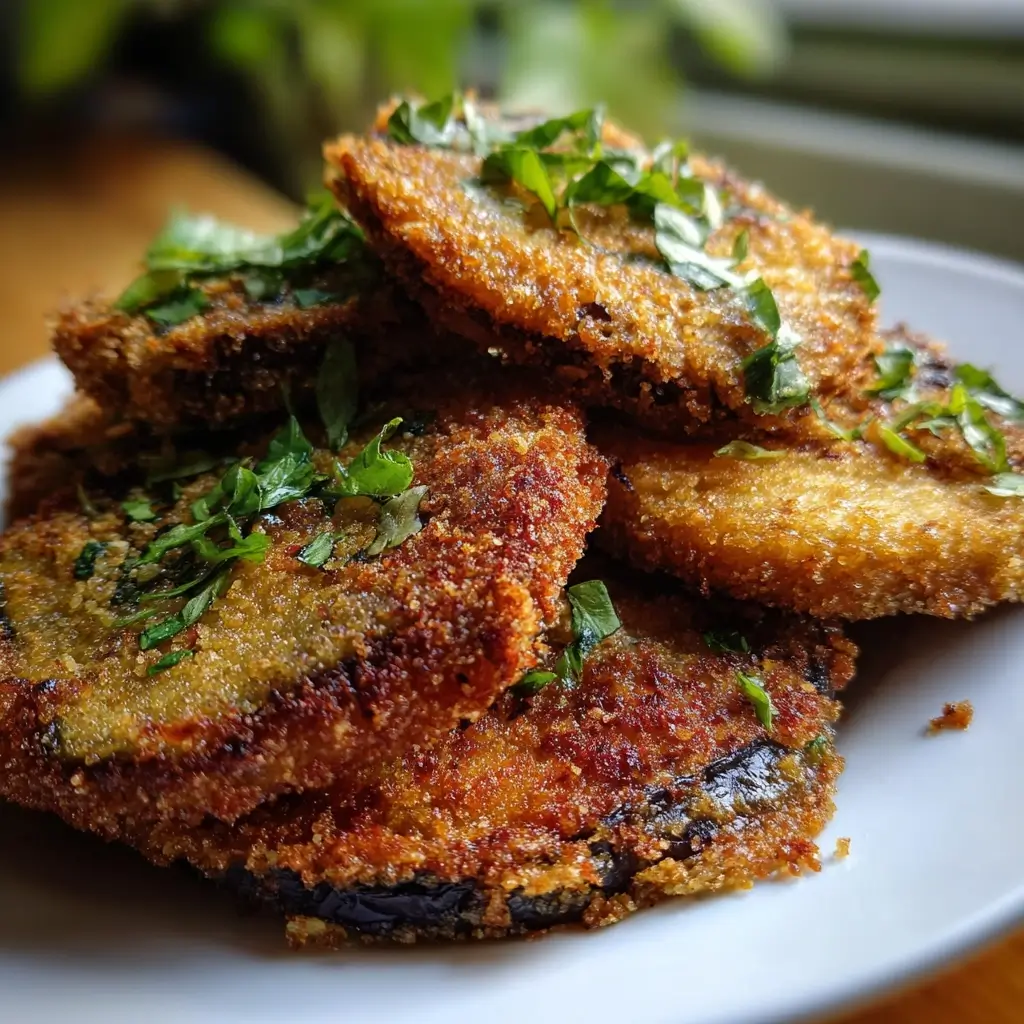
Of all the recipes that have become legendary in my household, the one that consistently sparks the most joy, and frankly, the most surprise, is this one for Crispy Vegetarian Eggplant Cutlets. I’ll never forget the first time I made them. My family, accustomed to more traditional meat-based cutlets, eyed the glistening, purple-skinned vegetable on the counter with a healthy dose of skepticism. I could almost hear their thoughts: “Eggplant? For dinner? As the main event?” But I persisted, driven by the memory of a similar dish I’d had at a small, family-run Italian restaurant years ago. As the cutlets sizzled in the pan, a magical transformation began. The kitchen filled with a nutty, savory aroma that was irresistibly comforting. The sound—that sharp, satisfying crunch as my knife cut through the first piece—turned heads. The initial skepticism melted away with the first bite, replaced by wide-eyed amazement. “This… is eggplant?!” was the unanimous verdict. The exterior was impeccably crispy, a golden-brown shell of seasoned breadcrumbs and parmesan, while the inside was tender, creamy, and succulent, with none of the bitterness sometimes associated with the vegetable. Since that day, these cutlets have become a weekly staple, our go-to for Meatless Mondays, a quick weeknight supper, and even a dish worthy of serving to guests. They are the ultimate culinary chameleon, proving that with the right technique, a humble vegetable can be transformed into a show-stopping, crave-worthy meal that satisfies even the most devoted carnivores.
Ingredients
Here is the simple list of ingredients you will need to create these incredibly satisfying and crispy eggplant cutlets. Each component plays a crucial role in building the layers of flavor and texture that make this dish a standout.
- 1 large globe eggplant (about 1.5 lbs): The star of the show. A large, firm globe eggplant provides wide, steak-like slices perfect for creating substantial cutlets. Look for one with smooth, shiny skin and a fresh green stem.
- 1 tablespoon kosher salt: This is not just for seasoning. The salt is essential for drawing out excess water and bitterness from the eggplant, which is the secret to a creamy interior and a crispy, non-soggy exterior.
- 1 cup all-purpose flour: This creates the first dry layer for the breading to adhere to. It ensures the egg wash sticks perfectly to the eggplant surface.
- 2 large eggs: Beaten to create an egg wash, this acts as the powerful adhesive that binds the crispy breadcrumb coating to the cutlet.
- 1 tablespoon water or milk: A small splash mixed with the eggs helps to thin the wash slightly, allowing for a more even and less heavy coating.
- 2 cups Panko breadcrumbs: The key to an ultra-crispy texture. Panko breadcrumbs are lighter and flakier than traditional breadcrumbs, so they absorb less oil and create a shatteringly crisp crust.
- 1/2 cup grated Parmesan cheese: Mixed with the Panko, Parmesan adds a salty, nutty, and savory depth of flavor (umami) that elevates the cutlets from good to unforgettable. It also aids in browning.
- 1 teaspoon garlic powder: Provides a savory, aromatic baseline of flavor that infuses the entire breading.
- 1 teaspoon dried oregano or Italian seasoning: This adds a classic, herbaceous note that pairs beautifully with the eggplant and Parmesan.
- 1/2 teaspoon black pepper: Freshly ground is best, adding a touch of pungent warmth to balance the richness.
- 1 cup neutral oil for frying (such as canola, vegetable, or avocado oil): A neutral oil with a high smoke point is essential for achieving a golden-brown, crispy fry without burning or imparting unwanted flavors.
Instructions
Follow these detailed steps carefully to ensure your eggplant cutlets are perfectly crispy on the outside and tender on the inside every single time. The process is straightforward but relies on technique for the best results.
- Prepare the Eggplant: Start by washing and drying your eggplant thoroughly. Trim off the top stem and the bottom end. There is no need to peel the eggplant; the skin becomes tender during cooking and helps the cutlets hold their shape. Slice the eggplant crosswise into uniform ½-inch thick rounds. Uniformity is key for even cooking.
- Salt and Sweat the Eggplant: Arrange the eggplant slices in a single layer on a wire rack set over a baking sheet (or on layers of paper towels). Sprinkle both sides of each slice generously with the kosher salt. Let the eggplant sit for at least 30 minutes, or up to an hour. You will see beads of water form on the surface. This process, called “sweating” or “purging,” draws out the eggplant’s natural bitterness and excess moisture, which is the most critical step to prevent soggy cutlets.
- Set Up Your Breading Station: While the eggplant is sweating, prepare your three-stage breading station. You will need three shallow dishes or pie plates.
- Dish 1 (Flour): In the first dish, combine the all-purpose flour with a pinch of salt and pepper.
- Dish 2 (Egg Wash): In the second dish, whisk the two large eggs with the tablespoon of water or milk until smooth and uniform.
- Dish 3 (Panko Mixture): In the third dish, combine the Panko breadcrumbs, grated Parmesan cheese, garlic powder, dried oregano, and ½ teaspoon of black pepper. Mix thoroughly with a fork to ensure all the seasonings are evenly distributed.
- Rinse and Dry the Eggplant: After the eggplant has finished sweating, rinse each slice thoroughly under cold running water to remove all the salt. Pat each slice completely dry with paper towels or a clean kitchen towel. This is another crucial step; the breading will not adhere to wet eggplant, and any excess water will cause the oil to splatter violently during frying.
- Bread the Cutlets: Working one slice at a time, follow this process for a perfect coating:
- First, dredge a dry eggplant slice in the seasoned flour, coating both sides and tapping off any excess. The slice should have a thin, even dusting.
- Next, dip the flour-coated slice into the egg wash, ensuring it is fully submerged and coated on all sides. Allow any excess egg to drip off for a few seconds.
- Finally, place the egg-washed slice into the Panko mixture. Press down gently on the slice to help the breadcrumbs adhere, then flip it over and press again. Ensure the entire surface is generously and evenly coated with the crispy mixture. Place the breaded cutlet on a clean wire rack or baking sheet and repeat with the remaining slices.
- Fry to Golden Perfection: Pour the neutral oil into a large, heavy-bottomed skillet (a cast-iron skillet works wonderfully) to a depth of about ½ inch. Heat the oil over medium-high heat until it reaches about 350°F (175°C). If you don’t have a thermometer, you can test the oil by dropping in a single Panko breadcrumb; if it sizzles vigorously and turns golden brown in about 30 seconds, the oil is ready.
- Cook in Batches: Carefully place a few breaded cutlets into the hot oil in a single layer. Do not overcrowd the pan, as this will lower the oil temperature and cause the cutlets to steam and become greasy rather than fry and become crispy. Fry for about 3-4 minutes per side, or until they are a deep golden brown and impeccably crisp.
- Drain and Season: Using a spatula or tongs, remove the cooked cutlets from the skillet and transfer them to a clean wire rack to drain. Placing them on a wire rack allows air to circulate underneath, keeping the bottom crispy. If you place them on paper towels, the bottom will trap steam and become soggy. Immediately sprinkle the hot cutlets with a tiny pinch of extra salt, if desired. Repeat the frying process with the remaining eggplant slices, adding more oil to the pan if needed and allowing it to come back up to temperature between batches.
Nutrition Facts
This recipe yields approximately 4-6 servings, depending on the size of the eggplant and the intended portion.
- Servings: 4-6
- Calories per serving (approximate): 350-450 kcal
- Rich in Fiber: Eggplant is an excellent source of dietary fiber, which is crucial for digestive health, helps maintain stable blood sugar levels, and contributes to a feeling of fullness.
- Source of Antioxidants: The skin of the eggplant contains an antioxidant called nasunin, which gives it its purple color and helps protect the body’s cells from damage.
- Heart-Healthy Fats: When fried in a healthy oil like avocado or canola oil, this dish provides monounsaturated fats, which are beneficial for cardiovascular health.
- Vegetarian Protein: Thanks to the eggs and Parmesan cheese in the breading, each serving provides a modest amount of protein, making it a more satisfying and complete vegetarian meal.
- Rich in Manganese: Eggplant is a very good source of the mineral manganese, an essential component of enzymes that play a role in bone formation, metabolism, and defending the body against free radicals.
Preparation Time
The total time for this recipe is approximately 1 hour and 15 minutes, but much of that is passive time.
- Active Preparation Time: About 25 minutes (slicing, breading, and frying).
- Passive Preparation Time: About 50 minutes (30-60 minutes for salting the eggplant, plus time for the oil to heat up). This hands-off time is perfect for preparing your side dishes or a dipping sauce.
How to Serve
These versatile Crispy Vegetarian Eggplant Cutlets can be served in a multitude of delicious ways. Here are some of our favorite serving suggestions:
- The Classic Italian-American Way:
- Serve the hot, crispy cutlets immediately with fresh lemon wedges for squeezing over the top. The acidity of the lemon cuts through the richness of the fried coating beautifully.
- Garnish with a generous sprinkle of fresh, chopped parsley or basil for a burst of color and fresh flavor.
- Offer a side of warm marinara sauce for dipping.
- As a Satisfying Main Course:
- Plate two or three cutlets alongside a bed of spaghetti or linguine tossed in a simple garlic and olive oil sauce (aglio e olio).
- Pair them with a hearty, vibrant salad, such as an arugula salad with cherry tomatoes, shaved Parmesan, and a lemon vinaigrette.
- Serve with a side of creamy polenta or roasted potatoes and green beans for a complete and comforting meal.
- In a Delicious Sandwich or Sub:
- Layer the crispy cutlets onto a crusty Italian sub roll or ciabatta bread.
- Top with melted provolone or mozzarella cheese, a generous spoonful of marinara sauce, and perhaps some roasted red peppers or sautéed spinach.
- This creates an incredible “Eggplant Parmesan” style sandwich that is hearty enough to satisfy any appetite.
- As an Appetizer or Party Food:
- Slice the cooked cutlets into smaller strips or wedges.
- Arrange them on a platter with a variety of dipping sauces, such as marinara, pesto aioli, or a creamy garlic-herb dip.
- This makes a fantastic and impressive appetizer for gatherings.
Additional Tips
To master the art of the perfect eggplant cutlet, keep these eight professional tips in mind.
- Don’t You Dare Skip the Salting: This tip is worth repeating because it is the single most important factor between crispy, creamy cutlets and soggy, bitter ones. The salt draws out water via osmosis, concentrating the eggplant’s flavor and ensuring it doesn’t release water into the hot oil, which would prevent a crisp crust from forming.
- Embrace Uniform Thickness: When you slice your eggplant, strive for consistent ½-inch thick rounds. If some slices are too thin, they may overcook and become tough. If they are too thick, the center may not cook through and become tender by the time the exterior is perfectly browned.
- Consider the “Double Dip” for an Armor-Like Crust: For those who crave an even thicker, crunchier coating, try a double-dipping technique. After the first full breading cycle (flour, egg, Panko), dip the breaded cutlet back into the egg wash and then once more into the Panko mixture. This creates an extra-sturdy, super-crispy shell.
- Season Every Single Layer: Flavor is built in layers. Don’t rely solely on the seasoning in the Panko mixture. Adding a small pinch of salt and pepper to the flour and even a tiny dash in the egg wash ensures that every single bite is flavorful from the inside out.
- Oil Temperature Is Not a Suggestion, It’s a Rule: Frying is a science. If your oil is too cold, the breading will absorb it like a sponge, leading to a greasy, heavy cutlet. If the oil is too hot, the breading will burn before the eggplant inside has a chance to become tender and creamy. Use a thermometer for precision or use the breadcrumb test before every batch.
- Give Them Space in the Pan: Never overcrowd your skillet. Frying requires high, direct heat. When you add too many cutlets at once, the overall temperature of the oil plummets. The cutlets will end up steaming in their own moisture and the oil, resulting in a pale, soggy mess instead of a golden, crispy treasure. Fry in batches for guaranteed success.
- The Wire Rack is Your Best Friend: Once the cutlets are fried, resist the urge to place them on a plate of paper towels. While paper towels absorb surface oil, they also trap steam underneath the cutlet, immediately turning that hard-earned crispy bottom layer soft. A wire rack allows air to circulate all around the cutlet, keeping it crispy on all sides as it cools and drains.
- Plan for Make-Ahead and Freezing: You can bread the cutlets ahead of time. Simply arrange the breaded, uncooked cutlets in a single layer on a baking sheet, cover with plastic wrap, and refrigerate for up to 4 hours before frying. For longer storage, freeze the uncooked breaded cutlets on a baking sheet until solid, then transfer them to a freezer-safe bag. You can fry them directly from frozen, just add a few extra minutes to the cooking time.
FAQ Section
Here are answers to some of the most frequently asked questions about making Crispy Vegetarian Eggplant Cutlets.
1. Why did my eggplant cutlets turn out soggy and greasy?
This is the most common issue and it usually comes down to three factors. First, you may have skipped or rushed the salting step, leaving too much moisture in the eggplant. Second, your oil was likely not hot enough when you added the cutlets, causing them to absorb oil instead of frying in it. Third, you may have overcrowded the pan, which lowers the oil temperature and steams the cutlets. Always ensure the eggplant is well-sweated and patted dry, the oil is at 350°F (175°C), and you fry in small batches.
2. Can I bake these eggplant cutlets instead of frying them?
Yes, you can absolutely bake them for a lighter version! Preheat your oven to 425°F (220°C). Prepare the cutlets as directed through the breading step. Place the breaded cutlets in a single layer on a wire rack set inside a baking sheet. Spray the tops generously with cooking spray. Bake for 15 minutes, then carefully flip the cutlets, spray the other side, and bake for another 10-15 minutes, or until golden brown and crisp. They won’t be quite as deeply browned or rich as the fried version, but they will be delicious.
3. Is it possible to make these in an air fryer?
Yes, an air fryer is a fantastic option! Preheat your air fryer to 400°F (200°C). Prepare the cutlets as directed. Spray the air fryer basket with cooking spray, then place the breaded cutlets in a single layer (you’ll need to work in batches). Spray the tops of the cutlets with cooking spray. Air fry for 8-10 minutes, then flip, spray the other side, and air fry for another 5-7 minutes, or until golden, crispy, and cooked through.
4. What is the best type of eggplant to use for cutlets?
The large, dark purple Globe eggplant is the most common and works perfectly for this recipe due to its size and meaty texture. Italian eggplants, which are slightly smaller and more slender, are also an excellent choice. Avoid using smaller varieties like Japanese or Thai eggplants, as their size and texture are not ideal for creating large, steak-like cutlets.
5. Do I really need to peel the eggplant?
No, and it’s generally better if you don’t. The skin of the eggplant is completely edible, contains beneficial nutrients and fiber, and becomes quite tender when cooked. Most importantly, it provides structural integrity that helps the cutlet hold its round shape during the frying process.
6. How do I store and reheat leftover eggplant cutlets?
Store any leftover cutlets in an airtight container in the refrigerator for up to 3 days. The breading will soften upon refrigeration. To bring back the crispiness, the best way to reheat them is in an oven or air fryer. Preheat your oven or air fryer to 375°F (190°C) and heat the cutlets for 5-10 minutes, until they are hot and the crust has crisped up again. Avoid reheating in the microwave, as this will make them soft and chewy.
7. Can I make this recipe gluten-free?
Certainly! To make gluten-free eggplant cutlets, simply make two substitutions. In the first breading dish, use a high-quality all-purpose gluten-free flour blend instead of regular flour. In the third dish, use gluten-free Panko breadcrumbs (widely available in most supermarkets) instead of regular Panko. The rest of the recipe remains the same.
8. My breading keeps falling off when I fry the cutlets. What am I doing wrong?
This frustrating problem usually stems from a breakdown in the breading process. Here are the likely culprits: your eggplant slices were not patted completely dry after rinsing; the flour coating was too thick (always tap off the excess); you didn’t let the excess egg wash drip off before moving to the Panko; or you are being too rough when flipping them in the pan. Ensure a dry surface, a thin flour coat, and a good egg “glue” layer for a breading that stays put.