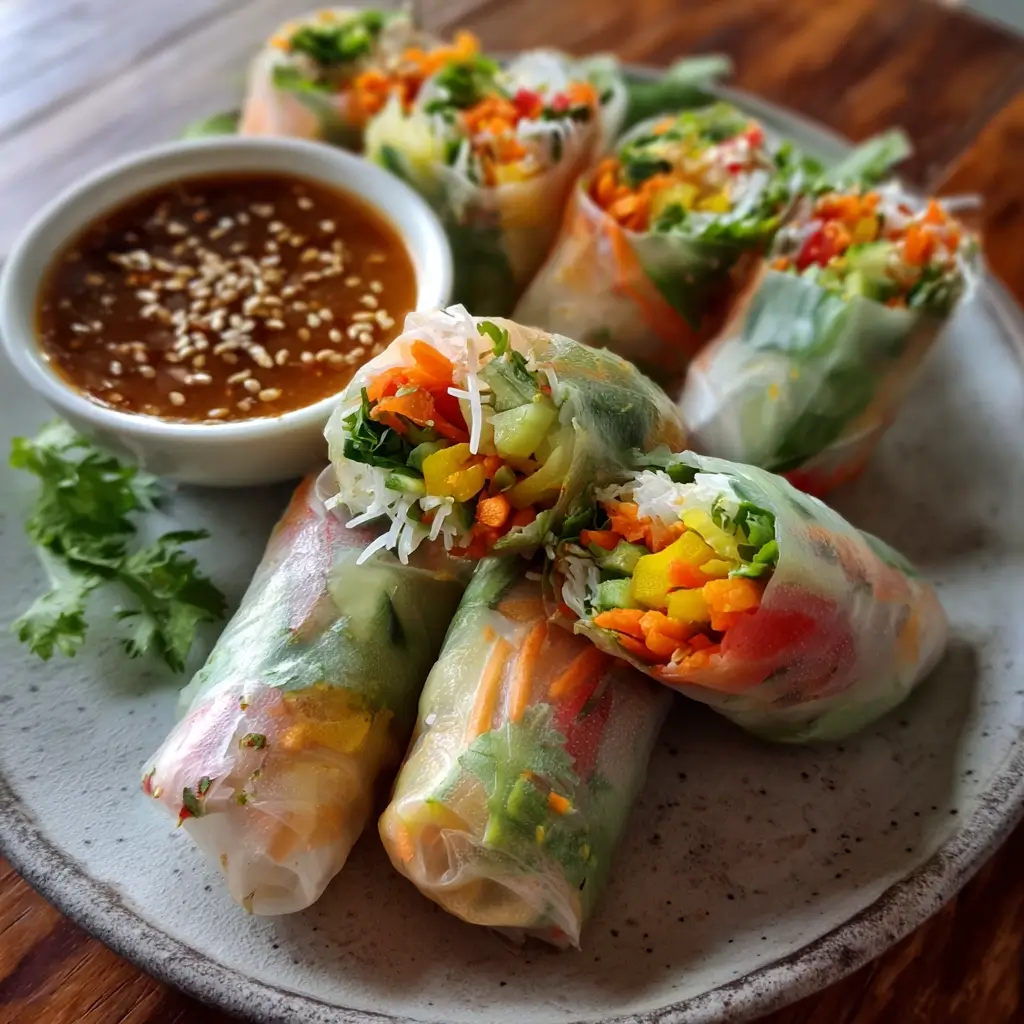
Of all the recipes that have become a staple in my kitchen, these Crunchy Veggie Rice Paper Rolls hold a special place. I first made them on a sweltering summer afternoon, looking for something light, refreshing, and, most importantly, something that wouldn’t require me to turn on the oven. I laid out a vibrant spread of julienned vegetables, fresh herbs, and a bowl of warm water, and my family gathered around the table, a little skeptical at first. But as we got the hang of dipping the delicate wrappers and artfully arranging the colorful fillings, it turned into a fun, interactive meal. The first bite was a revelation—the soft, chewy rice paper giving way to a symphony of crisp vegetables, fragrant herbs, and the unbelievably savory-sweet creaminess of the homemade peanut dipping sauce. They were an instant hit. Now, “roll night” is a regular occurrence, a meal my kids actively request, and my go-to dish for everything from quick weeknight dinners to impressive appetizers for guests. They are a testament to the fact that healthy food can be incredibly delicious, beautiful, and a joy to create and share.
Ingredients
For the Crunchy Veggie Rolls:
- Round Rice Paper Wrappers (12 sheets): These are the delicate, translucent sheets that will encase your vibrant fillings. Look for them in the international aisle of your supermarket.
- Vermicelli Rice Noodles (4 ounces): These thin, delicate noodles add a soft, satisfying texture and substance to the rolls, perfectly balancing the crunch of the vegetables.
- Large Carrots (2, peeled and julienned): Their natural sweetness and bright orange color add both flavor and visual appeal, along with a fantastic crunch.
- Cucumber (1, julienned): Provides a cool, refreshing crunch and a burst of hydration, cutting through the richness of the sauce.
- Red Bell Pepper (1, julienned): Offers a sweet, slightly fruity crispness and a stunning dash of red to the rolls’ jewel-toned interior.
- Butter Lettuce or Romaine (6 leaves, torn): Creates a soft bed for the other ingredients and helps prevent the sharper veggies from poking through the delicate rice paper.
- Fresh Mint (1 cup, leaves picked): This is a non-negotiable for authentic flavor, providing bright, cooling notes that elevate the entire experience.
- Fresh Cilantro (1 cup, leaves picked): Adds a zesty, citrusy freshness that pairs beautifully with the other vegetables and the peanut sauce.
- Avocado (1, thinly sliced): Lends a creamy, rich texture that contrasts wonderfully with the crisp components.
For the Creamy Peanut Dipping Sauce:
- Creamy Peanut Butter (1/2 cup): The star of the sauce, providing a rich, nutty, and savory base.
- Soy Sauce or Tamari (3 tablespoons): Adds a deep, salty, umami flavor. Use tamari for a gluten-free option.
- Maple Syrup or Honey (2 tablespoons): Balances the saltiness with a touch of sweetness, creating a more complex flavor profile.
- Rice Vinegar (1 tablespoon): Provides a mild acidity that brightens up the sauce and cuts through the richness of the peanut butter.
- Toasted Sesame Oil (1 teaspoon): A little goes a long way to add a distinctive, nutty, and aromatic depth.
- Fresh Ginger (1 teaspoon, grated): Offers a warm, pungent spice that invigorates the sauce.
- Garlic (1 clove, minced): Lends a sharp, savory kick.
- Hot Water (3-5 tablespoons): Used to thin the sauce to your desired consistency, making it perfectly dippable.
- Optional Garnish: Crushed peanuts and a pinch of red pepper flakes for extra texture and heat.
Instructions
Step 1: Prepare Your Ingredients (Mise en Place)
Preparation is the key to a smooth and enjoyable rolling process. Begin by cooking the vermicelli rice noodles according to the package directions. This usually involves soaking them in hot water for a few minutes until tender. Once cooked, drain them thoroughly and rinse with cold water to stop the cooking process and prevent them from sticking. Set them aside. Next, wash and prepare all your vegetables. Using a sharp knife or a mandoline, julienne the carrots, cucumber, and red bell pepper into thin, uniform matchsticks about 2-3 inches long. This uniform size not only looks beautiful but also makes rolling much easier. Wash and dry the lettuce leaves and fresh herbs. Pick the mint and cilantro leaves from their stems. Thinly slice the avocado. Arrange all your prepared ingredients on a large platter or in separate bowls, creating an organized workstation.
Step 2: Whisk Together the Peanut Dipping Sauce
In a medium-sized bowl, combine the creamy peanut butter, soy sauce (or tamari), maple syrup, rice vinegar, toasted sesame oil, grated ginger, and minced garlic. The mixture will be very thick at this point. Begin by adding 3 tablespoons of hot water and whisk vigorously. The sauce may seem to separate or look clumpy at first, but keep whisking, and it will emulsify into a smooth, creamy consistency. Continue to add more hot water, one tablespoon at a time, until you reach your desired level of thickness. It should be thin enough to dip a roll into easily but thick enough to coat it nicely. Taste and adjust the seasonings if needed—more soy sauce for saltiness, more maple syrup for sweetness, or more rice vinegar for tang. Transfer to a serving bowl and garnish with crushed peanuts and red pepper flakes if you wish.
Step 3: Set Up Your Rolling Station
This is where the fun begins! Find a clean, flat work surface like a large cutting board or countertop. Fill a large, shallow dish (a pie plate or a large skillet works perfectly) with warm water. The water should be warm to the touch, not hot, as overly hot water will make the rice paper too gummy and prone to tearing. Place your dish of water, your platter of prepared fillings, and a clean plate or tray for the finished rolls all within easy reach.
Step 4: Soften the Rice Paper
Take one sheet of rice paper and fully submerge it in the warm water. Let it soak for about 15-25 seconds. You are looking for it to become pliable and flexible, but not completely limp and mushy. It will continue to soften even after you take it out of the water. A common mistake is oversoaking, which leads to tearing. Carefully lift the softened wrapper from the water, letting any excess water drip off, and lay it flat on your work surface.
Step 5: Fill and Roll
Imagine the rice paper wrapper as a clock face. In the lower third of the wrapper (around the 6 o’clock position), place a piece of lettuce first. This acts as a protective barrier for the other ingredients. On top of the lettuce, layer a small handful of the vermicelli noodles, a few matchsticks of carrot, cucumber, and bell pepper, a few slices of avocado, and a generous sprinkle of fresh mint and cilantro. Be careful not to overfill the roll, as this is another common cause of tearing. A good rule is to leave about 2 inches of empty space on either side.
Now, begin to roll. Pick up the bottom edge of the rice paper (the edge closest to you) and pull it up and over the filling, tucking it in snugly, much like you would a burrito. Once you have one tight roll, fold in the left and right sides of the wrapper over the filling. This seals the ends. Continue to roll the entire package upwards, away from you, keeping the roll tight and compact until it’s fully enclosed.
Step 6: Repeat and Serve
Place the finished roll on your clean plate and cover it with a slightly damp paper towel to prevent it from drying out while you work on the rest. Repeat the process of soaking, filling, and rolling with the remaining rice paper wrappers and fillings until you have a beautiful platter of fresh, crunchy veggie rolls. Serve them immediately with the delicious peanut dipping sauce on the side.
Nutrition Facts
- Servings: 6 (2 rolls per serving)
- Calories per serving: Approximately 350 kcal (including 2 tablespoons of sauce)
- Fiber (High): Packed with vegetables, these rolls are an excellent source of dietary fiber, which is crucial for digestive health, blood sugar regulation, and promoting a feeling of fullness.
- Healthy Fats (Source of): The avocado and peanut butter provide heart-healthy monounsaturated fats, which can help lower bad cholesterol levels and are essential for brain function.
- Vitamins A & C (Rich in): Thanks to the colorful array of carrots, red bell peppers, and fresh greens, these rolls deliver a powerful dose of antioxidants like Vitamin A (for vision and immune function) and Vitamin C (for skin health and iron absorption).
- Plant-Based Protein (Good Source): The peanut butter in the sauce and the noodles contribute to the protein content, making this a more satisfying and muscle-supporting meal than you might expect.
- Low in Saturated Fat: As a naturally plant-based recipe, these rolls are very low in unhealthy saturated fats, making them a heart-conscious choice for a light meal or appetizer.
Preparation Time
The total time to bring these beautiful rolls to the table is approximately 40 minutes. This can be broken down into about 25-30 minutes of preparation time—which includes cooking the noodles and chopping all the vegetables—and about 10-15 minutes of assembly and rolling time. The vegetable prep is the most time-consuming part, but it can easily be done ahead of time to make assembly even quicker.
How to Serve
These Crunchy Veggie Rice Paper Rolls are as versatile as they are delicious. Here are some of the best ways to serve and enjoy them:
- As a Light and Healthy Lunch: A serving of two or three rolls with a generous side of peanut sauce makes for a perfect, guilt-free lunch that won’t leave you feeling sluggish. It’s easy to pack for work or school (see tips on how to prevent sticking).
- As an Elegant Appetizer: Arrange the rolls on a large white platter, either whole or sliced in half on a bias to show off the beautiful, colorful fillings. Place a bowl of the peanut sauce in the center for a stunning appetizer that is sure to impress guests at a dinner party or gathering.
- On a Party Platter: For a larger crowd, create a “build-your-own” rice paper roll bar. Lay out all the prepared fillings in separate bowls, provide the warm water station, and let guests have fun creating their own custom rolls. It’s an interactive and memorable dining experience.
- As a Post-Workout Snack: They are a great way to refuel after exercise, providing a good balance of complex carbohydrates from the noodles and rice paper, protein from the sauce, and replenishing vitamins from the fresh vegetables.
- With Multiple Dipping Sauces: While the peanut sauce is classic, you can offer a variety to please every palate. Consider serving them with:
- A Vietnamese Nuoc Cham (a sweet, sour, and spicy fish-sauce-based dip).
- A simple sweet chili sauce.
- A hoisin-based dipping sauce.
Additional Tips
- Don’t Oversoak the Rice Paper: This is the most crucial tip. A brief dip of 15-25 seconds in warm water is all you need. The paper will feel slightly stiff when you pull it out, but it will continue to absorb water and soften as you add your fillings. If it feels like a wet noodle, it’s over-soaked and will likely tear.
- The Art of the Double Wrap: If you are new to making rice paper rolls or find that yours are tearing easily, don’t be afraid to double wrap them. Simply soak two wrappers at once, lay them on top of each other (slightly offset), and then fill and roll as one. This creates a much sturdier roll, perfect for packing in a lunchbox.
- Mise en Place is Your Best Friend: The French term for having all your ingredients prepped and ready to go is essential here. The rolling process is quick, so you won’t have time to stop and chop more carrots. Have everything julienned, picked, and arranged before you soak your first wrapper.
- Play with Proteins: While these rolls are fantastic as-is, they are a perfect canvas for added protein. Consider adding strips of firm baked tofu, cooked shrimp, or shredded poached chicken or beef for a more substantial and filling meal.
- Go Wild with Herbs: Don’t just stop at mint and cilantro! The fresh herbs are what truly make these rolls sing. Experiment with adding Thai basil, which has a wonderful anise-like flavor, or even some fresh dill for a surprising and delicious twist.
- Make Ahead…With a Catch: You can make these rolls a few hours ahead of time. To prevent them from sticking to each other and drying out, wrap each roll individually in plastic wrap. Store them in a single layer in an airtight container in the refrigerator. They are best enjoyed the same day, as the rice paper can become tough overnight.
- Don’t Skimp on the Sauce: The dipping sauce is half the experience. Feel free to customize it to your liking. If you love spice, add a squirt of sriracha or some finely chopped Thai chili. If you prefer it sweeter, add a little more maple syrup. The sauce brings all the fresh flavors together.
- Get Creative with the Crunch: The “crunchy” in the name is key! You can enhance this by adding other textural elements. Consider sprinkling in some chopped roasted peanuts, sesame seeds, or even crispy fried shallots or onions inside the roll for an extra layer of crunch and flavor.
FAQ Section
1. Why do my rice paper rolls always tear when I roll them?
Tearing is the most common frustration and it usually stems from two issues: oversoaking the rice paper or overfilling the roll. Make sure you only dip the wrapper in warm water for 15-25 seconds until it’s just pliable. It will continue to soften on your work surface. For filling, be modest. A small amount of each ingredient is all you need. Also, ensure there are no sharp-edged ingredients (like a pointy piece of carrot) sticking out that could puncture the delicate skin. Using a lettuce leaf as the first layer helps create a protective barrier.
2. Can I make these veggie rolls ahead of time for a party?
Yes, you can, but with specific instructions for storage. You can prepare them up to 4-5 hours in advance. The key to preventing them from becoming a sticky, clumped mess is to store them correctly. Wrap each finished roll individually and tightly in plastic wrap. This prevents air from getting in (which dries them out) and stops them from touching and sticking to each other. Arrange the individually wrapped rolls in a single layer in an airtight container and refrigerate. Do not prepare them more than a day in advance, as the wrappers will become tough.
3. Are rice paper rolls actually healthy?
Absolutely! They are one of the healthiest and freshest meal options around. They are naturally low in fat and calories, and because they are packed with raw vegetables, they are incredibly nutrient-dense. You get a huge dose of vitamins, minerals, and fiber. The meal is well-balanced with carbohydrates from the rice paper and noodles, and healthy fats and protein from the avocado and peanut sauce. They are a fantastic way to “eat the rainbow.”
4. What other vegetables or fillings can I use?
The possibilities are nearly endless! This recipe is a perfect template for customization. You can use purple cabbage for color and crunch, bean sprouts for a traditional texture, edamame for a pop of green and protein, or even fruits like thin slices of mango for a sweet and savory combination. Any vegetable that can be thinly sliced or julienned will work well.
5. My peanut sauce is too thick or too thin. How can I fix it?
This is an easy fix! If your sauce is too thick, simply whisk in more warm water, one teaspoon at a time, until it reaches your desired consistency. If you’ve accidentally made it too thin, you can thicken it by whisking in another tablespoon of peanut butter. You can also thicken it by adding a small amount of cornstarch slurry (cornstarch mixed with cold water) and gently heating it, but simply adding more peanut butter is usually the easiest method.
6. Are these crunchy veggie rice paper rolls gluten-free?
Yes, they can be easily made 100% gluten-free. Rice paper wrappers, vermicelli rice noodles, and all the vegetables are naturally gluten-free. The only ingredient you need to double-check is the soy sauce in the dipping sauce. To ensure the entire meal is gluten-free, simply substitute the soy sauce with tamari or a certified gluten-free soy sauce.
7. How should I store leftover uncooked rice paper wrappers?
Once you open a package of rice paper wrappers, you need to protect them from moisture and air. The best way to store them is to place the remaining stack back in its original plastic bag or a resealable zip-top bag. Squeeze out as much air as possible before sealing. Store the bag in a cool, dry place like your pantry. Do not store them in the refrigerator, as the condensation can make them stick together.
8. What is the difference between these fresh rice paper rolls and fried spring rolls?
This is a common point of confusion. These fresh rolls (often called summer rolls or salad rolls) are served cold or at room temperature. Their wrapper is a thin, translucent rice paper sheet that is softened in water and not cooked. Fried spring rolls (or egg rolls) use a different type of wrapper, typically made from wheat flour, which is filled and then deep-fried until golden and crispy. While both are delicious, fresh rice paper rolls are a much lighter, healthier, and more refreshing option.

Crunchy Veggie Rice Paper Rolls
Ingredients
For the Crunchy Veggie Rolls:
- Round Rice Paper Wrappers (12 sheets): These are the delicate, translucent sheets that will encase your vibrant fillings. Look for them in the international aisle of your supermarket.
- Vermicelli Rice Noodles (4 ounces): These thin, delicate noodles add a soft, satisfying texture and substance to the rolls, perfectly balancing the crunch of the vegetables.
- Large Carrots (2, peeled and julienned): Their natural sweetness and bright orange color add both flavor and visual appeal, along with a fantastic crunch.
- Cucumber (1, julienned): Provides a cool, refreshing crunch and a burst of hydration, cutting through the richness of the sauce.
- Red Bell Pepper (1, julienned): Offers a sweet, slightly fruity crispness and a stunning dash of red to the rolls’ jewel-toned interior.
- Butter Lettuce or Romaine (6 leaves, torn): Creates a soft bed for the other ingredients and helps prevent the sharper veggies from poking through the delicate rice paper.
- Fresh Mint (1 cup, leaves picked): This is a non-negotiable for authentic flavor, providing bright, cooling notes that elevate the entire experience.
- Fresh Cilantro (1 cup, leaves picked): Adds a zesty, citrusy freshness that pairs beautifully with the other vegetables and the peanut sauce.
- Avocado (1, thinly sliced): Lends a creamy, rich texture that contrasts wonderfully with the crisp components.
For the Creamy Peanut Dipping Sauce:
- Creamy Peanut Butter (1/2 cup): The star of the sauce, providing a rich, nutty, and savory base.
- Soy Sauce or Tamari (3 tablespoons): Adds a deep, salty, umami flavor. Use tamari for a gluten-free option.
- Maple Syrup or Honey (2 tablespoons): Balances the saltiness with a touch of sweetness, creating a more complex flavor profile.
- Rice Vinegar (1 tablespoon): Provides a mild acidity that brightens up the sauce and cuts through the richness of the peanut butter.
- Toasted Sesame Oil (1 teaspoon): A little goes a long way to add a distinctive, nutty, and aromatic depth.
- Fresh Ginger (1 teaspoon, grated): Offers a warm, pungent spice that invigorates the sauce.
- Garlic (1 clove, minced): Lends a sharp, savory kick.
- Hot Water (3-5 tablespoons): Used to thin the sauce to your desired consistency, making it perfectly dippable.
- Optional Garnish: Crushed peanuts and a pinch of red pepper flakes for extra texture and heat.
Instructions
Preparation is the key to a smooth and enjoyable rolling process. Begin by cooking the vermicelli rice noodles according to the package directions. This usually involves soaking them in hot water for a few minutes until tender. Once cooked, drain them thoroughly and rinse with cold water to stop the cooking process and prevent them from sticking. Set them aside. Next, wash and prepare all your vegetables. Using a sharp knife or a mandoline, julienne the carrots, cucumber, and red bell pepper into thin, uniform matchsticks about 2-3 inches long. This uniform size not only looks beautiful but also makes rolling much easier. Wash and dry the lettuce leaves and fresh herbs. Pick the mint and cilantro leaves from their stems. Thinly slice the avocado. Arrange all your prepared ingredients on a large platter or in separate bowls, creating an organized workstation.
In a medium-sized bowl, combine the creamy peanut butter, soy sauce (or tamari), maple syrup, rice vinegar, toasted sesame oil, grated ginger, and minced garlic. The mixture will be very thick at this point. Begin by adding 3 tablespoons of hot water and whisk vigorously. The sauce may seem to separate or look clumpy at first, but keep whisking, and it will emulsify into a smooth, creamy consistency. Continue to add more hot water, one tablespoon at a time, until you reach your desired level of thickness. It should be thin enough to dip a roll into easily but thick enough to coat it nicely. Taste and adjust the seasonings if needed—more soy sauce for saltiness, more maple syrup for sweetness, or more rice vinegar for tang. Transfer to a serving bowl and garnish with crushed peanuts and red pepper flakes if you wish.
This is where the fun begins! Find a clean, flat work surface like a large cutting board or countertop. Fill a large, shallow dish (a pie plate or a large skillet works perfectly) with warm water. The water should be warm to the touch, not hot, as overly hot water will make the rice paper too gummy and prone to tearing. Place your dish of water, your platter of prepared fillings, and a clean plate or tray for the finished rolls all within easy reach.
Take one sheet of rice paper and fully submerge it in the warm water. Let it soak for about 15-25 seconds. You are looking for it to become pliable and flexible, but not completely limp and mushy. It will continue to soften even after you take it out of the water. A common mistake is oversoaking, which leads to tearing. Carefully lift the softened wrapper from the water, letting any excess water drip off, and lay it flat on your work surface.
Imagine the rice paper wrapper as a clock face. In the lower third of the wrapper (around the 6 o’clock position), place a piece of lettuce first. This acts as a protective barrier for the other ingredients. On top of the lettuce, layer a small handful of the vermicelli noodles, a few matchsticks of carrot, cucumber, and bell pepper, a few slices of avocado, and a generous sprinkle of fresh mint and cilantro. Be careful not to overfill the roll, as this is another common cause of tearing. A good rule is to leave about 2 inches of empty space on either side.
Now, begin to roll. Pick up the bottom edge of the rice paper (the edge closest to you) and pull it up and over the filling, tucking it in snugly, much like you would a burrito. Once you have one tight roll, fold in the left and right sides of the wrapper over the filling. This seals the ends. Continue to roll the entire package upwards, away from you, keeping the roll tight and compact until it’s fully enclosed.
Place the finished roll on your clean plate and cover it with a slightly damp paper towel to prevent it from drying out while you work on the rest. Repeat the process of soaking, filling, and rolling with the remaining rice paper wrappers and fillings until you have a beautiful platter of fresh, crunchy veggie rolls. Serve them immediately with the delicious peanut dipping sauce on the side.
Nutrition
- Serving Size: one normal portion
- Calories: 350