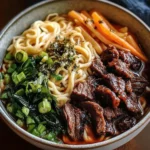
Ingredients
- Ramen Noodles: The foundation of our bowl, choose your favorite type – dried or fresh, wavy or straight. They provide that essential chewy texture.
- Beef Broth: The soul of the ramen, a rich beef broth forms the flavorful base. Opt for low sodium to control salt levels.
- Soy Sauce: Adds umami and depth to the broth, enhancing the savory notes. Low sodium soy sauce is recommended.
- Sesame Oil: A touch of toasted sesame oil brings a nutty aroma and flavor, crucial for authentic ramen taste.
- Garlic: Fresh garlic, minced or pressed, infuses the broth and beef with its pungent and savory goodness.
- Fresh Herbs (Parsley, Thyme, Rosemary): A blend of fresh parsley, thyme, and rosemary creates a fragrant and herbaceous dimension, elevating the beef and broth.
- Ginger: Fresh ginger, grated or minced, adds a warm, spicy, and slightly sweet note, balancing the richness of the beef.
- Green Onions: Used both in the broth and as a garnish, green onions provide a mild oniony flavor and a pop of freshness.
- Shiitake Mushrooms (Dried or Fresh): Dried shiitake mushrooms, rehydrated, impart a deep umami flavor to the broth, while fresh ones offer a meaty texture.
- Eggs: Soft boiled or ramen eggs add creaminess and protein, a classic ramen topping.
- Baby Bok Choy or Spinach: Leafy greens add a touch of freshness, vitamins, and a slight bitterness that complements the richness of the broth.
- Optional Toppings: Consider adding other toppings like sliced carrots, corn kernels, bamboo shoots, nori seaweed, or chili oil for extra flavor and customization.
Instructions
- Prepare the Broth Foundation: Begin by building the flavorful base of your ramen. In a large pot or Dutch oven, combine the beef broth, soy sauce, and sesame oil. Bring this mixture to a simmer over medium heat. This allows the flavors to meld and deepen.
- Infuse with Garlic and Ginger: Now, it’s time to infuse the broth with aromatic goodness. Add the minced garlic and grated ginger to the simmering broth. Let this simmer gently for about 10-15 minutes. This process allows the garlic and ginger to fully release their flavors into the broth, creating a fragrant and complex base.
- Herbaceous Harmony: Introduce the fresh herbs to the broth. Tie together sprigs of fresh parsley, thyme, and rosemary with kitchen twine to create a herb bouquet. Add this bouquet to the simmering broth. Simmer for another 15-20 minutes. The herbs will gently infuse their aromatic oils into the broth, creating a signature garlic herb flavor profile. After simmering, remove and discard the herb bouquet.
- Mushroom Magic (If Using Dried): If using dried shiitake mushrooms, rehydrate them according to package instructions. Typically, this involves soaking them in hot water for about 20-30 minutes until they are softened. Once rehydrated, remove the stems (which can be tough) and slice the caps. Add the sliced shiitake mushrooms (rehydrated or fresh) to the broth. Simmer for another 10 minutes to allow the mushrooms to soften and release their earthy umami flavor into the broth.
- Noodle Nirvana: While the broth simmers, prepare your ramen noodles according to package directions. Generally, this involves boiling them in a separate pot of water until they are just cooked through and slightly al dente. Be careful not to overcook them, as they will continue to cook slightly in the hot broth. Drain the noodles thoroughly once cooked.
- Egg-cellent Addition (Optional): If you desire soft boiled or ramen eggs, now is the time to prepare them. For soft boiled eggs, gently lower eggs into boiling water and cook for 6-7 minutes. Immediately transfer to an ice bath to stop cooking. Peel carefully. For ramen eggs (Ajitama), soft boil eggs, then marinate in a mixture of soy sauce, mirin, and sake (or water) for at least a few hours or overnight for deeper flavor and color.
- Vegetable Vitality: Add your chosen leafy greens – baby bok choy or spinach – to the simmering broth in the last few minutes of cooking. They will wilt quickly in the hot broth. Cook just until they are tender-crisp and vibrant green, retaining some texture and freshness.
- Assemble Your Ramen Bowls: Divide the cooked ramen noodles evenly among bowls. Ladle the hot garlic herb broth over the noodles, ensuring each bowl gets a generous portion of broth and mushrooms.
- Beefy (or Vegetarian) Bliss: If you are using beef (not mentioned in ingredients as per instructions, but keeping title consistency): Thinly slice cooked beef (such as steak or leftover roast beef). Arrange slices of beef artfully on top of the ramen in each bowl. For a vegetarian version (as ingredient list suggests): Consider adding cooked lentils or pan-fried tofu or tempeh for a protein boost and texture. Alternatively, simply enjoy the rich broth and mushroom flavors for a satisfying vegetarian bowl.
- Garnish and Glory: Garnish each bowl generously with sliced green onions. If using, add soft boiled or ramen egg halves to each bowl. Consider adding other optional toppings like sliced carrots, corn kernels, bamboo shoots, nori seaweed, or a drizzle of chili oil for an extra layer of flavor and visual appeal.
- Serve and Savor: Serve your Garlic Herb Beef Ramen Bowls immediately while they are hot and the noodles are perfectly cooked. Encourage everyone to slurp and enjoy the symphony of flavors and textures you’ve created!
Nutrition
- Serving Size: one normal portion
- Calories: 450
- Protein: 18g