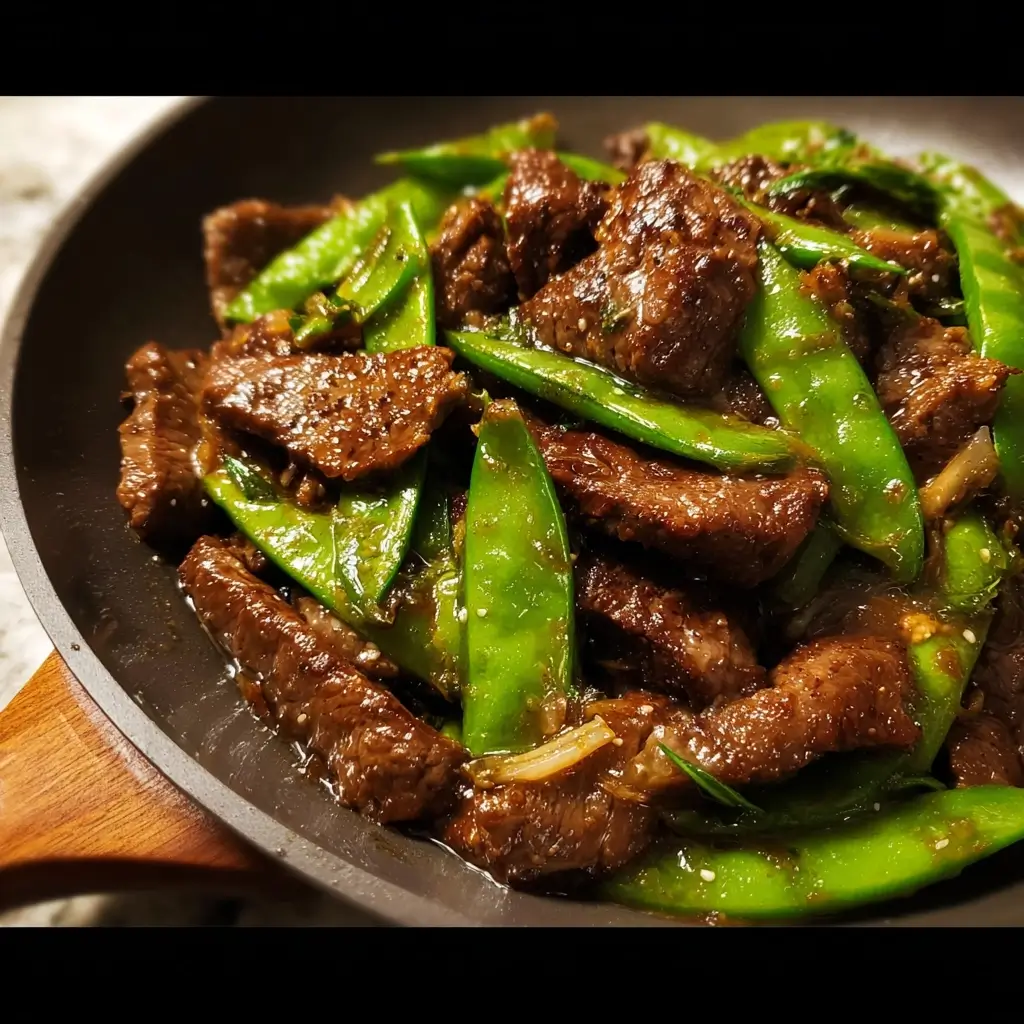
Of all the recipes that have become staples in my kitchen, this Ginger Garlic Beef and Snap Peas stir-fry holds a special place. I remember the first time I made it on a frantic Tuesday night. The house was chaotic, the kids were hungry, and I needed something that was fast, flavorful, and felt a little more special than our usual go-to meals. The moment the ginger, garlic, and sesame oil hit the hot pan, the entire atmosphere in the house changed. That intoxicating, savory aroma filled every room, and suddenly, everyone was quiet, drawn to the kitchen by the promise of what was to come. When I served it, the reaction was immediate. My husband, who is usually my toughest critic, took one bite and declared it “better than takeout.” The kids, who often turn their noses up at green vegetables, were happily crunching on the sweet, vibrant snap peas. The beef was incredibly tender, coated in a glossy, savory-sweet sauce that clung to every grain of rice. It was a resounding success, a culinary victory on a night when I desperately needed one. Since then, this dish has become our go-to for celebrating small wins, for comforting on tough days, and for those moments when we just crave something unequivocally delicious. It’s a recipe that proves you don’t need hours in the kitchen to create a meal that feels both wholesome and incredibly satisfying.
Ingredients
- For the Beef and Marinade:
- 1.5 lbs Flank Steak or Sirloin Steak: Sliced thinly against the grain. Using a quality cut ensures the beef remains tender and juicy.
- 1 Tablespoon Cornstarch: This is the secret to creating a velvety coating on the beef and helps to thicken the final sauce.
- 1 Tablespoon Low-Sodium Soy Sauce: Begins the marination process, adding a foundational savory flavor.
- 1 Teaspoon Sesame Oil: Adds a nutty, aromatic depth to the marinade.
- For the Stir-Fry Sauce:
- 1/2 Cup Low-Sodium Beef or Chicken Broth: Forms the liquid base of our sauce, providing a rich, savory body.
- 1/4 Cup Low-Sodium Soy Sauce: The primary source of salty, umami flavor. Using low-sodium gives you better control over the final taste.
- 2 Tablespoons Brown Sugar: Balances the saltiness with a touch of molasses-rich sweetness, helping the sauce caramelize.
- 1 Tablespoon Rice Vinegar: Adds a bright, acidic note that cuts through the richness and balances the flavors.
- 1 Tablespoon Sesame Oil: Reinforces the nutty aroma and adds a glossy finish to the sauce.
- 1 Teaspoon Cornstarch: The thickening agent that will transform the liquid into a luscious, clinging sauce.
- For the Stir-Fry Assembly:
- 2 Tablespoons Avocado Oil or other high-smoke-point oil, divided: Essential for searing the beef and stir-frying the vegetables without burning.
- 1 Tablespoon Freshly Grated Ginger (about a 1-inch piece): Provides a warm, pungent, and zesty spice that is central to the dish’s flavor profile.
- 4-5 Cloves Garlic, Minced: Delivers a powerful, aromatic, and savory punch that pairs perfectly with ginger.
- 1 lb Fresh Snap Peas, trimmed: These provide a beautiful, vibrant green color and a delightful sweet crunch that contrasts with the tender beef.
- Optional Garnishes: Toasted sesame seeds, sliced green onions.
Instructions
- Prepare the Beef: Begin by preparing your steak. For the easiest slicing, place the beef in the freezer for 20-30 minutes. This firms it up, allowing you to make very thin, uniform slices. Slice the partially frozen steak against the grain into 1/4-inch thick strips. Slicing against the grain is crucial as it shortens the muscle fibers, resulting in exceptionally tender meat.
- Marinate the Beef: In a medium bowl, add the sliced beef. Sprinkle the cornstarch over the beef and toss to coat each piece evenly. This initial cornstarch coating is a restaurant technique called “velveting,” which protects the meat from overcooking and gives it a soft texture. Add the 1 tablespoon of soy sauce and 1 teaspoon of sesame oil. Mix thoroughly until every strip of beef is coated. Set aside to marinate for at least 15 minutes at room temperature, or up to an hour in the refrigerator.
- Mix the Stir-Fry Sauce: While the beef marinates, prepare your sauce. In a small bowl or a liquid measuring cup, whisk together the beef broth, 1/4 cup of soy sauce, brown sugar, rice vinegar, 1 tablespoon of sesame oil, and the final 1 teaspoon of cornstarch. Whisk until the brown sugar and cornstarch are fully dissolved and the mixture is smooth. Set this aside. This step is part of your “mise en place” and ensures you’re not fumbling for ingredients once the cooking starts.
- Sear the Beef: Place a large skillet or a wok over high heat. Allow it to get screaming hot. Add 1 tablespoon of avocado oil and swirl to coat the bottom. Carefully add half of the marinated beef to the pan in a single layer, ensuring you don’t overcrowd it. Let the beef sear undisturbed for 1-2 minutes per side, until a deep brown crust forms. Searing in batches is key to getting a beautiful Maillard reaction crust rather than steaming the meat. Remove the first batch of seared beef with a slotted spoon and set it aside on a plate. Add the remaining beef to the pan and repeat the searing process.
- Sauté the Aromatics: Reduce the heat to medium-high. Add the remaining 1 tablespoon of avocado oil to the same skillet. Add the minced garlic and grated ginger to the pan. Stir-fry constantly for about 30-45 seconds until they become incredibly fragrant. Be careful not to burn the garlic, as it will turn bitter.
- Cook the Snap Peas: Add the trimmed snap peas to the skillet with the garlic and ginger. Stir-fry for 2-3 minutes. You want them to turn bright green and become tender-crisp. They should still have a satisfying snap when you bite into them. Overcooking will make them lose their color and delightful crunch.
- Combine and Thicken: Give your prepared stir-fry sauce a quick re-whisk to ensure the cornstarch hasn’t settled. Pour the sauce into the skillet with the snap peas. Bring the sauce to a simmer, stirring gently. It will begin to bubble and thicken almost immediately thanks to the cornstarch. This should only take about 1-2 minutes.
- Finish the Dish: Return the seared beef and any accumulated juices from the plate back into the skillet. Toss everything together to coat the beef and snap peas in the glossy, thickened sauce. Let it cook for one more minute to allow the beef to heat through.
- Serve Immediately: Remove the skillet from the heat. Garnish generously with toasted sesame seeds and thinly sliced green onions if desired. Serve immediately for the best texture and flavor.
Nutrition Facts
- Servings: 4-6 servings
- Calories per Serving (approximate): 380-450 kcal
- Protein: This dish is an excellent source of high-quality protein from the beef, essential for muscle building, repair, and keeping you feeling full and satisfied long after your meal.
- Fiber: The snap peas are a fantastic source of dietary fiber, which aids in digestion, helps maintain stable blood sugar levels, and contributes to overall gut health.
- Iron: Beef is one of the best dietary sources of heme iron, a form of iron that is easily absorbed by the body. Iron is crucial for carrying oxygen in the blood and preventing fatigue.
- Vitamin C: Fresh snap peas provide a good amount of Vitamin C, a powerful antioxidant that supports the immune system and also helps the body absorb the non-heme iron from plant sources.
- Healthy Fats: Using avocado oil and sesame oil provides a mix of monounsaturated and polyunsaturated fats, which are beneficial for heart health.
Preparation time
This Ginger Garlic Beef and Snap Peas recipe is designed for efficiency, making it a perfect weeknight meal. The total time is broken down into active preparation and cooking.
- Prep Time: 20 minutes (This includes slicing the beef, mincing the aromatics, trimming the snap peas, and mixing the sauce).
- Cook Time: 10-12 minutes (This is the active stir-frying time, which moves very quickly).
- Total Time: Approximately 30-35 minutes from start to finish.
How to Serve
This versatile stir-fry can be served in a variety of ways to suit different tastes and dietary needs. Here are some of our favorite serving suggestions:
- Classic and Comforting:
- Steamed Jasmine Rice: The fluffy, fragrant grains are perfect for soaking up every last drop of the delicious ginger garlic sauce.
- Brown Rice: For a healthier, whole-grain option with a nuttier flavor and chewier texture.
- Noodle Night:
- Lo Mein Noodles: Toss the cooked stir-fry directly with boiled and drained lo mein noodles for a complete, one-bowl meal.
- Udon Noodles: The thick, chewy texture of udon noodles provides a wonderful contrast to the crisp snap peas and tender beef.
- Rice Noodles: For a gluten-free noodle option, serve over delicate rice vermicelli or wider pad thai style noodles.
- Low-Carb and Healthy Options:
- Cauliflower Rice: A fantastic low-carb, grain-free alternative that mimics the texture of rice and absorbs the sauce beautifully.
- Zucchini Noodles (Zoodles): Lightly sautéed or raw zoodles make a fresh, healthy base for the stir-fry.
- Quinoa: Serve over a bed of fluffy quinoa for an extra boost of protein and complex carbohydrates.
- Garnishes and Toppings:
- Toasted Sesame Seeds: Adds a nutty crunch and visual appeal.
- Sliced Green Onions or Scallions: Provides a fresh, mild onion bite.
- Fresh Cilantro: For those who enjoy its bright, citrusy flavor.
- Red Pepper Flakes: Sprinkle on top for an extra kick of heat.
- A Squeeze of Lime: A final spritz of fresh lime juice can brighten all the flavors just before serving.
Additional tips
- The Ultimate Secret to Tender Beef: Beyond slicing against the grain, consider a technique called velveting with baking soda. After slicing the beef, toss it with 1 teaspoon of baking soda and let it sit for 15 minutes. The baking soda tenderizes the meat by raising its pH level. Rinse the beef thoroughly under cold water to remove all traces of baking soda, pat it completely dry with paper towels, and then proceed with the cornstarch and soy sauce marinade. This extra step guarantees melt-in-your-mouth tender beef every time.
- Mise en Place is Not Optional: The term “mise en place” is French for “everything in its place.” For a fast-cooking method like stir-frying, it’s absolutely essential. Before you even think about turning on the stove, have your beef sliced and marinating, your sauce whisked, your garlic and ginger minced, and your snap peas trimmed. The cooking process is too quick to allow for chopping on the fly. Being prepared prevents burning and ensures a smooth, stress-free cooking experience.
- Wok vs. Skillet – What’s Best? A carbon steel wok is the traditional and ideal vessel for stir-frying. Its sloped sides allow you to push cooked ingredients up and away from the intense heat at the bottom, creating different heat zones. However, a large, heavy-bottomed skillet (like cast iron or stainless steel) works wonderfully. The key is to use a pan that retains heat well and has a wide surface area to avoid steaming your ingredients.
- Don’t Crowd the Pan: This is the golden rule of searing. When you add too much meat to the pan at once, the pan’s temperature plummets. Instead of searing, the meat will release its juices and steam in them, resulting in grey, tough meat. Searing in two or even three small batches ensures the pan stays hot enough to create that beautiful, flavorful brown crust (the Maillard reaction).
- Expand Your Vegetable Horizons: While snap peas are the star, this recipe is a fantastic base for other vegetables. Feel free to add or substitute with what you have on hand. Broccoli florets, sliced carrots, red bell pepper strips, mushrooms, or baby corn are all excellent additions. Just be mindful of cooking times—add harder vegetables like carrots and broccoli a minute or two before softer ones like bell peppers.
- Making it Gluten-Free: To make this recipe completely gluten-free, a few simple swaps are needed. Use tamari or coconut aminos in place of the soy sauce in both the marinade and the stir-fry sauce. Ensure your beef or chicken broth is certified gluten-free. Cornstarch is naturally gluten-free, so no change is needed there.
- Master Your Aromatics: The foundation of this dish’s flavor comes from the ginger and garlic. Always use fresh ginger and garlic if possible; the pre-minced jarred varieties lack the potent, vibrant flavor of fresh. Grating the ginger on a microplane releases more of its juices and essence compared to mincing. Don’t be shy with the quantities—they are meant to be forward in the flavor profile.
- Meal Prep for a Busy Week: You can do most of the prep for this meal ahead of time. Slice the beef and store it in an airtight container in the fridge. Whisk together the sauce ingredients and keep it in a sealed jar. Chop your aromatics and vegetables. When you’re ready to cook, all you need to do is the quick 10-minute stir-fry. This transforms a 30-minute meal into a 10-minute one on a busy night.
FAQ section
1. What is the absolute best cut of beef to use for this stir-fry?
Flank steak is generally considered the top choice for stir-frying due to its robust beefy flavor and its long muscle fibers, which become very tender when sliced thinly against the grain. Sirloin steak is another excellent option that is slightly more tender and leaner. Skirt steak also works well, offering a rich flavor, but it can be a bit tougher, so slicing it very thinly against the grain is critical. Avoid stewing meats like chuck or round, as they are too tough for quick cooking and require long, slow braising to become tender.
2. My sauce didn’t thicken properly. How can I fix it?
This is a common and easily fixable issue! The likely culprit is that the sauce didn’t come to a full simmer, which is needed to activate the cornstarch. If your sauce is still thin, create a “slurry.” In a separate small bowl, mix 1 teaspoon of cornstarch with 1 tablespoon of cold water until it’s completely smooth. While the stir-fry is simmering, slowly whisk this slurry into the pan. The sauce should thicken up within a minute. Conversely, if your sauce gets too thick, simply thin it out by adding a tablespoon or two of beef broth or water until it reaches your desired consistency.
3. Can I use frozen snap peas for this recipe?
Yes, you can use frozen snap peas in a pinch, but fresh will always yield the best results in terms of crunch and flavor. If using frozen snap peas, there is no need to thaw them first. Add them directly from the freezer into the hot skillet. You may need to cook them for an extra minute or two to ensure they are heated through. Be aware that frozen snap peas tend to release more water and may not be as crisp as their fresh counterparts.
4. How do I properly store and reheat leftovers?
Leftover Ginger Garlic Beef and Snap Peas can be stored in an airtight container in the refrigerator for up to 3-4 days. To reheat, the goal is to warm it through without overcooking the beef and making the snap peas mushy. The best method is to reheat it gently in a skillet over medium-low heat with a splash of water or beef broth to create some steam and prevent it from drying out. You can also microwave it in 30-second intervals, stirring in between, until just warmed through.
5. My beef turned out tough and chewy. What did I do wrong?
There are a few common reasons for tough stir-fry beef. First, you may have sliced the beef with the grain instead of against it. Look for the lines (muscle fibers) running through the meat and slice perpendicular to them. Second, you might have overcooked it. Beef stir-fry strips cook in a matter of minutes. The goal is to sear them quickly on high heat and then just briefly toss them in the sauce at the end. Finally, your pan might not have been hot enough, causing the meat to steam in its own juices rather than searing.
6. What’s the difference between snap peas and snow peas? Can I substitute them?
They are often confused but are different. Snow peas are flat and have very small peas inside; the entire pod is eaten. Snap peas (or sugar snap peas) are a cross between snow peas and garden peas. They are plump and round, with a sweet, crunchy pod and small, sweet peas inside. You can absolutely substitute one for the other in this recipe. If using snow peas, they will cook even faster, likely needing only 1-2 minutes in the skillet.
7. Can I use ground beef instead of steak?
Yes, you can adapt this recipe for ground beef to create a different but still delicious meal. To do this, skip the marinating step. Brown 1 lb of lean ground beef in the skillet, breaking it up with a spoon, and drain off any excess fat. Remove the cooked beef from the pan, and then proceed with the recipe as written: sauté the aromatics and snap peas, add the sauce, and then return the cooked ground beef to the pan to heat through.
8. Can I add a spicy kick to this recipe?
Absolutely! There are several ways to add heat. You can add 1/2 to 1 teaspoon of red pepper flakes or a pinch of cayenne pepper to the stir-fry sauce mixture. For a deeper, more complex heat, add a teaspoon or two of a chili garlic sauce (like Sambal Oelek) or Sriracha along with the ginger and garlic. You could also add a few dried red chilies to the hot oil before you sauté the aromatics to infuse the oil with spice. Adjust the amount based on your personal heat preference.
Print
Ginger Garlic Beef and Snap Peas
Ingredients
- For the Beef and Marinade:
- 1.5 lbs Flank Steak or Sirloin Steak: Sliced thinly against the grain. Using a quality cut ensures the beef remains tender and juicy.
- 1 Tablespoon Cornstarch: This is the secret to creating a velvety coating on the beef and helps to thicken the final sauce.
- 1 Tablespoon Low-Sodium Soy Sauce: Begins the marination process, adding a foundational savory flavor.
- 1 Teaspoon Sesame Oil: Adds a nutty, aromatic depth to the marinade.
- For the Stir-Fry Sauce:
- 1/2 Cup Low-Sodium Beef or Chicken Broth: Forms the liquid base of our sauce, providing a rich, savory body.
- 1/4 Cup Low-Sodium Soy Sauce: The primary source of salty, umami flavor. Using low-sodium gives you better control over the final taste.
- 2 Tablespoons Brown Sugar: Balances the saltiness with a touch of molasses-rich sweetness, helping the sauce caramelize.
- 1 Tablespoon Rice Vinegar: Adds a bright, acidic note that cuts through the richness and balances the flavors.
- 1 Tablespoon Sesame Oil: Reinforces the nutty aroma and adds a glossy finish to the sauce.
- 1 Teaspoon Cornstarch: The thickening agent that will transform the liquid into a luscious, clinging sauce.
- For the Stir-Fry Assembly:
- 2 Tablespoons Avocado Oil or other high-smoke-point oil, divided: Essential for searing the beef and stir-frying the vegetables without burning.
- 1 Tablespoon Freshly Grated Ginger (about a 1-inch piece): Provides a warm, pungent, and zesty spice that is central to the dish’s flavor profile.
- 4–5 Cloves Garlic, Minced: Delivers a powerful, aromatic, and savory punch that pairs perfectly with ginger.
- 1 lb Fresh Snap Peas, trimmed: These provide a beautiful, vibrant green color and a delightful sweet crunch that contrasts with the tender beef.
- Optional Garnishes: Toasted sesame seeds, sliced green onions.
Instructions
- Prepare the Beef: Begin by preparing your steak. For the easiest slicing, place the beef in the freezer for 20-30 minutes. This firms it up, allowing you to make very thin, uniform slices. Slice the partially frozen steak against the grain into 1/4-inch thick strips. Slicing against the grain is crucial as it shortens the muscle fibers, resulting in exceptionally tender meat.
- Marinate the Beef: In a medium bowl, add the sliced beef. Sprinkle the cornstarch over the beef and toss to coat each piece evenly. This initial cornstarch coating is a restaurant technique called “velveting,” which protects the meat from overcooking and gives it a soft texture. Add the 1 tablespoon of soy sauce and 1 teaspoon of sesame oil. Mix thoroughly until every strip of beef is coated. Set aside to marinate for at least 15 minutes at room temperature, or up to an hour in the refrigerator.
- Mix the Stir-Fry Sauce: While the beef marinates, prepare your sauce. In a small bowl or a liquid measuring cup, whisk together the beef broth, 1/4 cup of soy sauce, brown sugar, rice vinegar, 1 tablespoon of sesame oil, and the final 1 teaspoon of cornstarch. Whisk until the brown sugar and cornstarch are fully dissolved and the mixture is smooth. Set this aside. This step is part of your “mise en place” and ensures you’re not fumbling for ingredients once the cooking starts.
- Sear the Beef: Place a large skillet or a wok over high heat. Allow it to get screaming hot. Add 1 tablespoon of avocado oil and swirl to coat the bottom. Carefully add half of the marinated beef to the pan in a single layer, ensuring you don’t overcrowd it. Let the beef sear undisturbed for 1-2 minutes per side, until a deep brown crust forms. Searing in batches is key to getting a beautiful Maillard reaction crust rather than steaming the meat. Remove the first batch of seared beef with a slotted spoon and set it aside on a plate. Add the remaining beef to the pan and repeat the searing process.
- Sauté the Aromatics: Reduce the heat to medium-high. Add the remaining 1 tablespoon of avocado oil to the same skillet. Add the minced garlic and grated ginger to the pan. Stir-fry constantly for about 30-45 seconds until they become incredibly fragrant. Be careful not to burn the garlic, as it will turn bitter.
- Cook the Snap Peas: Add the trimmed snap peas to the skillet with the garlic and ginger. Stir-fry for 2-3 minutes. You want them to turn bright green and become tender-crisp. They should still have a satisfying snap when you bite into them. Overcooking will make them lose their color and delightful crunch.
- Combine and Thicken: Give your prepared stir-fry sauce a quick re-whisk to ensure the cornstarch hasn’t settled. Pour the sauce into the skillet with the snap peas. Bring the sauce to a simmer, stirring gently. It will begin to bubble and thicken almost immediately thanks to the cornstarch. This should only take about 1-2 minutes.
- Finish the Dish: Return the seared beef and any accumulated juices from the plate back into the skillet. Toss everything together to coat the beef and snap peas in the glossy, thickened sauce. Let it cook for one more minute to allow the beef to heat through.
- Serve Immediately: Remove the skillet from the heat. Garnish generously with toasted sesame seeds and thinly sliced green onions if desired. Serve immediately for the best texture and flavor.
Nutrition
- Serving Size: one normal portion
- Calories: 450