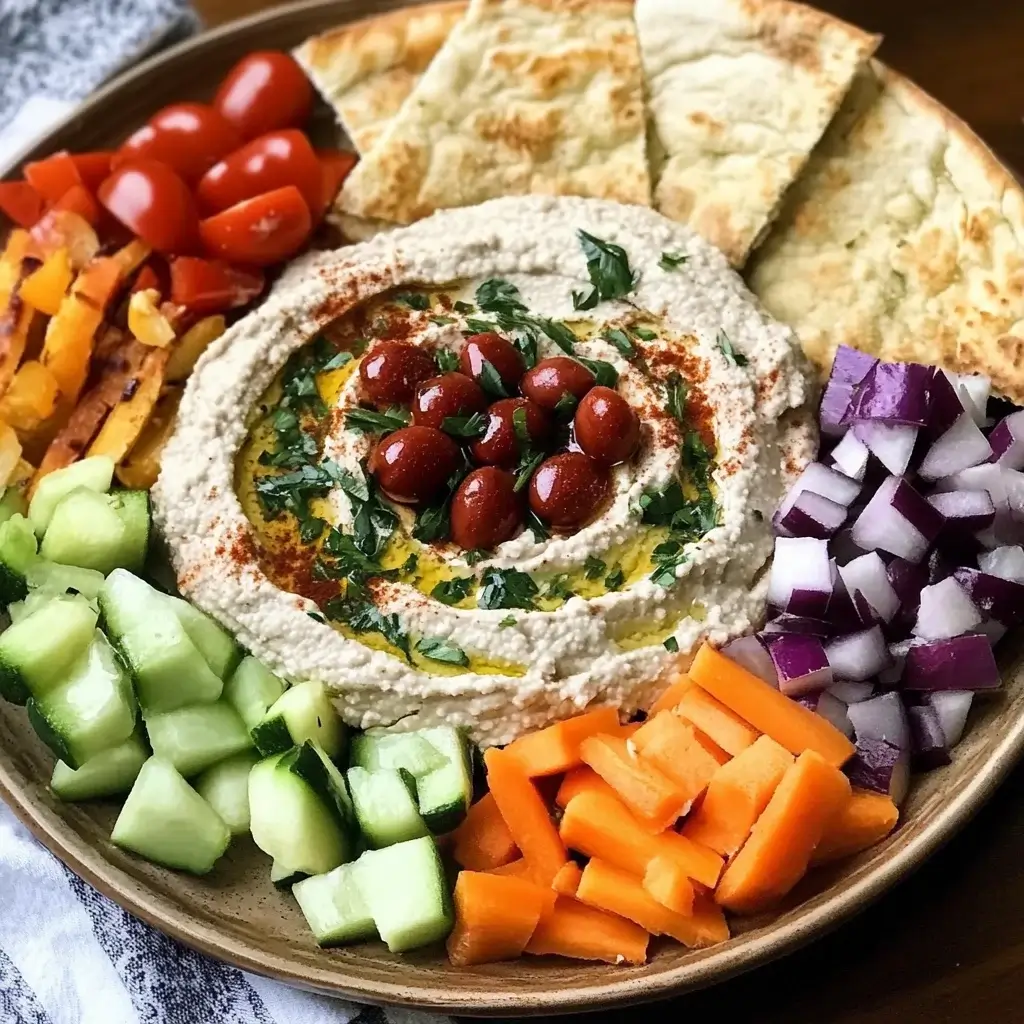
There’s something undeniably satisfying about setting down a vibrant platter overflowing with colorful vegetables, creamy hummus, and warm pita bread in the center of a table. It’s instantly inviting, encouraging sharing and conversation. In my home, this Hummus and Veggie Platter has become a staple. Weekends, weeknights, impromptu gatherings – it fits seamlessly into any occasion. Even my kids, who can sometimes be vegetable-averse, eagerly dive into the crisp carrots and cucumbers when they have a bowl of homemade hummus to dunk them in. It’s not just a recipe; it’s a joyful, healthy, and effortlessly elegant way to eat and connect. Whether you’re looking for a light lunch, a crowd-pleasing appetizer, or a nutritious snack, this platter is a guaranteed hit. Get ready to experience the simple pleasure of fresh flavors and textures with this incredibly easy and delicious recipe.
Ingredients: Freshness and Flavor in Every Bite
This Hummus and Veggie Platter is all about showcasing fresh, vibrant ingredients. Each component plays a crucial role in creating a balanced and delightful culinary experience. Here’s what you’ll need:
- For the Hummus:
- Chickpeas (1 can, 15 ounces): The heart of our hummus, providing a creamy texture and nutty flavor. Be sure to drain and rinse them well.
- Tahini (1/4 cup): Sesame seed paste that adds richness, depth, and that signature hummus taste. Look for good quality tahini for the best flavor.
- Lemon Juice (1/4 cup, fresh): Brightens the hummus and adds a zesty tang. Freshly squeezed is always preferred for optimal flavor.
- Garlic (2 cloves): Adds a pungent and aromatic punch to the hummus. Adjust to your taste – start with two and add more if you like a stronger garlic flavor.
- Olive Oil (1/4 cup, extra virgin): Contributes to the creamy texture and richness of the hummus, and adds a fruity, peppery note. Use good quality extra virgin olive oil for the best flavor.
- Ice Water (2-4 tablespoons): The secret to incredibly smooth and fluffy hummus! Add gradually until you reach your desired consistency.
- Salt: Enhances all the flavors. Start with a teaspoon and adjust to taste.
- Optional Garnishes (for hummus): Paprika, chopped parsley, extra virgin olive oil drizzle – for visual appeal and added flavor.
- For the Veggie Platter:
- Carrots (2-3 large): Provides a sweet and crunchy element. Choose colorful carrots like orange, purple, or yellow for visual variety.
- Cucumbers (1-2 English cucumbers): Offers a refreshing and hydrating crunch. English cucumbers are preferred for their thin skin and fewer seeds.
- Bell Peppers (2-3): Adds sweetness and vibrant color. Use a mix of colors like red, yellow, and orange for visual appeal and varied flavors.
- Celery Stalks (3-4): Provides a crisp and slightly salty bite. Choose firm and fresh celery stalks.
- Cherry Tomatoes (1 pint): Adds juicy bursts of sweetness and acidity. Use a mix of colors for visual interest.
- Broccoli Florets (1 head): Offers a slightly earthy and nutritious element. Choose firm, green florets.
- Radishes (1 bunch): Adds a peppery and slightly spicy bite. Choose vibrant red radishes for color and flavor.
- Snap Peas or Snow Peas (1 cup): Provides a sweet and crisp element. Snap peas offer a satisfying snap when bitten.
- Optional Veggies: Asparagus spears (blanched), zucchini sticks, cauliflower florets, mushrooms, olives, artichoke hearts – customize with your favorites and what’s in season!
- For the Pita Bread:
- Pita Bread (1 package): The perfect vessel for scooping up hummus and veggies. Choose whole wheat or white pita bread, depending on your preference.
- Optional: Olive oil and herbs for brushing and warming pita (adds flavor and aroma).
Instructions: Simple Steps to Deliciousness
Creating this Hummus and Veggie Platter is surprisingly easy and quick. Follow these simple steps to assemble your own vibrant and flavorful spread:
1. Prepare the Hummus:
- Drain and Rinse Chickpeas: Open the can of chickpeas and drain the liquid. Rinse the chickpeas thoroughly under cold running water. This helps to remove excess sodium and makes for smoother hummus.
- Peel Garlic: Peel the garlic cloves. For a milder garlic flavor, you can roast the garlic cloves beforehand. For a stronger flavor, use raw garlic.
- Combine Ingredients in a Food Processor: In a food processor, combine the drained and rinsed chickpeas, tahini, lemon juice, garlic cloves, and salt.
- Process Until Smooth: Process the mixture for about 1-2 minutes, scraping down the sides of the bowl as needed, until the mixture is very smooth and creamy.
- Add Olive Oil and Ice Water: With the food processor running, slowly drizzle in the olive oil. Then, add ice water, one tablespoon at a time, processing in between, until you reach your desired hummus consistency. Start with 2 tablespoons and add more if you prefer a thinner hummus. The ice water helps to create a light and fluffy texture.
- Taste and Adjust Seasoning: Taste the hummus and adjust the seasoning as needed. You might want to add more lemon juice for brightness, salt for flavor, or garlic for a stronger garlic kick. Process again to incorporate the adjustments.
- Chill (Optional): For the best flavor, chill the hummus in the refrigerator for at least 30 minutes before serving. This allows the flavors to meld together.
2. Prepare the Vegetables:
- Wash and Dry Vegetables: Thoroughly wash all the vegetables under cold running water. Dry them well with paper towels or a clean kitchen towel. This ensures that the vegetables stay crisp and that the hummus adheres well to them.
- Cut Vegetables: Cut the vegetables into bite-sized pieces, perfect for dipping.
- Carrots: Peel the carrots and cut them into sticks or rounds.
- Cucumbers: Cut the cucumbers into sticks or rounds. You can peel them partially or leave the skin on for added nutrients and texture.
- Bell Peppers: Remove the seeds and membranes from the bell peppers. Cut them into strips or chunks.
- Celery: Wash and trim the celery stalks. Cut them into sticks.
- Cherry Tomatoes: Leave cherry tomatoes whole or halve them, depending on their size.
- Broccoli: Cut the broccoli head into small, bite-sized florets.
- Radishes: Trim the radishes and leave them whole or halve them, depending on their size.
- Snap Peas/Snow Peas: Trim the ends of the snap peas or snow peas.
3. Warm the Pita Bread (Optional):
- Warm in Oven or Skillet: You can warm the pita bread in a preheated oven (350°F/175°C) for a few minutes until heated through and slightly softened. Alternatively, you can warm them in a dry skillet over medium heat for about 30 seconds per side, until pliable.
- Brush with Olive Oil and Herbs (Optional): For extra flavor, you can brush the pita bread with olive oil and sprinkle with herbs like oregano or rosemary before warming them.
- Cut into Wedges or Strips: Cut the warmed pita bread into wedges or strips for easy dipping.
4. Assemble the Platter:
- Arrange Hummus: Place the hummus in a serving bowl in the center of a large platter or serving dish. You can create a swirl in the hummus with a spoon and drizzle with a little extra virgin olive oil and sprinkle with paprika or chopped parsley for garnish.
- Arrange Vegetables: Arrange the prepared vegetables around the bowl of hummus in a visually appealing way. Group similar vegetables together and use a variety of colors and textures to create an attractive platter.
- Add Pita Bread: Place the warmed pita bread wedges or strips around the vegetables or in a separate basket alongside the platter.
5. Serve and Enjoy! Serve your Hummus and Veggie Platter immediately and watch it disappear!
Nutrition Facts: Healthy and Delicious
This Hummus and Veggie Platter is not only delicious but also packed with nutrients. Here’s an approximate nutritional breakdown per serving (assuming 6 servings and using the ingredients listed above):
- Serving Size: Approximately 1 cup of veggies, 1/4 cup hummus, and 1 pita bread wedge.
- Calories: Approximately 350-400 kcal
- Fat: 20-25g (Healthy fats from olive oil, tahini, and some vegetables)
Important Note: These are estimated values and can vary depending on specific ingredients, portion sizes, and preparation methods. This platter is naturally rich in vitamins, minerals, and antioxidants from the variety of fresh vegetables and the nutrient-dense hummus. It’s a great source of plant-based protein and fiber, contributing to a healthy and balanced diet.
Preparation Time: Quick and Easy Snacking
This recipe is incredibly time-efficient, perfect for when you need a healthy and impressive snack or appetizer with minimal effort.
- Prep Time: 20-25 minutes (This includes making the hummus and chopping the vegetables).
- Cook Time: 5-10 minutes (Optional, for warming pita bread).
- Total Time: Approximately 30-35 minutes.
The majority of the time is spent on prepping the vegetables and making the hummus. If you use store-bought hummus, the preparation time is significantly reduced, making it even quicker – practically ready in just the time it takes to chop the veggies! This makes it an ideal option for busy weeknights or last-minute gatherings.
How to Serve: Versatile and Crowd-Pleasing
The Hummus and Veggie Platter is incredibly versatile and can be served in numerous ways, making it perfect for various occasions:
- As an Appetizer:
- Perfect for parties, gatherings, or before a meal.
- Set it out as guests arrive for a healthy and inviting start.
- Pairs well with drinks like sparkling water, iced tea, or light wines.
- As a Healthy Snack:
- Ideal for afternoon snacks or healthy movie nights.
- Keep pre-cut veggies and hummus in the fridge for quick snacking.
- A much healthier alternative to chips and dips.
- As a Light Lunch or Dinner:
- Serve a larger platter with a bigger portion of hummus and pita for a light and satisfying meal.
- Add a side salad or soup to make it a more substantial meal.
- Great for warm weather meals when you want something light and refreshing.
- For Picnics and Potlucks:
- Easy to transport and share at picnics, potlucks, or outdoor events.
- Pack the hummus and veggies separately to keep them fresh and crisp.
- A crowd-pleasing dish that everyone will enjoy.
- Presentation Ideas:
- Arrange vegetables in rainbow order for a visually stunning platter.
- Use different sized bowls and platters to create height and visual interest.
- Garnish the hummus with paprika, parsley, pine nuts, or a drizzle of olive oil.
- Serve with other dips like baba ghanoush or tzatziki for variety.
- Add olives, pickles, or marinated artichoke hearts to the platter for extra flavor and texture.
Additional Tips: Elevating Your Platter
Here are some extra tips to make your Hummus and Veggie Platter even better:
- Make Hummus Ahead: Hummus can be made up to 3-4 days in advance and stored in an airtight container in the refrigerator. This is a great time-saver when preparing for a party. Just give it a good stir before serving.
- Roast Garlic for Milder Hummus: If you prefer a less pungent garlic flavor, roast the garlic cloves before adding them to the hummus. Roasting mellows out the garlic and adds a subtle sweetness.
- Soak Chickpeas for Creamier Hummus (from scratch): For the absolute smoothest hummus, start with dried chickpeas. Soak them overnight, then cook them until very tender. Remove the skins after cooking for extra creamy results.
- Warm Pita for Enhanced Flavor: Warming the pita bread not only makes it more pliable but also enhances its flavor and aroma. A few minutes in the oven or a quick toast in a skillet makes a big difference.
- Customize Your Veggies: Feel free to swap out or add vegetables based on your preferences and what’s in season. Blanched asparagus, zucchini sticks, cauliflower florets, green beans, and even grilled vegetables can be delicious additions.
- Spice it Up: Add a pinch of cayenne pepper or a drizzle of hot sauce to the hummus for a spicy kick. You can also incorporate roasted red peppers or jalapenos into the hummus for flavor variations.
- Don’t Forget the Garnishes: Garnishes elevate both the look and taste of your platter. A drizzle of good quality olive oil, a sprinkle of paprika, chopped fresh parsley, toasted pine nuts, or sesame seeds add visual appeal and extra flavor layers to the hummus.
- Store Leftovers Properly: Leftover hummus should be stored in an airtight container in the refrigerator for up to 3-4 days. Store leftover vegetables separately in airtight containers or zip-top bags in the refrigerator to maintain their crispness. Pita bread can be stored at room temperature in a sealed bag or container.
FAQ: Your Hummus and Veggie Platter Questions Answered
Q1: Can I use store-bought hummus to save time?
A1: Absolutely! While homemade hummus is incredibly delicious and easy, using store-bought hummus is a great time-saving option. Choose a good quality brand and flavor that you enjoy. You can even doctor it up with a drizzle of olive oil, a sprinkle of paprika, or some fresh herbs to make it feel a bit more special.
Q2: What are the best vegetables to include in a veggie platter?
A2: The best vegetables are those that are fresh, crisp, and offer a variety of colors and textures. Great options include carrots, cucumbers, bell peppers, celery, cherry tomatoes, broccoli, radishes, snap peas, and snow peas. Consider seasonal vegetables for the best flavor and freshness. Don’t be afraid to experiment with your favorites!
Q3: Can I make this platter vegan and/or gluten-free?
A3: Yes, this Hummus and Veggie Platter is naturally vegan. To make it gluten-free, simply serve it with gluten-free pita bread, gluten-free crackers, or even just enjoy it with the vegetables alone. Many gluten-free pita bread options are available in stores.
Q4: How far in advance can I prepare the Hummus and Veggie Platter?
A4: You can make the hummus up to 3-4 days in advance. Vegetables are best prepared on the day of serving for optimal crispness, but you can wash and chop them a day ahead and store them in airtight containers in the refrigerator lined with paper towels to absorb excess moisture. Assemble the platter just before serving for the freshest presentation.
Q5: How do I prevent the vegetables from drying out?
A5: To keep your vegetables crisp and fresh, store them in airtight containers or zip-top bags in the refrigerator. For cut vegetables, you can line the container with a slightly damp paper towel to help maintain moisture. Avoid cutting vegetables too far in advance, as they will dry out faster.
Q6: Can I freeze hummus?
A6: Yes, hummus can be frozen, although the texture might change slightly upon thawing. Store hummus in an airtight container or freezer-safe bag for up to 3 months. Thaw in the refrigerator overnight and stir well before serving. You might need to add a tablespoon or two of olive oil or water to restore its creamy texture after thawing.
Q7: What are some variations I can try with this recipe?
A7: There are many ways to customize this platter! For hummus variations, try roasted red pepper hummus, roasted garlic hummus, black bean hummus, or even beetroot hummus for a vibrant pink color. For the veggie platter, consider adding olives, artichoke hearts, pickles, marinated mushrooms, or grilled halloumi cheese for a non-vegan option. You can also serve it with different types of bread or crackers beyond pita.
Q8: How do I make this platter for a large crowd?
A8: Scaling up this recipe is easy! Simply double or triple the hummus recipe and prepare a larger quantity and variety of vegetables. Use a large platter or multiple platters to arrange everything attractively. Consider setting up a “build your own platter” station with bowls of hummus, pre-cut veggies, and pita bread so guests can serve themselves. This is a great way to cater to a crowd and ensure everyone gets enough.

Hummus and Veggie Platter with Pita
Ingredients
This Hummus and Veggie Platter is all about showcasing fresh, vibrant ingredients. Each component plays a crucial role in creating a balanced and delightful culinary experience. Here’s what you’ll need:
- For the Hummus:
- Chickpeas (1 can, 15 ounces): The heart of our hummus, providing a creamy texture and nutty flavor. Be sure to drain and rinse them well.
- Tahini (1/4 cup): Sesame seed paste that adds richness, depth, and that signature hummus taste. Look for good quality tahini for the best flavor.
- Lemon Juice (1/4 cup, fresh): Brightens the hummus and adds a zesty tang. Freshly squeezed is always preferred for optimal flavor.
- Garlic (2 cloves): Adds a pungent and aromatic punch to the hummus. Adjust to your taste – start with two and add more if you like a stronger garlic flavor.
- Olive Oil (1/4 cup, extra virgin): Contributes to the creamy texture and richness of the hummus, and adds a fruity, peppery note. Use good quality extra virgin olive oil for the best flavor.
- Ice Water (2-4 tablespoons): The secret to incredibly smooth and fluffy hummus! Add gradually until you reach your desired consistency.
- Salt: Enhances all the flavors. Start with a teaspoon and adjust to taste.
- Optional Garnishes (for hummus): Paprika, chopped parsley, extra virgin olive oil drizzle – for visual appeal and added flavor.
- For the Veggie Platter:
- Carrots (2-3 large): Provides a sweet and crunchy element. Choose colorful carrots like orange, purple, or yellow for visual variety.
- Cucumbers (1-2 English cucumbers): Offers a refreshing and hydrating crunch. English cucumbers are preferred for their thin skin and fewer seeds.
- Bell Peppers (2-3): Adds sweetness and vibrant color. Use a mix of colors like red, yellow, and orange for visual appeal and varied flavors.
- Celery Stalks (3-4): Provides a crisp and slightly salty bite. Choose firm and fresh celery stalks.
- Cherry Tomatoes (1 pint): Adds juicy bursts of sweetness and acidity. Use a mix of colors for visual interest.
- Broccoli Florets (1 head): Offers a slightly earthy and nutritious element. Choose firm, green florets.
- Radishes (1 bunch): Adds a peppery and slightly spicy bite. Choose vibrant red radishes for color and flavor.
- Snap Peas or Snow Peas (1 cup): Provides a sweet and crisp element. Snap peas offer a satisfying snap when bitten.
- Optional Veggies: Asparagus spears (blanched), zucchini sticks, cauliflower florets, mushrooms, olives, artichoke hearts – customize with your favorites and what’s in season!
- For the Pita Bread:
- Pita Bread (1 package): The perfect vessel for scooping up hummus and veggies. Choose whole wheat or white pita bread, depending on your preference.
- Optional: Olive oil and herbs for brushing and warming pita (adds flavor and aroma).
Instructions
Creating this Hummus and Veggie Platter is surprisingly easy and quick. Follow these simple steps to assemble your own vibrant and flavorful spread:
1. Prepare the Hummus:
- Drain and Rinse Chickpeas: Open the can of chickpeas and drain the liquid. Rinse the chickpeas thoroughly under cold running water. This helps to remove excess sodium and makes for smoother hummus.
- Peel Garlic: Peel the garlic cloves. For a milder garlic flavor, you can roast the garlic cloves beforehand. For a stronger flavor, use raw garlic.
- Combine Ingredients in a Food Processor: In a food processor, combine the drained and rinsed chickpeas, tahini, lemon juice, garlic cloves, and salt.
- Process Until Smooth: Process the mixture for about 1-2 minutes, scraping down the sides of the bowl as needed, until the mixture is very smooth and creamy.
- Add Olive Oil and Ice Water: With the food processor running, slowly drizzle in the olive oil. Then, add ice water, one tablespoon at a time, processing in between, until you reach your desired hummus consistency. Start with 2 tablespoons and add more if you prefer a thinner hummus. The ice water helps to create a light and fluffy texture.
- Taste and Adjust Seasoning: Taste the hummus and adjust the seasoning as needed. You might want to add more lemon juice for brightness, salt for flavor, or garlic for a stronger garlic kick. Process again to incorporate the adjustments.
- Chill (Optional): For the best flavor, chill the hummus in the refrigerator for at least 30 minutes before serving. This allows the flavors to meld together.
2. Prepare the Vegetables:
- Wash and Dry Vegetables: Thoroughly wash all the vegetables under cold running water. Dry them well with paper towels or a clean kitchen towel. This ensures that the vegetables stay crisp and that the hummus adheres well to them.
- Cut Vegetables: Cut the vegetables into bite-sized pieces, perfect for dipping.
- Carrots: Peel the carrots and cut them into sticks or rounds.
- Cucumbers: Cut the cucumbers into sticks or rounds. You can peel them partially or leave the skin on for added nutrients and texture.
- Bell Peppers: Remove the seeds and membranes from the bell peppers. Cut them into strips or chunks.
- Celery: Wash and trim the celery stalks. Cut them into sticks.
- Cherry Tomatoes: Leave cherry tomatoes whole or halve them, depending on their size.
- Broccoli: Cut the broccoli head into small, bite-sized florets.
- Radishes: Trim the radishes and leave them whole or halve them, depending on their size.
- Snap Peas/Snow Peas: Trim the ends of the snap peas or snow peas.
3. Warm the Pita Bread (Optional):
- Warm in Oven or Skillet: You can warm the pita bread in a preheated oven (350°F/175°C) for a few minutes until heated through and slightly softened. Alternatively, you can warm them in a dry skillet over medium heat for about 30 seconds per side, until pliable.
- Brush with Olive Oil and Herbs (Optional): For extra flavor, you can brush the pita bread with olive oil and sprinkle with herbs like oregano or rosemary before warming them.
- Cut into Wedges or Strips: Cut the warmed pita bread into wedges or strips for easy dipping.
4. Assemble the Platter:
- Arrange Hummus: Place the hummus in a serving bowl in the center of a large platter or serving dish. You can create a swirl in the hummus with a spoon and drizzle with a little extra virgin olive oil and sprinkle with paprika or chopped parsley for garnish.
- Arrange Vegetables: Arrange the prepared vegetables around the bowl of hummus in a visually appealing way. Group similar vegetables together and use a variety of colors and textures to create an attractive platter.
- Add Pita Bread: Place the warmed pita bread wedges or strips around the vegetables or in a separate basket alongside the platter.
5. Serve and Enjoy! Serve your Hummus and Veggie Platter immediately and watch it disappear!
Nutrition
- Serving Size: one normal portion
- Calories: 400
- Fat: 25g