
In my kitchen, the quest for the perfect weeknight dinner or holiday feast is always ongoing. Recently, I stumbled upon a recipe that has quickly become a family favorite: Lemon Garlic Roasted Turkey Breast. Let me tell you, this isn’t your dry, bland turkey experience. From the moment the tantalizing aroma of garlic and lemon started wafting through my house, I knew we were in for a treat. The result was a turkey breast that was unbelievably juicy, bursting with bright, zesty flavors, and incredibly easy to prepare. Even my pickiest eater, my son, devoured his portion and asked for seconds! Whether you’re looking for a simple yet impressive dinner for two, a smaller Thanksgiving alternative, or just a delicious and healthy protein to add to your meal rotation, this Lemon Garlic Roasted Turkey Breast recipe is a winner. It’s become my go-to for its simplicity, incredible flavor, and the sheer joy it brings to everyone at the table. Trust me, once you try this, you’ll be hooked too!
Ingredients
- Boneless Turkey Breast (3-4 pounds): The star of the show, providing a lean and flavorful protein source. Opt for a skin-on breast for extra crispiness and flavor.
- Lemons (2 large): One lemon for zesting and juicing to infuse the turkey with bright citrus notes, and the other for slicing and roasting alongside for added aroma and flavor.
- Garlic (6-8 cloves): Fresh garlic is essential for that pungent, savory flavor. Use more or less depending on your garlic preference.
- Fresh Herbs (2 tablespoons, mixed or single): Rosemary, thyme, and sage are fantastic choices that complement turkey, lemon, and garlic beautifully. Use fresh for the best aroma and flavor.
- Olive Oil (3 tablespoons): Helps to keep the turkey breast moist during roasting and aids in browning. Use extra virgin olive oil for the best flavor.
- Salt (1.5 teaspoons): Enhances the flavor of all the ingredients and helps to season the turkey. Kosher salt is recommended for even seasoning.
- Black Pepper (1 teaspoon): Adds a touch of spice and depth of flavor. Freshly ground black pepper is preferred for its bolder taste.
- Optional: White Wine or Chicken Broth (1/2 cup): Adding a liquid to the roasting pan helps to create steam, keeping the turkey moist and creating flavorful pan juices.
Instructions
- Prepare the Turkey Breast: Pat the turkey breast dry with paper towels. This helps the skin crisp up during roasting. Place the turkey breast in a roasting pan.
- Make the Lemon Garlic Herb Mixture: In a small bowl, combine the zest of one lemon, the juice of half a lemon (reserve the other half for later), minced garlic, chopped fresh herbs, olive oil, salt, and black pepper. Mix well to create a flavorful paste.
- Season the Turkey Breast: Rub the lemon garlic herb mixture all over the turkey breast, ensuring to get under the skin if possible (gently loosen the skin with your fingers to create pockets). This will infuse the meat with flavor from the inside out.
- Prepare the Lemons: Slice the remaining lemon and the other whole lemon into thick rounds. Scatter the lemon slices around the turkey breast in the roasting pan.
- Add Liquid (Optional): If using, pour white wine or chicken broth into the bottom of the roasting pan. This will help to create steam and prevent the turkey from drying out.
- Roast the Turkey Breast: Preheat your oven to 375°F (190°C). Roast the turkey breast for approximately 1 hour to 1 hour and 30 minutes, or until a meat thermometer inserted into the thickest part of the breast registers 165°F (74°C). Cooking time will vary depending on the size of the turkey breast.
- Baste (Optional): For extra moistness and flavor, baste the turkey breast with the pan juices every 20-30 minutes during roasting.
- Rest the Turkey Breast: Once the turkey breast is cooked through, remove it from the oven and let it rest for at least 10-15 minutes before carving. This allows the juices to redistribute throughout the meat, resulting in a more tender and flavorful turkey. Tent the turkey breast loosely with foil while it rests.
- Carve and Serve: After resting, carve the turkey breast against the grain and serve immediately. Spoon the flavorful pan juices over the sliced turkey for extra moisture and taste.
Nutrition Facts
(Per Serving, Estimated – Servings: 6)
- Calories: 350
- Protein: 45g
(Please note: Nutritional values are estimates and can vary based on specific ingredients and portion sizes. This is a general guide only.)
Preparation Time
- Prep Time: 20 minutes (This includes gathering ingredients, making the lemon garlic herb mixture, and preparing the turkey breast for roasting.)
- Cook Time: 1 hour 15 minutes (Roasting time can vary depending on the size and thickness of the turkey breast. Always use a meat thermometer to ensure it reaches an internal temperature of 165°F (74°C).)
- Rest Time: 10-15 minutes (Resting is crucial for juicy turkey. Allowing the turkey to rest after roasting helps the juices redistribute, resulting in a more tender and flavorful final product.)
- Total Time: Approximately 1 hour and 45 minutes (From start to finish, including prep, cook, and rest time, you can have this delicious Lemon Garlic Roasted Turkey Breast on your table in under two hours.)
How to Serve
This Lemon Garlic Roasted Turkey Breast is incredibly versatile and pairs beautifully with a wide variety of side dishes. Here are some delicious serving suggestions:
- Classic Sides:
- Mashed Potatoes: Creamy mashed potatoes are the perfect comfort food accompaniment to roasted turkey.
- Stuffing or Dressing: A traditional stuffing or dressing, whether bread-based or cornbread, complements the turkey wonderfully.
- Gravy: While the pan juices from this recipe are flavorful, you can easily make a classic gravy from them or serve a simple chicken gravy alongside.
- Cranberry Sauce: The tartness of cranberry sauce balances the richness of the turkey and adds a festive touch.
- Green Bean Casserole: A classic holiday side that’s always a crowd-pleaser.
- Vegetable Sides:
- Roasted Vegetables: Roast vegetables like Brussels sprouts, carrots, broccoli, or asparagus alongside the turkey or separately for a healthy and flavorful side.
- Green Salad: A fresh green salad with a light vinaigrette provides a refreshing contrast to the richness of the turkey.
- Steamed Asparagus: Simple steamed asparagus with a squeeze of lemon juice is a light and elegant side dish.
- Sautéed Spinach: Sautéed spinach with garlic and olive oil is a quick and nutritious side.
- Starchy Sides:
- Roasted Sweet Potatoes: Sweet potatoes roasted with cinnamon or herbs offer a sweet and savory side option.
- Rice Pilaf: A flavorful rice pilaf is a versatile side that complements the turkey well.
- Quinoa: For a healthier grain option, serve quinoa as a side dish.
- Bread:
- Dinner Rolls: Warm dinner rolls are perfect for soaking up the delicious pan juices.
- Cornbread: Cornbread is a great pairing, especially if you’re serving a more Southern-inspired meal.
- Garlic Bread: Adding garlic bread to the table enhances the garlic flavors in the turkey.
Additional Tips for Perfect Lemon Garlic Roasted Turkey Breast
Brining for Extra Juiciness
To elevate the juiciness of your lemon garlic roasted turkey breast, brining is an essential technique that shouldn’t be overlooked. A brine is a simple solution of water and salt that helps to infuse moisture into the meat. For a flavor-packed brine, consider adding fresh lemon slices and crushed garlic cloves to your saltwater mixture. This infusion not only enhances the turkey’s flavor profile but also contributes to its tenderness.
How to Brine:
- Prepare the Brine: In a large bowl or container, dissolve 1 cup of kosher salt in about 1 gallon of water. Add 1-2 sliced lemons and 4-6 crushed garlic cloves to the mixture. For an extra kick, you can also include herbs like rosemary or thyme.
- Brining Time: Submerge the turkey breast completely in the brine solution, ensuring it is covered. Allow it to brine in the refrigerator for at least 4 hours, but overnight is ideal for maximum moisture retention.
- Rinse and Dry: After brining, rinse the turkey breast under cold water to remove excess salt, then pat it dry with paper towels. This step is crucial for achieving a crispy skin during roasting.
Use a Meat Thermometer
Cooking a turkey breast perfectly requires precision, and a meat thermometer is your best ally in this endeavor. Relying solely on cooking times can lead to overcooked or undercooked meat, both of which can ruin your meal.
How to Use a Meat Thermometer:
- Placement: Insert the thermometer into the thickest part of the turkey breast, making sure not to touch the bone, as this can give a false reading.
- Target Temperature: Cook the turkey breast until it reaches an internal temperature of 165°F (74°C). This is the safe temperature for poultry, ensuring that harmful bacteria are eliminated.
- Check Multiple Spots: For larger turkey breasts, it’s a good idea to check multiple spots to ensure even cooking.
Don’t Overcook
One of the most common mistakes when roasting turkey is overcooking, which can lead to dry, tough meat. As soon as your meat thermometer reads 165°F (74°C), it’s time to take action.
Tips to Avoid Overcooking:
- Immediate Removal: Remove the turkey breast from the oven immediately once it reaches the target temperature. It’s essential to act quickly to prevent further cooking.
- Understanding Carryover Cooking: Keep in mind that the turkey will continue to cook slightly after removal from the oven due to residual heat, commonly referred to as carryover cooking. This phenomenon can raise the internal temperature by an additional 5°F (2°C) or more, so factor this into your timing.
Let it Rest Properly
Resting your turkey breast is a critical step that should never be skipped. This allows the juices, which are driven toward the center of the meat during cooking, to redistribute throughout the entire breast.
How to Rest:
- Timing: Allow the turkey breast to rest for at least 10-15 minutes before slicing. This waiting period is crucial for achieving maximum juiciness.
- Tenting with Foil: To keep the turkey warm while it rests, tent it loosely with aluminum foil. This technique prevents the skin from becoming soggy while still retaining warmth.
Customize Your Herbs
While the classic combination of rosemary, thyme, and sage works beautifully, don’t hesitate to personalize your herb blend to suit your taste.
Suggestions for Customization:
- Explore Different Flavors: Consider using Italian seasoning for a Mediterranean twist, or try a blend of dried herbs such as tarragon, dill, or oregano for a unique flavor profile.
- Fresh vs. Dried: Fresh herbs can provide a more vibrant flavor, so if you have access to fresh herbs, feel free to use them in place of dried ones for an aromatic boost.
Add Aromatics to the Pan
Enhancing the flavor of your turkey breast can be as simple as adding a variety of aromatics to the roasting pan. These ingredients will infuse the meat and the drippings with additional depth.
Recommended Aromatics:
- Onions and Shallots: Sliced onion wedges or shallots can impart a sweet and savory flavor that complements the turkey beautifully.
- Herbs: A few sprigs of fresh herbs like rosemary or thyme can be added to the pan to further enrich the aroma and flavor of the drippings.
Make Pan Sauce/Gravy
Don’t let those flavorful pan juices go to waste. They are the foundation for a delicious pan sauce or gravy that can elevate your meal.
Steps for Making Sauce:
- Skim the Fat: After roasting, carefully skim off any excess fat from the surface of the pan juices.
- Thickening the Sauce: In a small bowl, mix a slurry of cornstarch or flour with cold water, then whisk this mixture into the pan juices over medium heat until it thickens. You can also add a splash of white wine or chicken broth for extra flavor.
- Seasoning: Taste and adjust the seasoning with salt and pepper, and perhaps a squeeze of fresh lemon juice for brightness before serving.
Leftovers are a Treat
One of the best parts of roasting a turkey breast is the delicious leftovers that can be transformed into a variety of dishes.
Creative Leftover Ideas:
- Sandwiches and Wraps: Use sliced turkey in sandwiches with your favorite condiments and fresh veggies.
- Salads: Add diced turkey to salads for a protein boost, making for a quick and healthy meal.
- Soups and Casseroles: Incorporate leftover turkey into hearty soups or casseroles for a comforting meal.
- Storage Tips: Store leftover turkey in an airtight container in the refrigerator for up to 3-4 days. For longer storage, consider freezing the turkey in portions, which can last up to 4 months in the freezer.
By following these detailed tips, you can ensure that your lemon garlic roasted turkey breast is not only flavorful but also perfectly cooked and succulent, making your meal unforgettable.
Frequently Asked Questions (FAQ)
Q1: Can I use bone-in turkey breast for this recipe?
A: Yes, you can use bone-in turkey breast. Bone-in turkey breast may take slightly longer to cook. Always ensure the internal temperature reaches 165°F (74°C) regardless of whether you use bone-in or boneless.
Q2: What size turkey breast should I buy for X number of people?
A: As a general guideline, plan for about 1/2 to 3/4 pound of boneless turkey breast per person. For 4-6 people, a 3-4 pound turkey breast is usually sufficient.
Q3: How do I know when the turkey breast is cooked through?
A: The most accurate way to determine doneness is to use a meat thermometer. Insert it into the thickest part of the breast, avoiding the bone. The turkey is cooked when it reaches an internal temperature of 165°F (74°C).
Q4: Can I prepare the turkey breast ahead of time?
A: You can prepare the lemon garlic herb mixture and rub it on the turkey breast up to a day ahead of time. Store the seasoned turkey breast covered in the refrigerator. However, it’s best to roast the turkey breast fresh for optimal flavor and texture.
Q5: What if I don’t have fresh herbs? Can I use dried herbs?
A: Yes, you can use dried herbs if you don’t have fresh. Use about 1 teaspoon of dried herbs for every tablespoon of fresh herbs called for in the recipe. Dried herbs are more concentrated in flavor, so you need less.
Q6: Can I roast vegetables in the same pan as the turkey breast?
A: Yes, you can roast vegetables alongside the turkey breast. Choose vegetables that roast in a similar time frame as the turkey, such as carrots, potatoes, or Brussels sprouts. Toss the vegetables with olive oil, salt, and pepper and add them to the roasting pan around the turkey breast about halfway through the cooking time.
Q7: How do I reheat leftover roasted turkey breast without drying it out?
A: To reheat leftover turkey breast without drying it out, slice it and arrange it in a baking dish. Add a little chicken broth or pan juices to the dish to keep it moist. Cover with foil and reheat in a 325°F (160°C) oven until heated through, about 15-20 minutes. You can also reheat it in a skillet with a little broth or gravy over low heat.
Q8: Can I grill turkey breast instead of roasting it?
A: Yes, you can grill turkey breast. Prepare the turkey breast as instructed in the recipe and grill it over medium heat for about 20-30 minutes per side, or until it reaches an internal temperature of 165°F (74°C). Grilling will impart a smoky flavor to the turkey breast.
Print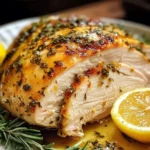
Lemon Garlic Roasted Turkey Breast
Ingredients
- Boneless Turkey Breast (3-4 pounds): The star of the show, providing a lean and flavorful protein source. Opt for a skin-on breast for extra crispiness and flavor.
- Lemons (2 large): One lemon for zesting and juicing to infuse the turkey with bright citrus notes, and the other for slicing and roasting alongside for added aroma and flavor.
- Garlic (6-8 cloves): Fresh garlic is essential for that pungent, savory flavor. Use more or less depending on your garlic preference.
- Fresh Herbs (2 tablespoons, mixed or single): Rosemary, thyme, and sage are fantastic choices that complement turkey, lemon, and garlic beautifully. Use fresh for the best aroma and flavor.
- Olive Oil (3 tablespoons): Helps to keep the turkey breast moist during roasting and aids in browning. Use extra virgin olive oil for the best flavor.
- Salt (1.5 teaspoons): Enhances the flavor of all the ingredients and helps to season the turkey. Kosher salt is recommended for even seasoning.
- Black Pepper (1 teaspoon): Adds a touch of spice and depth of flavor. Freshly ground black pepper is preferred for its bolder taste.
- Optional: White Wine or Chicken Broth (1/2 cup): Adding a liquid to the roasting pan helps to create steam, keeping the turkey moist and creating flavorful pan juices.
Instructions
- Prepare the Turkey Breast: Pat the turkey breast dry with paper towels. This helps the skin crisp up during roasting. Place the turkey breast in a roasting pan.
- Make the Lemon Garlic Herb Mixture: In a small bowl, combine the zest of one lemon, the juice of half a lemon (reserve the other half for later), minced garlic, chopped fresh herbs, olive oil, salt, and black pepper. Mix well to create a flavorful paste.
- Season the Turkey Breast: Rub the lemon garlic herb mixture all over the turkey breast, ensuring to get under the skin if possible (gently loosen the skin with your fingers to create pockets). This will infuse the meat with flavor from the inside out.
- Prepare the Lemons: Slice the remaining lemon and the other whole lemon into thick rounds. Scatter the lemon slices around the turkey breast in the roasting pan.
- Add Liquid (Optional): If using, pour white wine or chicken broth into the bottom of the roasting pan. This will help to create steam and prevent the turkey from drying out.
- Roast the Turkey Breast: Preheat your oven to 375°F (190°C). Roast the turkey breast for approximately 1 hour to 1 hour and 30 minutes, or until a meat thermometer inserted into the thickest part of the breast registers 165°F (74°C). Cooking time will vary depending on the size of the turkey breast.
- Baste (Optional): For extra moistness and flavor, baste the turkey breast with the pan juices every 20-30 minutes during roasting.
- Rest the Turkey Breast: Once the turkey breast is cooked through, remove it from the oven and let it rest for at least 10-15 minutes before carving. This allows the juices to redistribute throughout the meat, resulting in a more tender and flavorful turkey. Tent the turkey breast loosely with foil while it rests.
- Carve and Serve: After resting, carve the turkey breast against the grain and serve immediately. Spoon the flavorful pan juices over the sliced turkey for extra moisture and taste.
Nutrition
- Serving Size: one normal portion
- Calories: 350
- Protein: 45g
