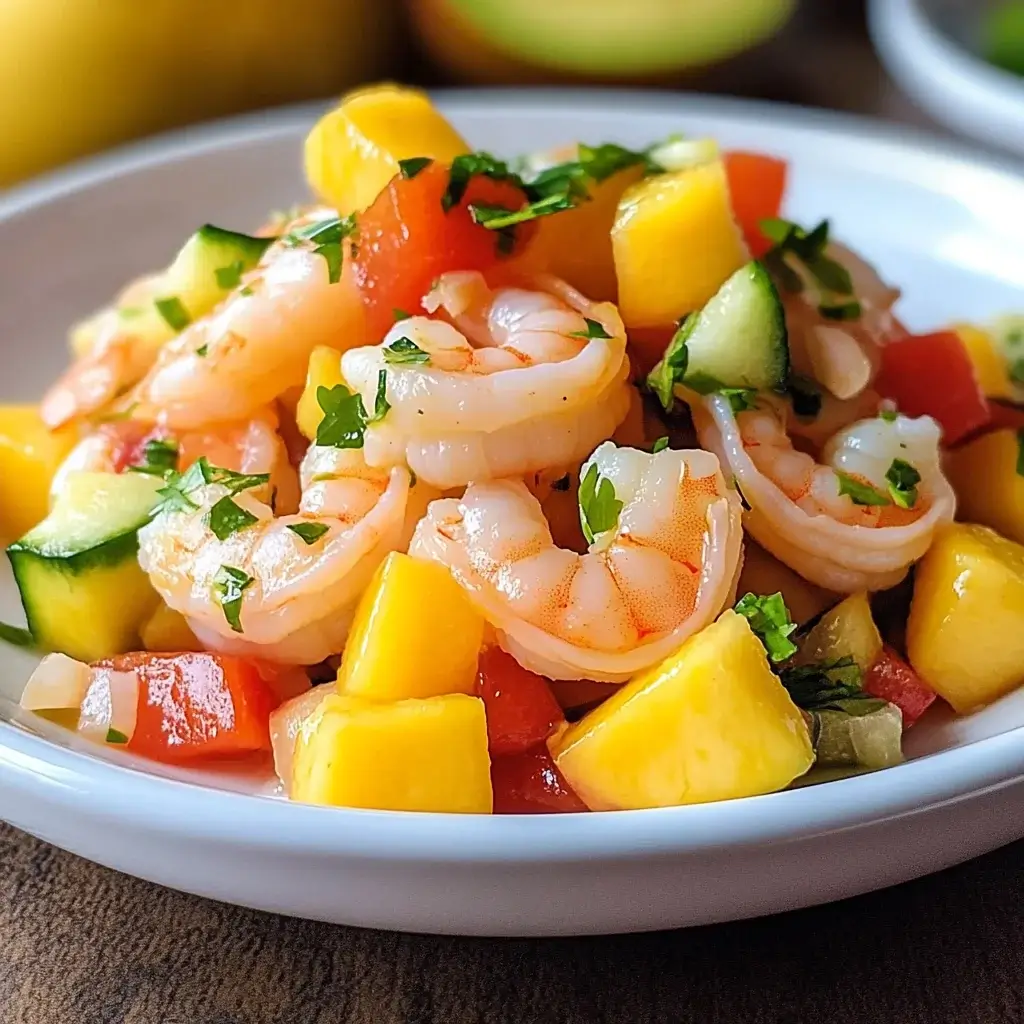
Mango Shrimp Ceviche has become an absolute staple in our household, especially during the warmer months. There’s something so incredibly refreshing and vibrant about the combination of sweet mango, succulent shrimp, and zesty lime juice that just sings of summer. The first time I made it, I was a little hesitant – raw shrimp? But the citrus magic of ceviche truly transforms the shrimp, “cooking” it perfectly and infusing it with incredible flavor. My family devoured it! Even my picky eaters, who usually shy away from seafood, couldn’t get enough. It’s now a requested dish for every potluck, BBQ, and even just a light and healthy weeknight dinner. If you’re looking for a dish that’s bursting with flavor, incredibly easy to make, and sure to impress, you absolutely have to try this Mango Shrimp Ceviche. Trust me, it will become your new favorite too!
Ingredients for Mango Shrimp Ceviche
- 1 pound raw shrimp, peeled and deveined: Look for fresh, high-quality shrimp. Smaller to medium-sized shrimp work best as they absorb the marinade quickly and are easier to eat in a ceviche.
- 2 ripe but firm mangoes, diced: Choose mangoes that are sweet and fragrant but still firm enough to hold their shape when diced. Avoid overly ripe mangoes that might become mushy.
- 1 red onion, finely diced: Red onion provides a sharp and slightly pungent flavor that balances the sweetness of the mango and shrimp.
- 1 jalapeño pepper, seeded and minced (optional): Adds a touch of heat. Adjust the amount or omit entirely if you prefer a milder ceviche. Remember to handle jalapeños with care and wash your hands afterwards.
- 1/2 cup freshly squeezed lime juice: The star ingredient that “cooks” the shrimp and provides the essential citrus tang. Freshly squeezed is crucial for the best flavor.
- 1/4 cup chopped fresh cilantro: Adds a fresh, herbaceous note. If you are not a fan of cilantro, you can substitute with parsley, though it will slightly alter the flavor profile.
- 2 tablespoons olive oil: Adds richness and helps to emulsify the marinade, coating the ingredients beautifully. Extra virgin olive oil is recommended for its superior flavor.
- Salt and freshly ground black pepper to taste: Essential for seasoning and enhancing all the flavors. Adjust to your preference.
- Optional garnishes: Avocado slices, tortilla chips, tostadas, hot sauce, extra cilantro, lime wedges. These allow for customization and enhance the serving experience.
Instructions for Making Mango Shrimp Ceviche
- Prepare the Shrimp: Begin by ensuring your shrimp is properly prepared. If using frozen shrimp, thaw it completely according to package instructions. Pat the shrimp dry with paper towels. This step is important as excess moisture can dilute the marinade. Once dry, cut the shrimp into bite-sized pieces, about ½ inch to ¾ inch in size. Smaller pieces will marinate and “cook” faster and are easier to eat in the ceviche. Place the chopped shrimp in a non-reactive bowl, such as glass or ceramic. Avoid using metal bowls as they can react with the lime juice and affect the flavor.
- Marinate the Shrimp in Lime Juice: Pour the freshly squeezed lime juice over the chopped shrimp, ensuring that all the shrimp pieces are submerged in the juice. The lime juice is acidic and will denature the proteins in the shrimp, effectively “cooking” it without heat. This process is what makes ceviche unique. Gently stir the shrimp to ensure even coating. Cover the bowl with plastic wrap or a lid and refrigerate for at least 30 minutes, or up to 1 hour. The marinating time will depend on the size of your shrimp pieces and your desired level of “cookedness”. The shrimp is ready when it turns opaque and pink, similar to cooked shrimp. If you prefer a firmer texture, marinate for the shorter end of the time range; for a more tender texture, marinate slightly longer. Don’t marinate for too long, as the shrimp can become rubbery if over-exposed to the acid.
- Prepare the Vegetables and Mango: While the shrimp is marinating, prepare the remaining ingredients. Dice the red onion finely. Rinsing the diced red onion under cold water can help to mellow its sharpness if you prefer a milder onion flavor. Mince the jalapeño pepper, removing the seeds and membranes for less heat, or leaving some seeds in for more spice. Remember to wear gloves or wash your hands thoroughly after handling jalapeños to avoid irritation. Dice the mango into similar-sized pieces as the shrimp, about ½ inch to ¾ inch. Ensure the mango is ripe but firm to prevent it from becoming mushy in the ceviche. Chop the fresh cilantro. Having all the ingredients prepped and ready will make assembling the ceviche quick and easy once the shrimp is marinated.
- Combine Ingredients: After the shrimp has marinated and is opaque and pink, drain off most of the lime juice. Leaving a little bit of the lime juice in the bowl is fine, but too much can make the ceviche overly acidic and watery. Add the diced red onion, minced jalapeño (if using), and diced mango to the bowl with the marinated shrimp. Gently toss all the ingredients together to combine them evenly.
- Add Olive Oil and Cilantro: Drizzle the olive oil over the mixture. The olive oil adds a richness and depth of flavor, as well as helping to emulsify the dressing and coat all the ingredients beautifully. Add the chopped fresh cilantro. Cilantro provides a bright, fresh, and herbaceous counterpoint to the sweet mango, spicy jalapeño, and tangy lime. Toss everything together again to ensure the olive oil and cilantro are well distributed throughout the ceviche.
- Season to Taste: Season the ceviche generously with salt and freshly ground black pepper. Taste and adjust the seasoning as needed. Ceviche often benefits from a good amount of salt to balance the acidity and bring out the flavors of the shrimp, mango, and other ingredients. You can also add a squeeze of extra lime juice if you prefer a more pronounced citrus flavor.
- Chill and Serve: Cover the bowl and refrigerate the Mango Shrimp Ceviche for at least 15-20 minutes before serving. Chilling allows the flavors to meld together and enhances the refreshing quality of the dish. Ceviche is best served cold. While it can be served immediately after mixing, chilling for a short period significantly improves the overall taste and texture. Serve immediately after chilling for the best quality and flavor. Garnish with optional toppings like avocado slices, extra cilantro, or lime wedges just before serving.
Nutrition Facts for Mango Shrimp Ceviche
Servings: 6
Calories per serving: Approximately 250-300 calories (estimated, may vary based on ingredient quantities and specific nutritional values)
- Protein: 20-25g
- Fat: 10-15g
Note: Nutritional information is an estimate and can vary based on specific ingredients and portion sizes. For precise nutritional values, use a nutrition calculator with specific ingredient brands and weights.
Preparation Time for Mango Shrimp Ceviche
Prep time: 20 minutes (chopping vegetables, preparing shrimp, dicing mango)
Marinating time: 30 minutes – 1 hour (shrimp in lime juice)
Chilling time: 15-20 minutes (after combining all ingredients)
Total time: Approximately 1 hour 5 minutes – 1 hour 40 minutes (including marinating and chilling)
This Mango Shrimp Ceviche is quick to prepare, especially considering it requires no actual cooking with heat. Most of the time is spent marinating, allowing you to focus on other tasks while the flavors develop.
How to Serve Mango Shrimp Ceviche
Mango Shrimp Ceviche is incredibly versatile and can be served in numerous delicious ways. Here are some popular and delightful serving suggestions:
- With Tortilla Chips: This is a classic and easy way to enjoy ceviche. Serve the ceviche in a bowl surrounded by crispy tortilla chips for scooping. The crunchy chips provide a wonderful textural contrast to the tender ceviche. Choose sturdy chips that can hold up to the moisture of the ceviche without breaking.
- On Tostadas: For a heartier option, spoon the ceviche onto crispy tostada shells. You can add a layer of refried beans or mashed avocado to the tostadas before topping with the ceviche for extra flavor and richness. Garnish with a sprinkle of cotija cheese or crumbled queso fresco for a salty finish.
- In Lettuce Cups: For a light and refreshing low-carb option, serve the ceviche in crisp lettuce cups, such as butter lettuce or romaine lettuce leaves. This is a perfect choice for a healthy appetizer or light lunch. The lettuce cups add a refreshing crunch and keep the dish light and vibrant.
- As a Salad: Mango Shrimp Ceviche can be served as a vibrant and flavorful salad. Simply arrange the ceviche on a bed of mixed greens or baby spinach. You can add other salad components like sliced avocado, cucumber, or bell peppers for added texture and nutrition. A light vinaigrette dressing can complement the ceviche, though often the natural juices are flavorful enough.
- Alongside Avocado: Avocado and ceviche are a match made in heaven. Serve the ceviche alongside slices or chunks of creamy avocado. The richness of the avocado beautifully complements the bright and tangy ceviche. You can also mash avocado with lime juice and salt to create a simple guacamole to serve with the ceviche.
- As an Appetizer Shooter: For a party-friendly presentation, serve small portions of the ceviche in shot glasses or small appetizer cups. This is an elegant and easy way to serve ceviche as a passed appetizer. Garnish each shooter with a small sprig of cilantro or a tiny lime wedge.
- With Plantain Chips: For a tropical twist, serve the ceviche with crispy plantain chips (tostones or plantain crisps). The slightly sweet and savory plantain chips pair wonderfully with the tangy and refreshing ceviche, creating a delightful Caribbean-inspired appetizer.
- As a Side Dish: Mango Shrimp Ceviche can also be served as a vibrant and flavorful side dish to grilled fish, chicken, or tacos. Its refreshing nature helps to balance richer main courses and adds a burst of freshness to the meal.
Additional Tips for Perfect Mango Shrimp Ceviche
- Use the Freshest Ingredients: The quality of your ingredients is paramount for ceviche, as it’s a dish where the flavors of each component truly shine. Use the freshest shrimp you can find, ripe but firm mangoes, and bright, vibrant cilantro. Freshly squeezed lime juice is non-negotiable – bottled lime juice lacks the same zest and brightness.
- Don’t Over-Marinate the Shrimp: While the lime juice “cooks” the shrimp, over-marinating can make it rubbery and tough. Stick to the recommended marinating time of 30 minutes to 1 hour. Keep an eye on the shrimp – it’s ready when it turns opaque and pink.
- Taste and Adjust Seasoning: Ceviche is all about balance. Taste the ceviche after combining all the ingredients and adjust the seasoning to your liking. You might need more salt, lime juice, or a touch of jalapeño for heat. Don’t be afraid to tweak it until it tastes perfect to you.
- Chill Before Serving: Chilling the ceviche after it’s assembled is crucial. It allows the flavors to meld together and enhances the refreshing quality of the dish. Serve it cold for the best taste and texture.
- Make it Ahead (Partially): You can prepare the individual components of the ceviche ahead of time. Dice the vegetables and mango, and even marinate the shrimp up to a few hours in advance and store them separately in the refrigerator. Combine all the ingredients and season just before serving for the freshest possible ceviche. Assembled ceviche is best consumed within a few hours of preparation.
- Control the Heat: If you’re sensitive to spice, start with a small amount of jalapeño or omit it entirely. You can always add a pinch of cayenne pepper or a dash of hot sauce later if you want to increase the heat. For those who love spice, consider using serrano peppers for a hotter kick, or leaving some seeds and membranes in the jalapeño.
- Add Other Vegetables: Feel free to customize your ceviche with other vegetables. Diced cucumber, bell peppers (especially red or yellow for color), or even finely chopped jicama can add extra crunch and flavor dimensions.
- Garnish Creatively: Garnishes not only make the dish look more appealing but also add flavor and texture. Consider garnishing with avocado slices, extra cilantro sprigs, lime wedges, a sprinkle of red pepper flakes for color and a touch of heat, or even a drizzle of hot sauce for those who like extra spice.
Frequently Asked Questions About Mango Shrimp Ceviche (FAQ)
Q1: Can I use cooked shrimp for ceviche?
A: While traditional ceviche uses raw seafood that is “cooked” by citrus juice, using pre-cooked shrimp is possible if you are hesitant about using raw shrimp. However, the texture and flavor will be slightly different. If using cooked shrimp, simply skip the marinating step in lime juice and add the cooked shrimp to the other ingredients just before serving. Keep in mind it will technically be more of a “salad” than true ceviche in this case.
Q2: How long does Mango Shrimp Ceviche last in the refrigerator?
A: Ceviche is best consumed fresh, ideally within a few hours of preparation. While it can be stored in the refrigerator for up to 24 hours, the texture of the shrimp and vegetables may become softer, and the flavors might become less vibrant over time. The lime juice will continue to “cook” the shrimp, potentially making it tougher if left too long. For the best quality and flavor, enjoy it as soon as possible.
Q3: Can I make Mango Shrimp Ceviche ahead of time for a party?
A: Yes, you can prep components ahead of time. You can chop the vegetables and mango and store them separately in airtight containers in the refrigerator. You can also marinate the shrimp in lime juice up to 2-3 hours before serving and keep it refrigerated. However, it is best to combine all ingredients and season just before serving, ideally within an hour or two of your event, to maintain optimal freshness and texture.
Q4: I don’t like cilantro. What can I substitute?
A: If you’re not a fan of cilantro, fresh parsley is the best substitute. It will provide a fresh, herbaceous note, although the flavor profile will be slightly different. Mint or even a bit of chopped basil could also be interesting alternatives for a different flavor twist, but parsley is the closest in flavor profile to cilantro in this context.
Q5: Can I make this ceviche spicier?
A: Absolutely! To increase the heat, you can use a hotter pepper like serrano instead of jalapeño, or leave some of the seeds and membranes in the jalapeño. You can also add a pinch of cayenne pepper or a dash of your favorite hot sauce to the ceviche. Taste and adjust the spice level to your preference.
Q6: What kind of mango is best for ceviche?
A: Choose mangoes that are ripe but still firm to the touch. Varieties like Ataulfo (honey mangoes), Kent, or Tommy Atkins are all good choices. Avoid overly ripe mangoes that are too soft, as they will become mushy in the ceviche. The goal is to have sweet mango flavor with a firm texture that holds up well when diced.
Q7: Can I use frozen shrimp for ceviche?
A: Yes, you can use frozen shrimp, and it’s often a very convenient and cost-effective option. Make sure to thaw the shrimp completely before using it. The best way to thaw shrimp is overnight in the refrigerator. If you need to thaw it quickly, place the frozen shrimp in a sealed bag and submerge it in a bowl of cold water. Change the water every 30 minutes until the shrimp is fully thawed. Pat the thawed shrimp thoroughly dry with paper towels before marinating to remove excess moisture.
Q8: Is Mango Shrimp Ceviche gluten-free and dairy-free?
A: Yes, Mango Shrimp Ceviche is naturally gluten-free and dairy-free, making it a great option for people with dietary restrictions. It is made with shrimp, mango, vegetables, lime juice, olive oil, and seasonings, all of which are inherently gluten-free and dairy-free. Just be sure to serve it with gluten-free dippers if needed, such as corn tortilla chips or lettuce cups, to ensure the entire meal remains gluten-free and dairy-free.
Mango Shrimp Ceviche
Ingredients
- 1 pound raw shrimp, peeled and deveined: Look for fresh, high-quality shrimp. Smaller to medium-sized shrimp work best as they absorb the marinade quickly and are easier to eat in a ceviche.
- 2 ripe but firm mangoes, diced: Choose mangoes that are sweet and fragrant but still firm enough to hold their shape when diced. Avoid overly ripe mangoes that might become mushy.
- 1 red onion, finely diced: Red onion provides a sharp and slightly pungent flavor that balances the sweetness of the mango and shrimp.
- 1 jalapeño pepper, seeded and minced (optional): Adds a touch of heat. Adjust the amount or omit entirely if you prefer a milder ceviche. Remember to handle jalapeños with care and wash your hands afterwards.
- 1/2 cup freshly squeezed lime juice: The star ingredient that “cooks” the shrimp and provides the essential citrus tang. Freshly squeezed is crucial for the best flavor.
- 1/4 cup chopped fresh cilantro: Adds a fresh, herbaceous note. If you are not a fan of cilantro, you can substitute with parsley, though it will slightly alter the flavor profile.
- 2 tablespoons olive oil: Adds richness and helps to emulsify the marinade, coating the ingredients beautifully. Extra virgin olive oil is recommended for its superior flavor.
- Salt and freshly ground black pepper to taste: Essential for seasoning and enhancing all the flavors. Adjust to your preference.
- Optional garnishes: Avocado slices, tortilla chips, tostadas, hot sauce, extra cilantro, lime wedges. These allow for customization and enhance the serving experience.
Instructions
- Prepare the Shrimp: Begin by ensuring your shrimp is properly prepared. If using frozen shrimp, thaw it completely according to package instructions. Pat the shrimp dry with paper towels. This step is important as excess moisture can dilute the marinade. Once dry, cut the shrimp into bite-sized pieces, about ½ inch to ¾ inch in size. Smaller pieces will marinate and “cook” faster and are easier to eat in the ceviche. Place the chopped shrimp in a non-reactive bowl, such as glass or ceramic. Avoid using metal bowls as they can react with the lime juice and affect the flavor.
- Marinate the Shrimp in Lime Juice: Pour the freshly squeezed lime juice over the chopped shrimp, ensuring that all the shrimp pieces are submerged in the juice. The lime juice is acidic and will denature the proteins in the shrimp, effectively “cooking” it without heat. This process is what makes ceviche unique. Gently stir the shrimp to ensure even coating. Cover the bowl with plastic wrap or a lid and refrigerate for at least 30 minutes, or up to 1 hour. The marinating time will depend on the size of your shrimp pieces and your desired level of “cookedness”. The shrimp is ready when it turns opaque and pink, similar to cooked shrimp. If you prefer a firmer texture, marinate for the shorter end of the time range; for a more tender texture, marinate slightly longer. Don’t marinate for too long, as the shrimp can become rubbery if over-exposed to the acid.
- Prepare the Vegetables and Mango: While the shrimp is marinating, prepare the remaining ingredients. Dice the red onion finely. Rinsing the diced red onion under cold water can help to mellow its sharpness if you prefer a milder onion flavor. Mince the jalapeño pepper, removing the seeds and membranes for less heat, or leaving some seeds in for more spice. Remember to wear gloves or wash your hands thoroughly after handling jalapeños to avoid irritation. Dice the mango into similar-sized pieces as the shrimp, about ½ inch to ¾ inch. Ensure the mango is ripe but firm to prevent it from becoming mushy in the ceviche. Chop the fresh cilantro. Having all the ingredients prepped and ready will make assembling the ceviche quick and easy once the shrimp is marinated.
- Combine Ingredients: After the shrimp has marinated and is opaque and pink, drain off most of the lime juice. Leaving a little bit of the lime juice in the bowl is fine, but too much can make the ceviche overly acidic and watery. Add the diced red onion, minced jalapeño (if using), and diced mango to the bowl with the marinated shrimp. Gently toss all the ingredients together to combine them evenly.
- Add Olive Oil and Cilantro: Drizzle the olive oil over the mixture. The olive oil adds a richness and depth of flavor, as well as helping to emulsify the dressing and coat all the ingredients beautifully. Add the chopped fresh cilantro. Cilantro provides a bright, fresh, and herbaceous counterpoint to the sweet mango, spicy jalapeño, and tangy lime. Toss everything together again to ensure the olive oil and cilantro are well distributed throughout the ceviche.
- Season to Taste: Season the ceviche generously with salt and freshly ground black pepper. Taste and adjust the seasoning as needed. Ceviche often benefits from a good amount of salt to balance the acidity and bring out the flavors of the shrimp, mango, and other ingredients. You can also add a squeeze of extra lime juice if you prefer a more pronounced citrus flavor.
- Chill and Serve: Cover the bowl and refrigerate the Mango Shrimp Ceviche for at least 15-20 minutes before serving. Chilling allows the flavors to meld together and enhances the refreshing quality of the dish. Ceviche is best served cold. While it can be served immediately after mixing, chilling for a short period significantly improves the overall taste and texture. Serve immediately after chilling for the best quality and flavor. Garnish with optional toppings like avocado slices, extra cilantro, or lime wedges just before serving.
Nutrition
- Serving Size: one normal portion
- Calories: 300
- Fat: 15g
- Protein: 25g