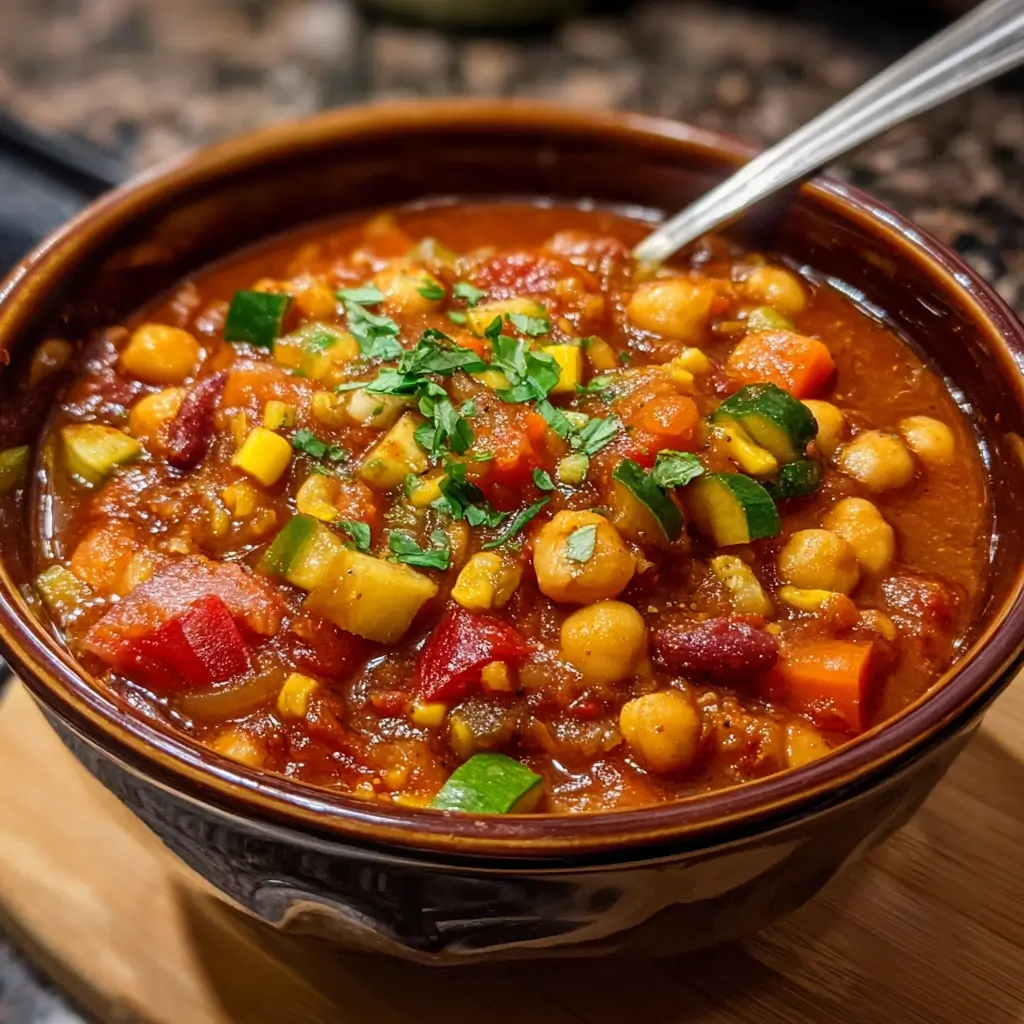
Of all the recipes that have graced my kitchen over the years, there are a select few that become more than just a meal; they become a feeling. This One-Pot Chickpea Veggie Chili is one of those cherished recipes. I first made it on a whim one blustery Tuesday evening when the day had gotten away from me and the thought of a complicated dinner with a mountain of dishes was simply too much to bear. I wanted something that felt like a warm hug in a bowl—nourishing, hearty, and, most importantly, simple. Skepticism was high, especially from my husband who is a self-proclaimed chili connoisseur. A chili without meat? With chickpeas? He raised an eyebrow, but hunger won out. As the aromas of toasted cumin, smoky paprika, and simmering vegetables began to fill the house, the mood shifted. An hour later, we were all gathered around the table, bowls steaming, topped with a dollop of sour cream and a sprinkle of sharp cheddar. The silence that followed the first few spoonfuls was all the confirmation I needed. It was a resounding success. This chili isn’t just about convenience; it’s a vibrant, flavor-packed dish that proves plant-based eating can be incredibly satisfying and robust. It has since become our go-to comfort meal, perfect for busy weeknights, lazy Sundays, or for feeding a crowd. It’s the recipe I share with friends who want to eat healthier without sacrificing flavor, and it’s the one that always leaves everyone asking for the recipe.
Ingredients
- 2 tablespoons Olive Oil: A quality extra virgin olive oil serves as the flavor base for sautéing the aromatics.
- 2 medium Yellow Onions, diced: These provide a sweet, aromatic foundation that deepens as it cooks.
- 2 large Bell Peppers, diced (any color combination): We love a mix of red and yellow for a vibrant color and a sweet, mild flavor that complements the spices.
- 4-5 cloves Garlic, minced: Freshly minced garlic is essential for that pungent, savory kick that is crucial to any good chili.
- 1 large Jalapeño, finely diced (optional): For those who like a gentle wave of heat. Remove the seeds and membranes for less spice.
- 1/4 cup Chili Powder: The heart and soul of the chili, providing a complex, mildly spicy, and earthy flavor profile.
- 2 tablespoons Ground Cumin: Lends a warm, nutty, and slightly peppery flavor that is characteristic of chili.
- 1 tablespoon Smoked Paprika: This is the secret weapon, adding a wonderful smoky depth that mimics the flavor of slow-cooked dishes.
- 1 teaspoon Dried Oregano: Adds a touch of earthy, peppery brightness.
- 1/2 teaspoon Ground Coriander: Provides a lemony, floral note that brightens the other spices.
- 1/4 teaspoon Cayenne Pepper (or more, to taste): Allows you to customize the heat level to your personal preference.
- 1 (28-ounce) can Crushed Tomatoes: Forms the rich, savory base of the chili. Fire-roasted crushed tomatoes can be used for an even smokier flavor.
- 1 (15-ounce) can Diced Tomatoes, undrained: Adds texture and chunks of tomato throughout the chili.
- 1 (15-ounce) can Black Beans, rinsed and drained: These add a creamy texture, earthy flavor, and a boost of protein and fiber.
- 1 (15-ounce) can Kidney Beans, rinsed and drained: A classic chili bean that holds its shape well and provides a firm, hearty bite.
- 2 (15-ounce) cans Chickpeas (Garbanzo Beans), rinsed and drained: The star of the show, offering a unique, slightly nutty flavor and a satisfyingly dense texture.
- 1.5 cups Vegetable Broth: Used to control the consistency of the chili and add another layer of savory vegetable flavor.
- 1 cup Frozen or Canned Corn, drained: Adds pops of sweetness and texture that contrast beautifully with the beans.
- 2 teaspoons Cocoa Powder, unsweetened: A secret ingredient that doesn’t make the chili taste like chocolate but adds an incredible depth and richness.
- 1 tablespoon Brown Sugar or Maple Syrup (optional): Helps to balance the acidity of the tomatoes and enhances the overall flavor complexity.
- Salt and Freshly Ground Black Pepper, to taste: Essential for seasoning and bringing all the flavors together.
- 1 large Lime, juiced: A squeeze of fresh lime juice at the end brightens up the entire dish, cutting through the richness.
Instructions
- Sauté the Aromatics: Place a large Dutch oven or heavy-bottomed pot over medium heat. Add the olive oil and let it warm for a moment. Add the diced yellow onions and bell peppers. Sauté, stirring occasionally, for about 6-8 minutes, or until the onions become translucent and the peppers have softened. Season generously with a pinch of salt and pepper. This initial step builds the first layer of flavor.
- Bloom the Spices: Add the minced garlic and diced jalapeño (if using) to the pot. Cook for another minute until fragrant, being careful not to burn the garlic. Add the chili powder, cumin, smoked paprika, oregano, coriander, and cayenne pepper. Stir constantly for about 60 seconds. This process, known as “blooming,” toasts the spices and unlocks their full aromatic potential, creating a much deeper and more robust flavor in the final chili.
- Combine the Core Ingredients: Pour in the crushed tomatoes, diced tomatoes (with their juice), and vegetable broth. Use a wooden spoon or spatula to scrape up any browned bits stuck to the bottom of the pot—this is called deglazing and adds immense flavor.
- Add the Beans and Enhancers: Stir in the rinsed and drained black beans, kidney beans, and chickpeas. Add the frozen corn, unsweetened cocoa powder, and brown sugar or maple syrup (if using). Stir everything together until well combined.
- Simmer to Perfection: Bring the chili to a gentle boil, then reduce the heat to low. Cover the pot and let it simmer for at least 45 minutes, stirring every 10-15 minutes to prevent sticking. For the best, most developed flavor, allow it to simmer for 1 to 1.5 hours. The longer it simmers, the more the flavors will meld and deepen, and the chili will thicken to a perfect consistency.
- Final Seasoning: After simmering, taste the chili and adjust the seasonings as needed. You may want to add more salt, pepper, or a pinch more cayenne for heat.
- Finish with Brightness: Turn off the heat. Squeeze in the juice of one large lime and stir to combine. This final step is crucial; the acidity from the lime juice cuts through the richness and brightens all the savory flavors, making the chili taste fresh and vibrant.
- Rest and Serve: Let the chili rest for 5-10 minutes off the heat before serving. This allows the flavors to settle. Ladle into bowls and serve hot with your favorite toppings.
Nutrition Facts
This recipe makes approximately 8 generous servings. The nutritional information is an estimate and can vary based on specific ingredients used.
- Servings: 8
- Calories Per Serving: Approximately 350-400 kcal
- Fiber (Approx. 15g): This chili is a fiber powerhouse. Fiber is crucial for digestive health, helps maintain stable blood sugar levels, and promotes a feeling of fullness, which can aid in weight management.
- Protein (Approx. 15g): Entirely from plant-based sources like beans and chickpeas, the protein in this dish is essential for muscle repair, immune function, and overall body maintenance. It makes the chili incredibly satisfying and sustaining.
- Vitamin C (High): Thanks to the bell peppers, tomatoes, and lime juice, this chili provides a significant amount of Vitamin C, a powerful antioxidant that supports the immune system and skin health.
- Iron (Good Source): Beans and chickpeas are excellent sources of plant-based iron, which is vital for carrying oxygen in the blood and preventing fatigue.
- Low in Saturated Fat: As a plant-based dish, this chili is naturally low in saturated fat, making it a heart-healthy choice compared to traditional meat-based chilis.
Preparation time
The beauty of this one-pot meal lies in its straightforward preparation. You can expect about 15-20 minutes of active preparation time, which includes chopping the vegetables and measuring out the spices. The cooking time is approximately 1 to 1.5 hours, most of which is hands-off simmering time where the pot does all the work, allowing the rich, complex flavors to develop beautifully.
How to Serve
Serving this One-Pot Chickpea Veggie Chili is half the fun! Setting up a “chili bar” with various toppings allows everyone to customize their bowl. Here are some classic and creative ideas:
- The Classic Toppings Bar:
- Dairy/Dairy-Free: A dollop of cool sour cream, plain Greek yogurt, or a dairy-free cashew cream to balance the spice.
- Cheese: A generous sprinkle of shredded sharp cheddar, Monterey Jack, or a high-quality vegan shredded cheese.
- Onions: Finely diced red onion or sliced green onions (scallions) for a fresh, pungent bite.
- Fresh and Crunchy Garnishes:
- Avocado: Creamy diced avocado or a scoop of guacamole adds richness and healthy fats.
- Cilantro: A handful of fresh, chopped cilantro brings a bright, herbaceous note that complements the spices perfectly.
- Tortilla Strips: Crispy, salty tortilla strips or crushed tortilla chips for a delightful crunch in every bite.
- Jalapeños: Sliced fresh or pickled jalapeños for those who crave an extra kick of heat.
- Perfect Pairings (What to Serve on the Side):
- Cornbread: A slice of warm, sweet, and buttery cornbread is the ultimate companion for soaking up every last bit of chili.
- Rice: Serve the chili over a bed of fluffy white or brown rice to make it an even more substantial meal.
- Quinoa: For an extra protein and nutrient boost, serve over cooked quinoa.
- Baked Potatoes: Ladle the chili over a split baked potato or sweet potato for a hearty and complete meal.
- Simple Green Salad: A crisp green salad with a light vinaigrette provides a refreshing contrast to the rich, warm chili.
Additional tips
- Master Your Meal Prep: To make this recipe even faster on a weeknight, do your prep ahead of time. Chop the onions, bell peppers, and garlic and store them in an airtight container in the fridge for up to 2 days. You can also pre-measure all your dry spices into a small bowl or jar. When you’re ready to cook, everything is grab-and-go.
- Freezing for the Future: This chili freezes exceptionally well, making it a perfect batch-cook meal. Allow the chili to cool completely, then portion it into freezer-safe containers or bags. It will keep for up to 3 months. To reheat, let it thaw in the refrigerator overnight and then gently warm it on the stovetop or in the microwave.
- Control the Spice Level: This recipe is easily adaptable to your heat preference. For a milder chili, omit the jalapeño and cayenne pepper entirely. For a medium heat, use the jalapeño but be sure to remove all seeds and white membranes. For a truly fiery chili, leave the jalapeño seeds in and don’t be shy with the cayenne pepper, or even add a pinch of chipotle powder for a smoky heat.
- Sneak in More Veggies: This recipe is a fantastic canvas for adding even more vegetables. Consider stirring in a cup of diced zucchini or yellow squash during the last 30 minutes of simmering. A few handfuls of fresh spinach or chopped kale can be wilted in at the very end for a boost of greens. Diced sweet potato or butternut squash can also be added with the onions for a sweeter, heartier chili.
- Achieve a Creamier Texture: If you prefer a chili with a slightly creamier, thicker body, you can achieve it easily. Take about 1-2 cups of the finished chili (making sure to get plenty of beans) and blend it with an immersion blender or a regular blender until smooth. Then, stir this puréed mixture back into the main pot. This thickens the chili beautifully without adding any dairy.
- The Importance of Quality Spices: The flavor of your chili is directly dependent on the quality and freshness of your spices. Spices that have been sitting in your cabinet for years lose their potency. For the best result, use spices that are vibrant in color and aroma. It makes a world of difference.
- Don’t Skip the Bloom: The step where you toast the spices in the pot for a minute before adding liquids is non-negotiable for maximum flavor. This simple technique awakens the essential oils in the spices, transforming them from dusty powders into a fragrant, deeply flavorful foundation for your chili.
- Let It Rest: While it’s tempting to ladle it up straight from the stove, letting the chili rest for at least 10-15 minutes after cooking allows the flavors to meld and settle. Even better? This chili is one of those magical dishes that tastes even better the next day as the flavors continue to marry in the fridge.
FAQ section
1. Can I use different types of beans in this chili?
Absolutely! This recipe is incredibly versatile. Feel free to substitute any of the beans with what you have on hand. Pinto beans are a fantastic, creamy alternative. You could also use cannellini beans or even a mix from a “chili bean” can. The key is to keep the total quantity of beans roughly the same (about 3-4 standard cans) to maintain the right texture and heartiness.
2. Is this One-Pot Chickpea Veggie Chili gluten-free?
Yes, as written, this recipe is naturally gluten-free. All the core ingredients—vegetables, beans, spices, and tomatoes—are gluten-free. Just be sure to double-check the labels on your vegetable broth and any packaged spices to ensure they are certified gluten-free and have no hidden gluten-containing additives.
3. How can I add even more protein to this vegetarian chili?
While the chili is already a good source of protein, you can easily boost it further. Consider adding a cup of cooked red or brown lentils along with the beans; they will dissolve slightly and help thicken the chili. Another great option is to stir in a cup of cooked quinoa during the last 15 minutes of simmering. Finally, serving the chili with a dollop of protein-rich Greek yogurt is another simple way to increase the protein content.
4. My chili seems too thin (or too thick). How can I fix it?
This is an easy fix! If your chili is too thin, you can let it simmer longer with the lid slightly ajar to allow more liquid to evaporate. Alternatively, you can make a slurry by mixing 1 tablespoon of cornstarch with 2 tablespoons of cold water, then stirring it into the simmering chili until it thickens. If your chili is too thick, simply stir in a splash more vegetable broth or water until it reaches your desired consistency.
5. Can I make this chili in a slow cooker or Instant Pot?
Yes, this recipe adapts beautifully to both!
- For a Slow Cooker: Complete steps 1 and 2 (sautéing veggies and blooming spices) on the stovetop. This is a crucial flavor-building step. Then, transfer the sautéed mixture to your slow cooker and add all the remaining ingredients (except the lime juice). Stir well, cover, and cook on low for 6-8 hours or on high for 3-4 hours. Stir in the fresh lime juice just before serving.
- For an Instant Pot: Use the “Sauté” function to complete steps 1 and 2 directly in the Instant Pot liner. Turn off the sauté function, then pour in a little of the vegetable broth and deglaze the pot thoroughly. Add all remaining ingredients (except the lime juice), stir, and secure the lid. Cook on high pressure for 12 minutes, then allow for a 10-minute natural pressure release before manually releasing the rest. Stir in the lime juice before serving.
6. What is the best way to store and reheat leftovers?
Store any leftover chili in an airtight container in the refrigerator for up to 5 days. The flavors will actually deepen and improve overnight! To reheat, you can gently warm it in a saucepan over medium-low heat on the stovetop, stirring occasionally, or simply microwave individual portions until hot. If the chili has thickened in the fridge, you may want to add a splash of water or vegetable broth when reheating.
7. Can I use fresh tomatoes instead of canned?
You can, but it will change the texture and require a bit more work. Canned crushed tomatoes provide a thick, rich base that’s hard to replicate quickly with fresh tomatoes. If you want to use fresh, you would need about 3-4 pounds of ripe tomatoes (like Roma). You would need to score, blanch, and peel them, then crush them yourself. You will also likely need to simmer the chili for a longer period to allow the fresh tomatoes to break down and develop a deep flavor.
8. My chili tastes a little bitter or too acidic. Why, and how can I fix it?
A slight bitterness or sharp acidity can sometimes come from the canned tomatoes or the spices. This recipe includes two ingredients specifically to combat this: the unsweetened cocoa powder and the optional brown sugar/maple syrup. The cocoa adds depth that mellows bitterness, while the touch of sweetness perfectly balances the acidity of the tomatoes. If you’ve already added them and it’s still sharp, try adding another teaspoon of sugar or a pinch more salt, as salt can also help balance flavors.

One-Pot Chickpea Veggie Chili
Ingredients
- 2 tablespoons Olive Oil: A quality extra virgin olive oil serves as the flavor base for sautéing the aromatics.
- 2 medium Yellow Onions, diced: These provide a sweet, aromatic foundation that deepens as it cooks.
- 2 large Bell Peppers, diced (any color combination): We love a mix of red and yellow for a vibrant color and a sweet, mild flavor that complements the spices.
- 4–5 cloves Garlic, minced: Freshly minced garlic is essential for that pungent, savory kick that is crucial to any good chili.
- 1 large Jalapeño, finely diced (optional): For those who like a gentle wave of heat. Remove the seeds and membranes for less spice.
- 1/4 cup Chili Powder: The heart and soul of the chili, providing a complex, mildly spicy, and earthy flavor profile.
- 2 tablespoons Ground Cumin: Lends a warm, nutty, and slightly peppery flavor that is characteristic of chili.
- 1 tablespoon Smoked Paprika: This is the secret weapon, adding a wonderful smoky depth that mimics the flavor of slow-cooked dishes.
- 1 teaspoon Dried Oregano: Adds a touch of earthy, peppery brightness.
- 1/2 teaspoon Ground Coriander: Provides a lemony, floral note that brightens the other spices.
- 1/4 teaspoon Cayenne Pepper (or more, to taste): Allows you to customize the heat level to your personal preference.
- 1 (28-ounce) can Crushed Tomatoes: Forms the rich, savory base of the chili. Fire-roasted crushed tomatoes can be used for an even smokier flavor.
- 1 (15-ounce) can Diced Tomatoes, undrained: Adds texture and chunks of tomato throughout the chili.
- 1 (15-ounce) can Black Beans, rinsed and drained: These add a creamy texture, earthy flavor, and a boost of protein and fiber.
- 1 (15-ounce) can Kidney Beans, rinsed and drained: A classic chili bean that holds its shape well and provides a firm, hearty bite.
- 2 (15-ounce) cans Chickpeas (Garbanzo Beans), rinsed and drained: The star of the show, offering a unique, slightly nutty flavor and a satisfyingly dense texture.
- 1.5 cups Vegetable Broth: Used to control the consistency of the chili and add another layer of savory vegetable flavor.
- 1 cup Frozen or Canned Corn, drained: Adds pops of sweetness and texture that contrast beautifully with the beans.
- 2 teaspoons Cocoa Powder, unsweetened: A secret ingredient that doesn’t make the chili taste like chocolate but adds an incredible depth and richness.
- 1 tablespoon Brown Sugar or Maple Syrup (optional): Helps to balance the acidity of the tomatoes and enhances the overall flavor complexity.
- Salt and Freshly Ground Black Pepper, to taste: Essential for seasoning and bringing all the flavors together.
- 1 large Lime, juiced: A squeeze of fresh lime juice at the end brightens up the entire dish, cutting through the richness.
Instructions
- Sauté the Aromatics: Place a large Dutch oven or heavy-bottomed pot over medium heat. Add the olive oil and let it warm for a moment. Add the diced yellow onions and bell peppers. Sauté, stirring occasionally, for about 6-8 minutes, or until the onions become translucent and the peppers have softened. Season generously with a pinch of salt and pepper. This initial step builds the first layer of flavor.
- Bloom the Spices: Add the minced garlic and diced jalapeño (if using) to the pot. Cook for another minute until fragrant, being careful not to burn the garlic. Add the chili powder, cumin, smoked paprika, oregano, coriander, and cayenne pepper. Stir constantly for about 60 seconds. This process, known as “blooming,” toasts the spices and unlocks their full aromatic potential, creating a much deeper and more robust flavor in the final chili.
- Combine the Core Ingredients: Pour in the crushed tomatoes, diced tomatoes (with their juice), and vegetable broth. Use a wooden spoon or spatula to scrape up any browned bits stuck to the bottom of the pot—this is called deglazing and adds immense flavor.
- Add the Beans and Enhancers: Stir in the rinsed and drained black beans, kidney beans, and chickpeas. Add the frozen corn, unsweetened cocoa powder, and brown sugar or maple syrup (if using). Stir everything together until well combined.
- Simmer to Perfection: Bring the chili to a gentle boil, then reduce the heat to low. Cover the pot and let it simmer for at least 45 minutes, stirring every 10-15 minutes to prevent sticking. For the best, most developed flavor, allow it to simmer for 1 to 1.5 hours. The longer it simmers, the more the flavors will meld and deepen, and the chili will thicken to a perfect consistency.
- Final Seasoning: After simmering, taste the chili and adjust the seasonings as needed. You may want to add more salt, pepper, or a pinch more cayenne for heat.
- Finish with Brightness: Turn off the heat. Squeeze in the juice of one large lime and stir to combine. This final step is crucial; the acidity from the lime juice cuts through the richness and brightens all the savory flavors, making the chili taste fresh and vibrant.
- Rest and Serve: Let the chili rest for 5-10 minutes off the heat before serving. This allows the flavors to settle. Ladle into bowls and serve hot with your favorite toppings.
Nutrition
- Serving Size: one normal portion
- Calories: 400
- Fiber: 15g
- Protein: 15g