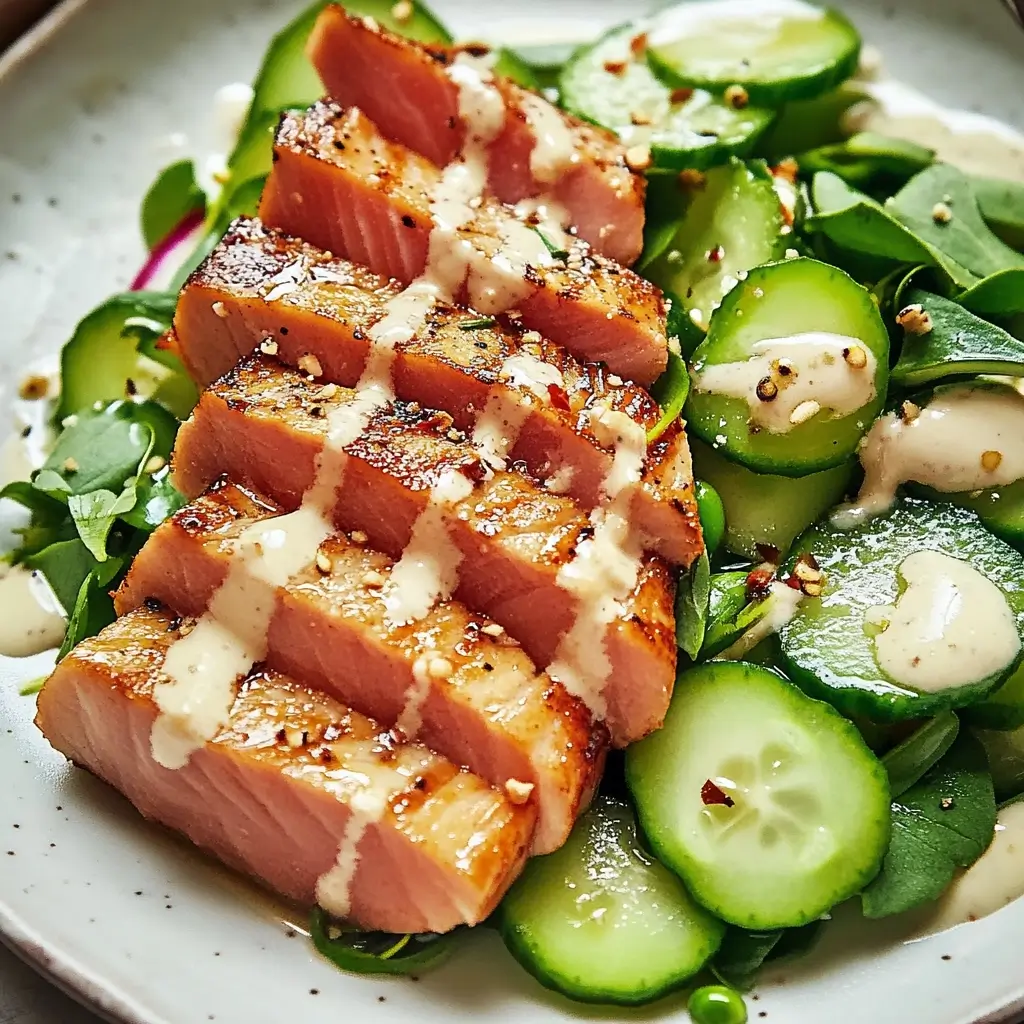
This Pan-Seared Tuna with Cucumber Salad has become an absolute revelation in our household. The first time I made it, I was aiming for something light, healthy, yet satisfying for a weeknight dinner, and boy, did it deliver! My husband, who can be a tough critic when it comes to fish, was instantly won over by the perfectly seared, ruby-red interior of the tuna, contrasting beautifully with its savory, crusted exterior. The kids, surprisingly, devoured the cucumber salad, loving its refreshing crunch and zesty dressing – a minor miracle! What I personally adore is the simplicity married with elegance. It feels like a restaurant-quality dish but comes together in under 30 minutes, making me feel like a culinary superstar without hours spent in the kitchen. The bright, clean flavors are a delightful symphony, with the richness of the tuna perfectly balanced by the crisp, cool cucumber salad. It’s since become a regular on our meal rotation, especially when we crave something that’s both incredibly delicious and genuinely good for us. It’s a dish that never fails to impress guests either, always eliciting oohs and aahs when it hits the table.
Ingredients
- For the Pan-Seared Tuna:
- 2 (6-8 ounce) Ahi Tuna Steaks: Sashimi-grade, about 1 to 1.5 inches thick. The quality here is paramount for a tender, flavorful result.
- 1 tablespoon Sesame Oil: Toasted, for a nutty aroma and flavor that complements the tuna.
- 1 tablespoon Soy Sauce (or Tamari for gluten-free): Adds a savory, umami depth.
- 1 teaspoon Grated Fresh Ginger: Provides a warm, zesty kick.
- 1 Clove Garlic, Minced: For a pungent, aromatic base.
- 1 tablespoon Black and White Sesame Seeds: For coating, adding texture and visual appeal.
- 1 tablespoon Avocado Oil or Canola Oil: For searing, chosen for its high smoke point.
- Salt and Freshly Ground Black Pepper: To taste, for enhancing all the flavors.
- For the Cucumber Salad:
- 1 Large English Cucumber (or 2-3 Persian Cucumbers): Thinly sliced or julienned. English cucumbers have thinner skin and fewer seeds, making them ideal.
- 1/4 Red Onion, Thinly Sliced: Adds a sharp, piquant counterpoint. (Optional, can be soaked in cold water to mellow its flavor).
- 2 tablespoons Rice Vinegar: Provides a mild, slightly sweet acidity.
- 1 teaspoon Toasted Sesame Oil: Echoes the flavor in the tuna marinade.
- 1 teaspoon Honey or Maple Syrup (optional): For a touch of sweetness to balance the vinegar.
- 1 tablespoon Chopped Fresh Cilantro or Mint: Adds a burst of freshness.
- Pinch of Red Pepper Flakes (optional): For a subtle hint of heat.
- Salt: To taste, and for drawing out excess moisture from the cucumbers.
Instructions
1. Prepare the Cucumber Salad (Allow to Marinate):
* In a medium bowl, combine the thinly sliced cucumber and red onion (if using). Sprinkle lightly with salt and let it sit for 10-15 minutes. This helps draw out excess water from the cucumbers, resulting in a crunchier salad.
* After 10-15 minutes, gently pat the cucumbers and onions dry with a paper towel or drain any excess liquid from the bowl.
* In a small separate bowl, whisk together the rice vinegar, toasted sesame oil, honey/maple syrup (if using), chopped fresh cilantro/mint, and red pepper flakes (if using).
* Pour the dressing over the cucumbers and onions. Toss gently to combine.
* Cover and refrigerate while you prepare the tuna. This allows the flavors to meld.
2. Prepare the Tuna:
* Pat the tuna steaks thoroughly dry with paper towels. This is crucial for achieving a good sear.
* In a shallow dish or plate, combine the 1 tablespoon of sesame oil, soy sauce (or tamari), grated ginger, and minced garlic.
* Place the tuna steaks in the marinade, turning to coat all sides. Let them marinate for at least 10 minutes, but no longer than 20-30 minutes (the acid in the soy sauce can start to “cook” the fish if left too long).
* On a separate clean plate, spread out the black and white sesame seeds.
* Remove the tuna from the marinade, letting any excess drip off. Lightly press each side of the tuna steaks into the sesame seeds to create an even crust.
* Season generously with salt and freshly ground black pepper on all sides.
3. Sear the Tuna:
* Heat the avocado oil (or canola oil) in a heavy-bottomed skillet (cast iron is excellent for this) over medium-high to high heat. The pan needs to be very hot to get a good sear. You’ll know it’s ready when the oil is shimmering or a drop of water evaporates instantly.
* Carefully place the sesame-crusted tuna steaks in the hot skillet. Ensure there’s enough space between them; cook in batches if necessary to avoid overcrowding the pan, which would lower the temperature and result in steaming rather than searing.
* Sear the tuna for 1-2 minutes per side for rare, or 2-3 minutes per side for medium-rare. The goal is a beautifully browned and crispy exterior with a warm, pink to red center. Adjust cooking time based on the thickness of your tuna steaks and desired doneness. For a 1.5-inch thick steak, 90 seconds per side is often perfect for rare.
* Use tongs to also briefly sear the edges of the tuna steaks (about 15-20 seconds per edge) if desired, for a more uniform crust.
4. Rest and Slice the Tuna:
* Once seared to your liking, immediately remove the tuna steaks from the skillet and transfer them to a clean cutting board.
* Let the tuna rest for 5-10 minutes. This allows the juices to redistribute, ensuring a more tender and flavorful result. Do not skip this step!
* After resting, use a very sharp knife to slice the tuna against the grain into 1/4 to 1/2-inch thick slices.
5. Assemble and Serve:
* Give the cucumber salad a final toss.
* Arrange a generous portion of the cucumber salad on each plate.
* Fan out the slices of pan-seared tuna alongside or atop the salad.
* Garnish with extra fresh cilantro/mint or a sprinkle of sesame seeds, if desired. Serve immediately.
Nutrition Facts
- Servings: 2
- Calories per serving: Approximately 450-550 kcal (This can vary based on the exact size of tuna steaks and amount of oil used).
- Protein: Very High (approx. 45-55g). Tuna is an excellent source of lean protein, crucial for muscle repair and satiety.
- Healthy Fats: Rich (approx. 20-28g). Primarily from the tuna (omega-3 fatty acids) and sesame/avocado oils (monounsaturated fats), supporting heart and brain health.
- Low Carbohydrate: Relatively low (approx. 10-15g). Most carbohydrates come from the cucumber salad dressing (honey/maple syrup if used) and vegetables, making it a good option for low-carb diets.
- Vitamins & Minerals: Good source of B vitamins (especially Niacin, B6, B12 from tuna), Vitamin K (from cucumber), and minerals like Selenium and Phosphorus.
- Sodium: Moderate. Primarily from soy sauce and added salt; can be adjusted by using low-sodium soy sauce and controlling added salt.
Preparation Time
- Total Preparation & Cooking Time: Approximately 25-35 minutes
- Active Preparation Time: 15-20 minutes (slicing vegetables, marinating tuna, searing)
- Marinating/Resting Time: 10 minutes for cucumber salting, 10-20 minutes for tuna marinating, 5-10 minutes for tuna resting (these can overlap). This makes it an ideal dish for a quick yet sophisticated weeknight meal or an impressive, effortless dinner for guests.
How to Serve
This Pan-Seared Tuna with Cucumber Salad is a versatile dish that can be presented in several appealing ways. Here are some ideas:
- Classic Plating:
- Create a bed of the vibrant cucumber salad on each plate.
- Artfully arrange the sliced, seared tuna fanned out over or next to the salad, showcasing its beautiful pink interior and seared crust.
- Bowl Style:
- Serve in shallow bowls for a more modern, casual feel. Place the cucumber salad at the bottom and top with the tuna slices.
- This works particularly well if you’re adding a grain base like quinoa or rice.
- Accompaniments to Elevate the Meal:
- Grains: Serve with a side of steamed jasmine rice, brown rice, quinoa, or even chilled soba noodles to make it a more substantial meal.
- Additional Greens: A small handful of mixed baby greens or peppery arugula can be added under the cucumber salad for extra volume and nutrients.
- Edamame: Steamed and lightly salted edamame (shelled or in pods) makes a perfect, protein-rich side.
- Pickled Ginger (Gari): A small amount on the side can act as a palate cleanser, similar to how it’s served with sushi.
- Wasabi and Soy Sauce: Offer small dishes of wasabi paste and extra soy sauce (or tamari) for dipping, allowing guests to customize the intensity.
- Garnishes for Visual Appeal and Flavor:
- A sprinkle of extra toasted sesame seeds (black and white) over the tuna and salad.
- Freshly chopped cilantro, mint, or chives scattered on top.
- A fine drizzle of sriracha mayo or a high-quality chili oil for those who like an extra kick.
- Thinly sliced radishes or scallions for added crunch and color.
- Drink Pairings:
- White Wine: A crisp, dry white wine like Sauvignon Blanc, Pinot Grigio, or a dry Riesling complements the freshness of the dish.
- Sake: Chilled sake is a natural pairing with Japanese-inspired flavors.
- Light Beer: A Japanese lager or a light pilsner works well.
- Non-alcoholic: Iced green tea, sparkling water with a squeeze of lime, or a cucumber-mint infused water.
Additional Tips
- Source the Best Tuna: This cannot be stressed enough. For pan-searing where the inside remains rare or medium-rare, always opt for sashimi-grade or sushi-grade tuna. This ensures it’s safe to eat partially cooked and will have the best texture and flavor. Look for firm, bright red or deep pink flesh.
- Achieve the Perfect Sear: The key to a great sear is a very hot pan and dry tuna. Pat the tuna steaks completely dry with paper towels before marinating and again before applying the sesame seed crust. Don’t overcrowd the pan; cook tuna steaks one or two at a time if necessary. This maintains the pan’s high temperature.
- Don’t Overcook the Tuna: This is the most common mistake. Ahi tuna is best enjoyed rare to medium-rare. Overcooking will result in dry, tough fish. For a 1-1.5 inch thick steak, 1-2 minutes per side on high heat is usually sufficient for a rare center. Monitor it closely!
- Resting is Crucial: Just like with steak, resting the tuna for 5-10 minutes after searing allows the juices to redistribute throughout the fish. Slicing it immediately will cause the delicious juices to run out, leaving you with drier tuna.
- Cucumber Salad Customization: Feel free to adjust the cucumber salad to your liking. If you prefer a less watery salad, you can gently squeeze the salted cucumbers to remove more moisture before adding the dressing. For a spicier kick, add more red pepper flakes or a finely minced jalapeño.
- Oil Choice Matters: Use an oil with a high smoke point for searing, such as avocado oil, grapeseed oil, canola oil, or peanut oil. Olive oil (especially extra virgin) has a lower smoke point and can burn, imparting a bitter taste.
- Slice Against the Grain: When slicing the rested tuna, identify the direction of the muscle fibers and slice perpendicular (against) the grain. This shortens the muscle fibers, resulting in more tender bites. Use a very sharp knife for clean cuts.
- Make-Ahead Components: The cucumber salad can be made a few hours ahead and kept chilled; in fact, the flavors often improve as it marinates. However, for the best texture, dress it closer to serving time if you prefer maximum crunch. The tuna is best seared just before serving, but the marinade can be prepared in advance.
FAQ Section
Q1: Can I use frozen tuna steaks for this recipe?
A: Yes, you absolutely can use frozen tuna steaks. Ensure they are high-quality, sashimi-grade if possible. The key is to thaw them properly: do so overnight in the refrigerator. Avoid thawing at room temperature or in the microwave, as this can affect the texture and safety of the fish. Once fully thawed, pat them very dry with paper towels before proceeding with the recipe.
Q2: How do I know when the tuna is cooked to rare or medium-rare?
A: The best way is by visual cues and feel. For rare, you’re looking for a deeply seared crust on the outside (about 1/8 inch deep on each side) with a cool, bright red center. For medium-rare, the seared crust will be slightly thicker, and the center will be warm and pink. A 1.5-inch thick steak typically takes 1-2 minutes per side on high heat for rare. You can also gently press the center; rare tuna will feel very soft, while medium-rare will have a bit more resistance. An instant-read thermometer can be used: rare is around 115-120°F (46-49°C), and medium-rare is 125-130°F (52-54°C).
Q3: What if I prefer my tuna more cooked? Can I cook it well-done?
A: While Ahi tuna is best enjoyed rare to medium-rare to preserve its delicate texture and flavor, you can certainly cook it longer to your preference. However, be aware that Ahi tuna becomes dry and somewhat tough when cooked well-done. If you prefer it more cooked, aim for medium (pink throughout but opaque) by searing for 3-4 minutes per side. Cooking it completely through (well-done) is generally not recommended for this cut of fish.
Q4: Can I make the cucumber salad ahead of time?
A: Yes, the cucumber salad can be made a few hours in advance. In fact, allowing it to marinate in the refrigerator can enhance the flavors. However, cucumbers will continue to release water over time, which can make the salad a bit more watery and slightly less crunchy if made too far in advance (e.g., a day ahead). If you need to prep further out, you can slice the cucumbers and onions and prepare the dressing separately, then combine them an hour or two before serving.
Q5: What are some good variations for the cucumber salad dressing?
A: The dressing is quite versatile! You could add a teaspoon of Dijon mustard for a bit more tang, a splash of lime juice instead of or with the rice vinegar for a different citrus note, or a small amount of fish sauce for deeper umami (if you enjoy its flavor). For a creamier version (though less traditional for this pairing), a touch of Greek yogurt or mayonnaise could be whisked in, but this would change the dish’s light profile.
Q6: My sesame seeds aren’t sticking to the tuna well. Any tips?
A: First, ensure the tuna isn’t too wet from the marinade; let excess drip off. Second, press the tuna firmly into the sesame seeds on a flat plate to help them adhere. If they still struggle, you can very lightly brush the tuna with an egg white wash (just a tiny bit of beaten egg white) before pressing it into the seeds; this acts as a “glue.” However, usually, the slightly tacky surface from the marinade is enough.
Q7: How should I store leftovers?
A: Store leftover seared tuna and cucumber salad separately in airtight containers in the refrigerator. The tuna is best eaten within 1-2 days; note that the seared texture won’t be as good when reheated (it’s often better enjoyed cold or at room temperature in salads the next day). The cucumber salad will also keep for 1-2 days, though it may become more watery over time.
Q8: Is this Pan-Seared Tuna with Cucumber Salad recipe considered healthy?
A: Yes, this recipe is generally considered very healthy. Tuna is a fantastic source of lean protein and omega-3 fatty acids, which are beneficial for heart and brain health. The cucumber salad is packed with hydration, vitamins, and fiber from the vegetables. The oils used (sesame and avocado/canola) are primarily unsaturated fats. It’s relatively low in carbohydrates and can be made gluten-free by using tamari instead of soy sauce. As with any recipe, portion size and specific ingredient choices (like the amount of honey/sweetener) will influence its overall nutritional profile.