
Of all the weeknight dinner dilemmas I’ve faced, the constant battle between “what’s fast?” and “what’s healthy?” is the most recurring. Last week was a perfect storm of deadlines, after-school activities, and that all-too-familiar 5 PM panic. The temptation to order takeout was immense, but I was determined to put something wholesome and homemade on the table. Rummaging through the fridge, I found some beautiful cod fillets and a crisper drawer full of colorful veggies. That’s when I remembered the magic of my steamer basket, a kitchen tool often relegated to the back of the cabinet. I decided to throw together this Quick Steamed Fish and Veggies, and honestly, I was not prepared for how much of a hit it would be. The entire meal came together in under 30 minutes, and the aroma of fresh ginger, garlic, and sesame oil that filled the kitchen was incredible. My family, who can sometimes be skeptical of “healthy” dinners, devoured it. The fish was unbelievably tender and flaky, practically melting in your mouth, and the vegetables were perfectly crisp-tender, their vibrant colors a feast for the eyes. The simple, savory sauce tied everything together beautifully. It wasn’t just a meal; it was a revelation. It proved that you don’t need hours or a pile of pots and pans to create a dinner that is both incredibly delicious and genuinely good for you. This recipe has since become our go-to for busy nights, a shining example of how simple ingredients and a smart cooking technique can lead to a truly spectacular result.
Ingredients
- White Fish Fillets (4 x 6-ounce fillets): You’ll need about 1.5 pounds of firm, white fish. Excellent choices include cod, halibut, tilapia, or sea bass. These fish have a mild flavor and a delicate, flaky texture that is perfect for steaming. Ensure they are boneless and skinless for the easiest preparation and eating experience.
- Low-Sodium Soy Sauce or Tamari (1/4 cup): This forms the savory, umami base of our finishing sauce. Using a low-sodium version allows you to control the saltiness of the final dish. For a gluten-free option, tamari is the perfect substitute.
- Sesame Oil (2 tablespoons): This oil adds a deep, nutty, and aromatic fragrance that is characteristic of many Asian-inspired dishes. A little goes a long way in providing a rich flavor profile.
- Rice Vinegar (1 tablespoon): This adds a touch of bright acidity that cuts through the richness and balances the savory soy sauce. It brightens up the entire dish, making the flavors pop.
- Fresh Ginger (2-inch piece): Finely grated or minced, fresh ginger provides a warm, zesty, and slightly spicy kick. It infuses the fish and the sauce with an incredible aroma and a complex flavor that is both refreshing and comforting.
- Garlic (3 cloves): Minced garlic brings a pungent, savory depth that pairs beautifully with ginger. It’s a foundational aromatic that builds a robust flavor base for the entire meal.
- Broccoli (1 large head): Cut into bite-sized florets, broccoli adds a beautiful green color, a satisfying crunch, and a wealth of nutrients. Its structure holds up well to steaming, becoming tender without turning mushy.
- Carrots (2 medium): Peeled and thinly sliced on the diagonal, carrots provide a natural sweetness, a vibrant orange hue, and a firm texture that contrasts nicely with the soft fish and broccoli.
- Red Bell Pepper (1 large): Cored, seeded, and thinly sliced, red bell pepper contributes a sweet, slightly fruity flavor and a brilliant splash of color, making the dish as visually appealing as it is delicious.
- Optional Garnish (to taste): Toasted sesame seeds, sliced green onions, and fresh cilantro leaves. These are not just for looks; they add a final layer of texture and fresh flavor right before serving.
Instructions
- Prepare the Sauce: In a small bowl, whisk together the low-sodium soy sauce (or tamari), sesame oil, and rice vinegar. Add the finely minced garlic and grated ginger to the bowl. Whisk everything together until well combined. This mixture will serve as both a partial marinade and the final dressing. Set it aside for the flavors to meld while you prepare the other components.
- Ready the Fish: Pat the fish fillets completely dry with a paper towel. This is a crucial step as it helps the fish steam more effectively rather than just getting wet and soggy. Arrange the fillets in a single layer on a heatproof plate or in a shallow dish that will fit comfortably inside your steamer basket. Spoon about two tablespoons of the prepared sauce over the fillets, gently spreading it to cover the surface. This initial layer of sauce will begin to infuse the fish with flavor as it steams.
- Prepare the Steamer: Fill a large pot or wok with about 1-2 inches of water. Make sure the water level is below the bottom of the steamer basket when it’s placed inside; you want the food to cook in the steam, not boil in the water. Bring the water to a rolling boil over high heat.
- Arrange the Vegetables: Once the water is boiling, reduce the heat to a medium-high simmer. Carefully place your steamer basket into the pot. Create a bed of the “harder” vegetables first. Arrange the sliced carrots and broccoli florets in a single layer in the bottom of the steamer basket. These vegetables take slightly longer to cook than the fish and bell peppers.
- First Steaming Phase – Veggies: Cover the pot with a tight-fitting lid and let the carrots and broccoli steam for about 3-4 minutes. This gives them a head start to ensure they become perfectly crisp-tender by the time the fish is cooked.
- Add the Fish and Remaining Veggies: Carefully remove the lid, allowing the steam to escape away from your face. Place the plate containing the fish fillets directly on top of the bed of steaming vegetables. Scatter the sliced red bell peppers around the plate of fish. The bell peppers are added at this stage because they cook very quickly and you want to retain their slight crunch and vibrant color.
- Final Steaming Phase: Place the lid back on the pot. Continue to steam for another 6-8 minutes. The exact time will depend on the thickness of your fish fillets. The fish is done when it is opaque all the way through and flakes easily when gently prodded with a fork. The vegetables should be bright and crisp-tender.
- Finish and Serve: Using oven mitts, carefully lift the entire steamer basket out of the pot. Then, cautiously remove the hot plate of fish. Arrange the steamed vegetables on a serving platter or on individual plates. Place the beautifully steamed fish fillets on top of the vegetables. Take the remaining sauce you set aside earlier and drizzle it generously over the fish and veggies. Garnish with a sprinkle of toasted sesame seeds, freshly sliced green onions, and cilantro leaves before serving immediately.
Nutrition Facts
- Servings: 4
- Calories per Serving: Approximately 380 kcal
- High in Lean Protein: This dish is packed with high-quality lean protein, primarily from the fish. Protein is crucial for building and repairing tissues, supporting muscle mass, and keeping you feeling full and satisfied long after your meal.
- Rich in Omega-3 Fatty Acids: White fish like cod are a fantastic source of Omega-3 fatty acids. These healthy fats are renowned for their anti-inflammatory properties and play a vital role in supporting brain health and cardiovascular function.
- Excellent Source of Vitamins: The colorful array of vegetables provides a powerful dose of essential vitamins. The broccoli and red bell peppers are exceptionally high in Vitamin C, an antioxidant that boosts the immune system, while carrots are loaded with Vitamin A, which is important for vision and skin health.
- Low in Saturated Fat: Steaming is a cooking method that requires no added oils for the cooking process itself. This, combined with the lean nature of the fish, makes the entire meal very low in unhealthy saturated fats, contributing to better heart health.
- Good Source of Fiber: The combination of broccoli, carrots, and bell peppers delivers a healthy serving of dietary fiber. Fiber is essential for digestive health, helps regulate blood sugar levels, and contributes to a feeling of fullness.
Preparation Time
This recipe is designed for maximum efficiency on a busy schedule. The total time from start to finish is under 30 minutes. The active preparation time, which includes washing and chopping the vegetables and mixing the sauce, takes approximately 10-12 minutes. The cooking time is a swift 10-12 minutes, allowing you to have a delicious, restaurant-quality meal on the table in less time than it takes to get takeout delivered.
How to Serve
Presenting this dish thoughtfully can elevate it from a simple weeknight meal to an elegant dining experience. Here are several ways to serve your Quick Steamed Fish and Veggies:
- Classic and Comforting:
- Serve the fish and vegetables over a bed of fluffy, hot cooked rice.
- Jasmine Rice: Its fragrant aroma beautifully complements the ginger and garlic in the sauce.
- Brown Rice: A healthier, whole-grain option that adds a nutty flavor and a chewier texture.
- Quinoa: A protein-packed, gluten-free alternative with a delightful pop.
- Low-Carb and Keto-Friendly:
- For those following a low-carbohydrate or ketogenic diet, skip the grains entirely.
- Cauliflower Rice: Serve the steamed dish over a generous portion of seasoned cauliflower rice.
- Zucchini Noodles (Zoodles): Lightly sautéed or raw zucchini noodles make a fantastic, fresh base.
- Larger Veggie Portion: Simply increase the quantity of the steamed vegetables and serve the fish right on top for a complete, veggie-centric meal.
- With a Noodle Twist:
- Create an Asian-inspired noodle bowl.
- Soba Noodles: Cooked buckwheat soba noodles, served chilled or warm, are a perfect pairing.
- Rice Vermicelli: Thin rice noodles provide a delicate base that soaks up the delicious sauce.
- Toss the noodles with a little bit of the sauce before topping them with the fish and vegetables.
- Plating for Presentation:
- Family Style: Arrange the vibrant steamed vegetables on a large platter. Gently place the fish fillets on top. Drizzle with the final sauce and sprinkle with all the garnishes. Place it in the center of the table for everyone to serve themselves.
- Individual Plates: Create a neat mound of your chosen base (rice, quinoa, etc.) in the center of each plate. Artfully arrange the colorful vegetables around the base. Place a fish fillet on top, and then finish with the sauce and garnishes for a restaurant-worthy presentation.
Additional Tips
- Choosing the Best Fish: While cod, halibut, and tilapia are excellent, don’t be afraid to experiment. Salmon also steams beautifully, offering a richer flavor and even more Omega-3s. The key is to choose fillets of a similar thickness (about 1-inch thick) to ensure they all cook evenly in the same amount of time.
- Don’t Overcrowd the Steamer: Give your food space! Overcrowding the steamer basket will prevent the steam from circulating properly, leading to unevenly cooked fish and soggy vegetables. If you are doubling the recipe, it’s better to cook in two separate batches than to cram everything in at once.
- The Secret to Crisp-Tender Veggies: The timing mentioned in the instructions is key. Harder vegetables like carrots and broccoli need a head start. Softer vegetables like bell peppers, asparagus, bok choy, or snap peas should be added in the last 4-5 minutes of cooking to retain their color and crunch.
- No Steamer Basket? No Problem! You can easily create a makeshift steamer. Place a small, heatproof metal rack or even three tightly rolled balls of aluminum foil in the bottom of a large pot. Add water just below the level of your rack/foil balls, place the plate of food on top, cover, and steam as directed.
- The Parchment Paper Method (En Papillote): For an even easier cleanup, try cooking in a parchment paper packet. Place a fish fillet and a portion of the vegetables on a large piece of parchment. Drizzle with the sauce, then fold and seal the edges of the parchment to create a tight packet. Place the packets on a baking sheet and bake at 400°F (200°C) for 12-15 minutes. The food steams in its own juices right inside the packet.
- Amp Up Your Sauce: The provided sauce is a classic and delicious base, but feel free to customize it. Add a teaspoon of sriracha or a pinch of red pepper flakes for heat. A squeeze of fresh lime juice at the end can add another layer of brightness. A teaspoon of honey or maple syrup can add a touch of sweetness to balance the salt and acid.
- How to Know When Fish is Perfectly Cooked: The most reliable visual cue is opacity and texture. The flesh should have turned from translucent to opaque, and it should flake easily with a gentle press from a fork. For ultimate precision, use an instant-read thermometer; the internal temperature of the thickest part should read 145°F (63°C).
- Meal Prep for Even Faster Assembly: You can make this 30-minute meal even faster. Wash and chop all your vegetables ahead of time and store them in an airtight container in the fridge. You can also mix the sauce and store it in a jar. When you’re ready to cook, all you have to do is assemble and steam.
FAQ Section
1. Can I use frozen fish for this recipe?
Absolutely! Frozen fish is a convenient and excellent option. The key is to thaw it properly first. For the best texture, thaw the fish fillets overnight in the refrigerator. If you’re short on time, you can place the vacuum-sealed fillets in a bowl of cold water for about 30-60 minutes until thawed. Always pat the thawed fish completely dry with paper towels before seasoning and steaming.
2. How do I store and reheat leftovers?
Store any leftovers in an airtight container in the refrigerator for up to 2 days. Be gentle when reheating to avoid overcooking the delicate fish. The best method is to steam it again for just 2-3 minutes until warmed through. Alternatively, you can microwave it at 50% power in 30-second intervals, but be aware that this can sometimes alter the texture of the fish more than steaming.
3. Is this recipe gluten-free?
Yes, this recipe can easily be made completely gluten-free. The only ingredient of concern is soy sauce. To make it gluten-free, simply substitute the soy sauce with an equal amount of tamari or coconut aminos, both of which are excellent gluten-free alternatives that provide that same savory, umami flavor.
4. What are some other vegetables I can use?
This recipe is incredibly versatile! Feel free to substitute with your favorite vegetables or whatever you have on hand. Great alternatives that steam well include asparagus spears, snap peas, snow peas, sliced zucchini, mushrooms, and baby bok choy. Just remember to adjust the steaming time based on the vegetable’s density (e.g., asparagus and bok choy cook very quickly).
5. My steamed fish sometimes comes out bland. What am I doing wrong?
Blandness in steamed fish usually comes from one of three things: under-seasoning, not using fresh aromatics, or forgetting the finishing sauce. Ensure you are using fresh, pungent ginger and garlic, as they impart a huge amount of flavor. Don’t skip the step of spooning some sauce onto the fish before steaming. Most importantly, the final drizzle of the reserved, uncooked sauce at the end is what brings the entire dish to life with its bright, concentrated flavor.
6. I don’t like soy sauce. What other sauces can I use?
If you want to move away from the Asian flavor profile, you can create a simple Mediterranean-style sauce. Drizzle the fish with olive oil, lemon juice, and sprinkle with dried oregano before steaming. Top with fresh dill and capers after it’s cooked. Another option is a simple lemon-butter sauce drizzled over the top at the end.
7. Can I marinate the fish for longer?
Yes, you can marinate the fish for extra flavor. After patting the fish dry, you can place it in a dish with about half of the sauce and let it marinate in the refrigerator for 15-30 minutes before steaming. I wouldn’t recommend marinating for much longer than that, as the acidity in the rice vinegar can start to “cook” the fish (like in ceviche) and alter its texture.
8. What’s the best way to clean my steamer basket after use?
For bamboo steamers, do not use soap as it can be absorbed by the wood. Simply scrub it with a brush under hot water. For tough-to-remove bits of food, you can steam the empty basket over boiling water for a few minutes to loosen them. For metal or silicone steamers, you can wash them with regular dish soap and water, and most are dishwasher-safe. To prevent sticking in the first place, you can line your steamer with parchment paper or cabbage leaves before placing the food inside.
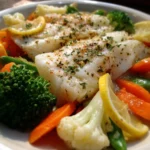
Quick Steamed Fish and Veggies
Ingredients
- White Fish Fillets (4 x 6-ounce fillets): You’ll need about 1.5 pounds of firm, white fish. Excellent choices include cod, halibut, tilapia, or sea bass. These fish have a mild flavor and a delicate, flaky texture that is perfect for steaming. Ensure they are boneless and skinless for the easiest preparation and eating experience.
- Low-Sodium Soy Sauce or Tamari (1/4 cup): This forms the savory, umami base of our finishing sauce. Using a low-sodium version allows you to control the saltiness of the final dish. For a gluten-free option, tamari is the perfect substitute.
- Sesame Oil (2 tablespoons): This oil adds a deep, nutty, and aromatic fragrance that is characteristic of many Asian-inspired dishes. A little goes a long way in providing a rich flavor profile.
- Rice Vinegar (1 tablespoon): This adds a touch of bright acidity that cuts through the richness and balances the savory soy sauce. It brightens up the entire dish, making the flavors pop.
- Fresh Ginger (2-inch piece): Finely grated or minced, fresh ginger provides a warm, zesty, and slightly spicy kick. It infuses the fish and the sauce with an incredible aroma and a complex flavor that is both refreshing and comforting.
- Garlic (3 cloves): Minced garlic brings a pungent, savory depth that pairs beautifully with ginger. It’s a foundational aromatic that builds a robust flavor base for the entire meal.
- Broccoli (1 large head): Cut into bite-sized florets, broccoli adds a beautiful green color, a satisfying crunch, and a wealth of nutrients. Its structure holds up well to steaming, becoming tender without turning mushy.
- Carrots (2 medium): Peeled and thinly sliced on the diagonal, carrots provide a natural sweetness, a vibrant orange hue, and a firm texture that contrasts nicely with the soft fish and broccoli.
- Red Bell Pepper (1 large): Cored, seeded, and thinly sliced, red bell pepper contributes a sweet, slightly fruity flavor and a brilliant splash of color, making the dish as visually appealing as it is delicious.
- Optional Garnish (to taste): Toasted sesame seeds, sliced green onions, and fresh cilantro leaves. These are not just for looks; they add a final layer of texture and fresh flavor right before serving.
Instructions
- Prepare the Sauce: In a small bowl, whisk together the low-sodium soy sauce (or tamari), sesame oil, and rice vinegar. Add the finely minced garlic and grated ginger to the bowl. Whisk everything together until well combined. This mixture will serve as both a partial marinade and the final dressing. Set it aside for the flavors to meld while you prepare the other components.
- Ready the Fish: Pat the fish fillets completely dry with a paper towel. This is a crucial step as it helps the fish steam more effectively rather than just getting wet and soggy. Arrange the fillets in a single layer on a heatproof plate or in a shallow dish that will fit comfortably inside your steamer basket. Spoon about two tablespoons of the prepared sauce over the fillets, gently spreading it to cover the surface. This initial layer of sauce will begin to infuse the fish with flavor as it steams.
- Prepare the Steamer: Fill a large pot or wok with about 1-2 inches of water. Make sure the water level is below the bottom of the steamer basket when it’s placed inside; you want the food to cook in the steam, not boil in the water. Bring the water to a rolling boil over high heat.
- Arrange the Vegetables: Once the water is boiling, reduce the heat to a medium-high simmer. Carefully place your steamer basket into the pot. Create a bed of the “harder” vegetables first. Arrange the sliced carrots and broccoli florets in a single layer in the bottom of the steamer basket. These vegetables take slightly longer to cook than the fish and bell peppers.
- First Steaming Phase – Veggies: Cover the pot with a tight-fitting lid and let the carrots and broccoli steam for about 3-4 minutes. This gives them a head start to ensure they become perfectly crisp-tender by the time the fish is cooked.
- Add the Fish and Remaining Veggies: Carefully remove the lid, allowing the steam to escape away from your face. Place the plate containing the fish fillets directly on top of the bed of steaming vegetables. Scatter the sliced red bell peppers around the plate of fish. The bell peppers are added at this stage because they cook very quickly and you want to retain their slight crunch and vibrant color.
- Final Steaming Phase: Place the lid back on the pot. Continue to steam for another 6-8 minutes. The exact time will depend on the thickness of your fish fillets. The fish is done when it is opaque all the way through and flakes easily when gently prodded with a fork. The vegetables should be bright and crisp-tender.
- Finish and Serve: Using oven mitts, carefully lift the entire steamer basket out of the pot. Then, cautiously remove the hot plate of fish. Arrange the steamed vegetables on a serving platter or on individual plates. Place the beautifully steamed fish fillets on top of the vegetables. Take the remaining sauce you set aside earlier and drizzle it generously over the fish and veggies. Garnish with a sprinkle of toasted sesame seeds, freshly sliced green onions, and cilantro leaves before serving immediately.
Nutrition
- Serving Size: one normal portion
- Calories: 380
