Introduction
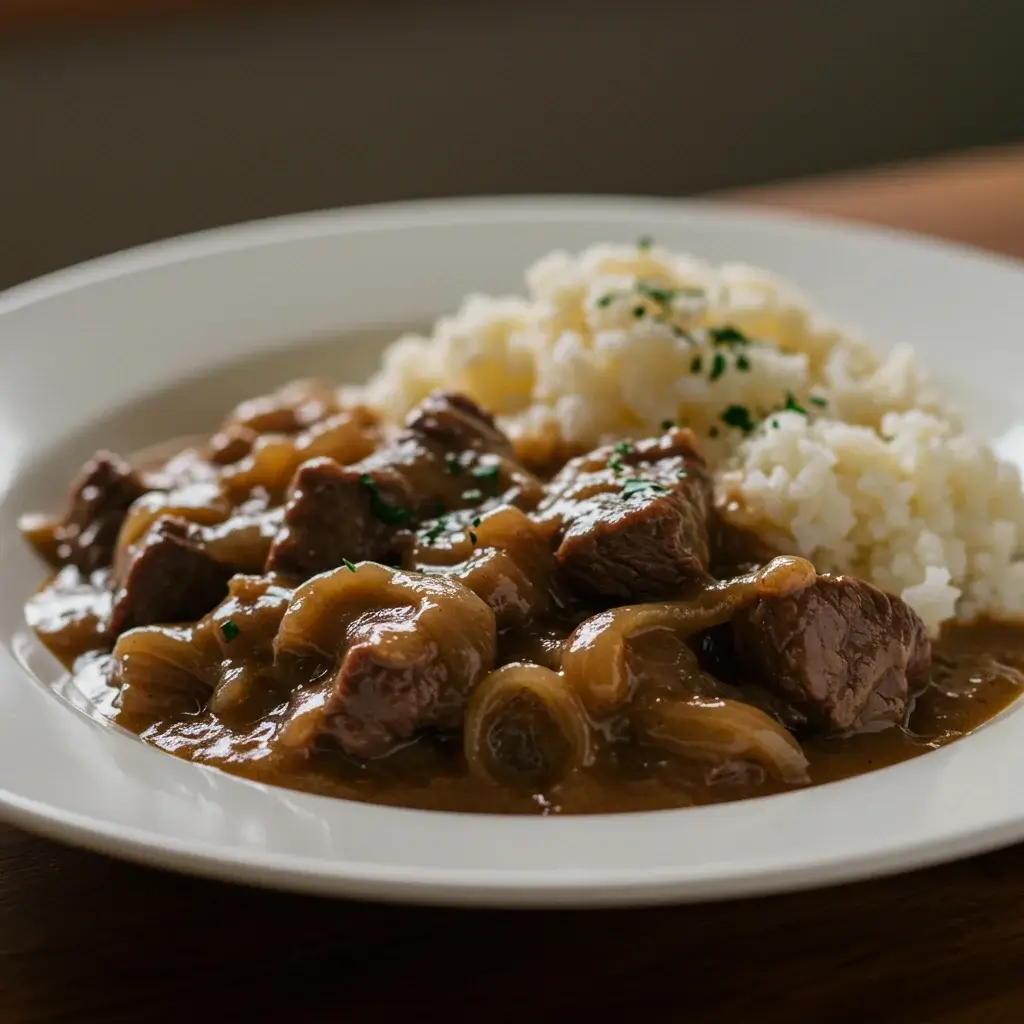
There’s something undeniably comforting about a hearty stew simmering away in the kitchen. Among the myriad of options, Slow-Cooked Beef and Onion Stew stands out as a timeless classic. The combination of tender beef and rich onion gravy creates a dish that’s both satisfying and delicious, perfect for those who crave savory flavors. In this article, we’ll explore the steps to create this mouth-watering stew, delve into the nutritional benefits, and offer tips on serving it to perfection. Whether you’re a seasoned home cook or a beginner, this guide will help you master one of the most beloved comfort foods.
Ingredients
To create this flavorful Slow-Cooked Beef and Onion Stew, you’ll need the following ingredients:
- 2 pounds beef chuck, cut into 1-inch cubes
- 3 large onions, thinly sliced
- 4 cloves garlic, minced
- 3 tablespoons olive oil
- 2 tablespoons all-purpose flour
- 1 cup beef broth
- 1 cup red wine (optional for richer flavor)
- 2 tablespoons tomato paste
- 2 teaspoons Worcestershire sauce
- 2 bay leaves
- 1 teaspoon dried thyme
- Salt and black pepper, to taste
- Fresh parsley, chopped (for garnish)
Instructions
Creating this stew is simple, yet it requires patience to allow the flavors to meld beautifully. Follow these steps for a delightful result:
- Prepare the Beef:
- Season the beef cubes with salt and black pepper.
- Heat 2 tablespoons of olive oil in a large skillet over medium-high heat.
- Brown the beef cubes in batches, ensuring each side is well-seared. Transfer to a slow cooker.
- Cook the Onions:
- In the same skillet, add the remaining tablespoon of olive oil.
- Add the sliced onions and cook over medium heat, stirring frequently until they become soft and golden brown. This should take around 15 minutes.
- Add Garlic and Flour:
- Stir in the minced garlic and cook for an additional 2 minutes.
- Sprinkle the flour over the onions and garlic, and stir well to coat.
- Deglaze the Skillet:
- Pour in the red wine, if using, and scrape up any brown bits from the bottom of the skillet.
- Allow the wine to simmer for about 5 minutes, reducing slightly.
- Combine Ingredients:
- Transfer the onion mixture to the slow cooker with the beef.
- Add the beef broth, tomato paste, Worcestershire sauce, bay leaves, and thyme.
- Stir all ingredients to combine.
- Slow Cook:
- Cover the slow cooker and cook on low heat for 7-8 hours or until the beef is tender and the flavors have melded together.
- Final Seasoning:
- Taste the stew and adjust seasoning with additional salt and pepper, if necessary.
- Remove bay leaves before serving.
- Serve:
- Ladle the stew into bowls, garnish with chopped parsley, and enjoy!
Nutrition Facts
Understanding the nutritional profile of your meal is essential. Here’s a breakdown of the nutritional content per serving of Slow-Cooked Beef and Onion Stew:
- Calories: Approximately 350 kcal
- Protein: 30 g
- Fat: 20 g
- Saturated Fat: 7 g
- Carbohydrates: 12 g
This stew is rich in protein and provides a good balance of essential nutrients, making it a wholesome choice for a hearty meal.
How to Serve
Serving this stew can be as creative or as simple as you desire, allowing you to tailor the presentation and accompaniments to suit your personal taste and the occasion. Here are some detailed ideas to enhance your dining experience and elevate the humble beef stew into a memorable meal:
Classic Pairing
One of the most beloved ways to serve beef stew is over a bed of creamy mashed potatoes. The velvety texture of the potatoes perfectly complements the rich, hearty stew, creating a comforting dish that warms both the body and soul. To prepare the mashed potatoes, boil peeled Yukon gold or Russet potatoes until fork-tender, then mash them with butter, cream, and a pinch of salt for a smooth and creamy consistency. For an added twist, consider mixing in roasted garlic or chives for extra flavor. This classic combination not only enhances the taste but also provides a satisfying contrast in textures.
With Bread
Another delightful option is to serve your beef stew with crusty bread or soft dinner rolls. A thick slice of sourdough or a warm baguette can be perfect for soaking up the rich onion gravy that envelops the beef and vegetables. To make the experience even more enjoyable, consider toasting the bread lightly and spreading a bit of herb-infused butter or garlic butter on top. This simple addition not only enhances the flavor but also adds a delightful crunch to each bite. If you’re feeling adventurous, you could also serve the stew in hollowed-out bread bowls, turning the meal into an interactive dining experience where guests can enjoy both the stew and the bread.
Over Rice
For those looking for a different starch option, ladling the stew over steamed white or brown rice provides a satisfying and filling meal. The rice acts as a neutral base that absorbs the stew’s flavors, making every mouthful delectable. For an added layer of flavor, consider cooking the rice in broth or adding a splash of soy sauce or a squeeze of lime juice to the cooking water. This not only enhances the taste but also adds a subtle twist that complements the stew’s savory notes. For a more gourmet touch, you could also opt for wild rice or a quinoa blend, which adds a nutty flavor and a pleasing texture.
With Vegetables
To create a well-rounded meal, accompany your beef stew with a side of steamed vegetables. Bright, fresh vegetables like green beans, carrots, or broccoli not only add nutritional value but also introduce vibrant colors to the plate, making the meal more visually appealing. Steaming retains the vegetables’ natural flavors and nutrients, ensuring they are tender yet crisp. For a hint of sophistication, consider drizzling the steamed vegetables with a light vinaigrette or a touch of melted butter mixed with fresh herbs. This simple addition can elevate the dish and provide a refreshing contrast to the richness of the stew.
Garnishing Your Stew
Don’t forget the power of garnishes to enhance the presentation of your beef stew! A sprinkle of fresh parsley or thyme just before serving adds a pop of color and a fragrant aroma that can entice the senses. If you’re a fan of heat, consider adding a few slices of fresh jalapeño or a dash of hot sauce for those who enjoy a spicy kick. Additionally, a dollop of sour cream or a sprinkle of grated cheese can introduce a creamy richness that complements the stew beautifully.
Setting the Table
To further elevate your dining experience, consider the overall setting of your meal. A well-set table with elegant dinnerware, cloth napkins, and a centerpiece can transform a simple family dinner into a special occasion. Use warm, inviting colors for your table settings to match the cozy ambiance of a hearty stew. Soft lighting, perhaps from candles or dimmed fixtures, can create a relaxed and inviting atmosphere, making the meal even more enjoyable.
By thoughtfully considering how to serve your beef stew, you can turn a simple dish into a culinary delight that impresses your family and friends, making every meal a special occasion.
Additional Tips
To ensure that your Slow-Cooked Beef and Onion Stew turns out perfectly every time, consider the following comprehensive tips that will enhance both the cooking process and the final flavor profile of your dish:
Choosing the Beef
- Opt for Well-Marbled Beef Chuck: When selecting your beef, look for cuts that are rich in marbling. Beef chuck, known for its robust flavor and tender texture, is ideal for slow cooking. The marbling consists of intramuscular fat that melts during cooking, infusing the stew with richness and tenderness. You can also consider cuts like brisket or round, but chuck remains the gold standard for stews due to its balance of flavor and price.
- Freshness Matters: Always choose fresh or properly frozen beef. Look for bright red meat with minimal browning, as this indicates freshness. If buying pre-packaged beef, ensure it is within its sell-by date to avoid any risk of spoilage.
Browning the Beef
- Don’t Skip Browning: Browning the beef before adding it to the slow cooker is a crucial step that should not be overlooked. This process caramelizes the surface of the meat, enhancing the overall depth of flavor in your stew. The Maillard reaction that occurs during browning creates complex flavor compounds that elevate the dish.
- Technique Matters: To achieve the best browning, heat a tablespoon or two of oil in a heavy-bottomed skillet over medium-high heat. Work in batches to avoid overcrowding the pan, which can lead to steaming instead of browning. Brown each piece on all sides, taking care not to burn it. Once browned, transfer the beef to the slow cooker and deglaze the skillet with a splash of broth or water to scrape up the flavorful browned bits, adding them to the stew for an extra flavor boost.
Alcohol-Free Option
- Substituting Wine: If you prefer not to use wine in your stew, you can easily replace it with additional beef broth or stock. The key is to maintain the liquid volume while ensuring the stew still has a rich flavor. You might also consider using grape juice or apple cider vinegar diluted with water as a substitute, which can mimic some of the acidity and sweetness of wine without the alcohol content.
- Enhancing Flavor: To compensate for the absence of wine, consider adding a splash of Worcestershire sauce or a teaspoon of balsamic vinegar to deepen the flavor profile. These ingredients bring acidity and complexity to the dish, similar to what wine would contribute.
Thickening the Gravy
- For a Thicker Gravy: If you prefer a thicker gravy, one effective method is to remove the lid of the slow cooker during the last hour of cooking. This allows excess liquid to evaporate, concentrating the flavors and thickening the stew naturally.
- Alternative Thickening Methods: If you desire an even thicker consistency, consider creating a slurry by mixing equal parts of cornstarch and cold water. Stir this mixture into the stew during the last 30 minutes of cooking, allowing it to thicken up without altering the flavor. Alternatively, you can mash a portion of the cooked vegetables in the stew to naturally thicken the gravy.
Storing Leftovers
- Proper Storage: Store any leftovers in an airtight container in the refrigerator for up to 3 days. Ensure the stew has cooled to room temperature before sealing the container to prevent condensation from forming, which can dilute the flavor.
- Flavor Enhancement Over Time: Interestingly, the flavors of your beef and onion stew often improve after a day in the fridge. This resting period allows the various ingredients to meld and develop a more harmonious taste, making it an excellent choice for meal prep. When reheating, do so gently on the stovetop or in the microwave, adding a splash of broth if the stew has thickened too much.
- Freezing for Future Enjoyment: If you have a larger batch or want to save some for later, consider freezing portions of the stew. Use freezer-safe containers or resealable bags, removing as much air as possible to prevent freezer burn. Label the containers with the date, and consume within 3 months for the best quality. To reheat, thaw overnight in the refrigerator and warm gently on the stove.
By implementing these additional tips, you can elevate your Slow-Cooked Beef and Onion Stew, ensuring not only a delicious meal but also an enjoyable cooking experience.
FAQs
1. Can I use a different cut of beef for this stew?
Yes, while beef chuck is preferred for its tenderness and flavor, you can also use other cuts like brisket or round roast. Just ensure the meat is cooked until tender.
2. Is it possible to make this stew on the stovetop instead of using a slow cooker?
Absolutely! After browning the beef and cooking the onions, combine all ingredients in a large pot. Simmer on low heat for 2-3 hours, stirring occasionally until the beef is tender.
3. Can I freeze the stew for later?
Yes, this stew freezes well. Store in a freezer-safe container for up to 3 months. Thaw in the refrigerator overnight before reheating.
4. Can I add vegetables directly to the stew?
Certainly! Adding vegetables like carrots, potatoes, or peas can enhance the stew’s flavor and texture. Add them during the last hour of cooking to prevent overcooking.
5. What can I substitute for Worcestershire sauce?
If you don’t have Worcestershire sauce, you can use soy sauce or a mixture of soy sauce and a dash of vinegar as a substitute.
Conclusion
Slow-Cooked Beef and Onion Stew is a culinary delight that brings warmth and comfort to any table. Its rich flavors and tender meat make it a favorite for family dinners and gatherings. By following the comprehensive guide above, you can easily prepare this classic dish, customized to your tastes and preferences. Whether served with mashed potatoes, rice, or bread, this stew is sure to please and satisfy. Enjoy the process of creating a meal that not only tastes incredible but also nourishes the soul. Bon appétit!
Print
Slow-Cooked Beef and Onion Stew
Ingredients
To create this flavorful Slow-Cooked Beef and Onion Stew, you’ll need the following ingredients:
- 2 pounds beef chuck, cut into 1-inch cubes
- 3 large onions, thinly sliced
- 4 cloves garlic, minced
- 3 tablespoons olive oil
- 2 tablespoons all-purpose flour
- 1 cup beef broth
- 1 cup red wine (optional for richer flavor)
- 2 tablespoons tomato paste
- 2 teaspoons Worcestershire sauce
- 2 bay leaves
- 1 teaspoon dried thyme
- Salt and black pepper, to taste
- Fresh parsley, chopped (for garnish)
Instructions
Creating this stew is simple, yet it requires patience to allow the flavors to meld beautifully. Follow these steps for a delightful result:
- Prepare the Beef:
- Season the beef cubes with salt and black pepper.
- Heat 2 tablespoons of olive oil in a large skillet over medium-high heat.
- Brown the beef cubes in batches, ensuring each side is well-seared. Transfer to a slow cooker.
- Cook the Onions:
- In the same skillet, add the remaining tablespoon of olive oil.
- Add the sliced onions and cook over medium heat, stirring frequently until they become soft and golden brown. This should take around 15 minutes.
- Add Garlic and Flour:
- Stir in the minced garlic and cook for an additional 2 minutes.
- Sprinkle the flour over the onions and garlic, and stir well to coat.
- Deglaze the Skillet:
- Pour in the red wine, if using, and scrape up any brown bits from the bottom of the skillet.
- Allow the wine to simmer for about 5 minutes, reducing slightly.
- Combine Ingredients:
- Transfer the onion mixture to the slow cooker with the beef.
- Add the beef broth, tomato paste, Worcestershire sauce, bay leaves, and thyme.
- Stir all ingredients to combine.
- Slow Cook:
- Cover the slow cooker and cook on low heat for 7-8 hours or until the beef is tender and the flavors have melded together.
- Final Seasoning:
- Taste the stew and adjust seasoning with additional salt and pepper, if necessary.
- Remove bay leaves before serving.
- Serve:
- Ladle the stew into bowls, garnish with chopped parsley, and enjoy!
Nutrition
- Serving Size: one normal portion
- Calories: 350
- Fat: 20 g
- Saturated Fat: 7 g
- Carbohydrates: 12 g
- Protein: 30 g