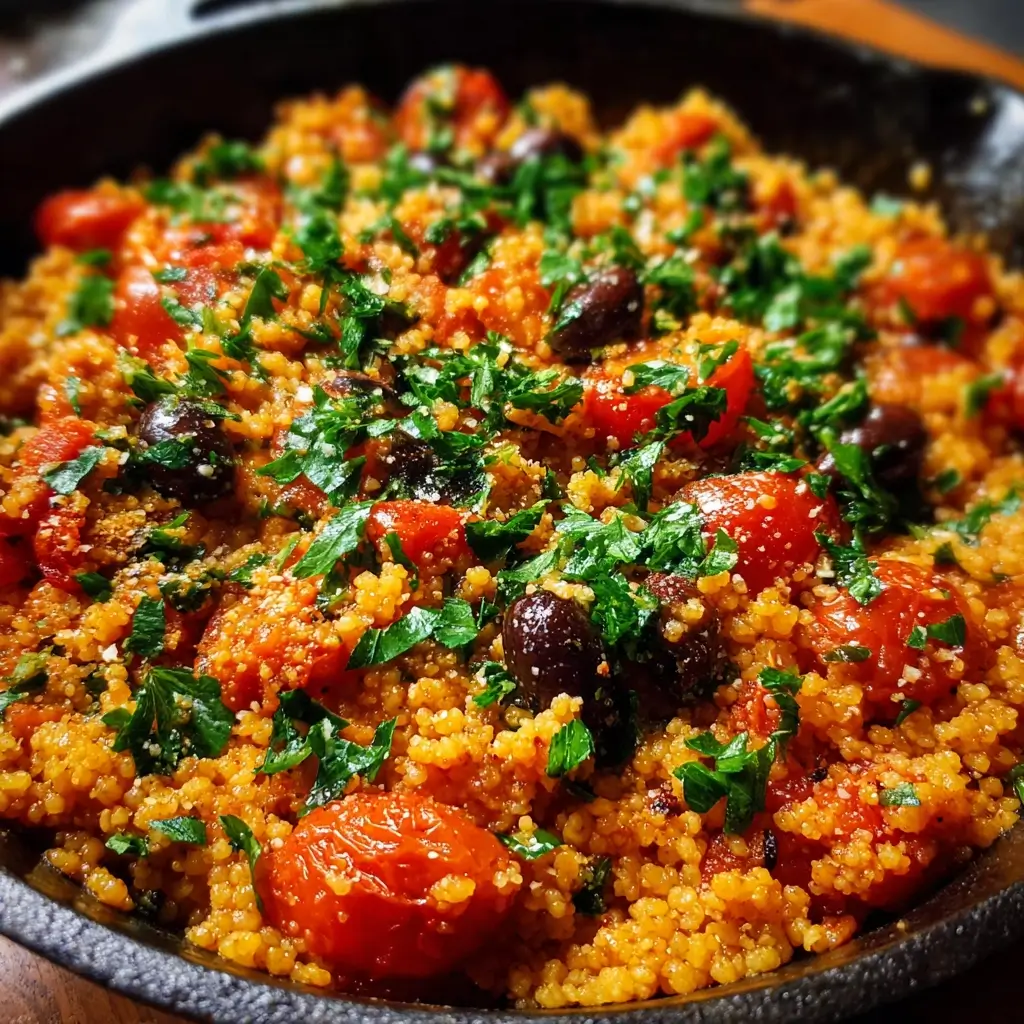
Of all the recipes that have graced my kitchen over the years, there are a select few that become true staples—the ones you turn to on a hectic Tuesday night, the ones you suggest when friends are coming over last minute, and the ones that deliver maximum flavor with minimum fuss. This Tomato Olive Couscous Skillet has firmly cemented its place in that treasured collection. The first time I made it, I was simply looking for a quick, one-pan meal to use up some cherry tomatoes and a jar of olives. I didn’t expect the culinary magic that was about to unfold. As the garlic and onions sizzled, releasing their fragrant aroma, my family started migrating to the kitchen, drawn in by the promise of something delicious. The real moment of triumph, however, was seeing everyone, including my notoriously picky eater, go back for a second helping. The fluffy pearls of couscous, perfectly cooked and infused with the tangy sweetness of burst tomatoes, the briny punch of Kalamata olives, and the subtle warmth of Mediterranean spices, created a symphony of flavors that was both comforting and exciting. It’s more than just a recipe; it’s a solution. It’s a healthy, satisfying meal that comes together in under 30 minutes, and the single skillet means cleanup is an absolute dream. This dish has become our go-to for a reason—it’s effortlessly elegant, incredibly versatile, and undeniably delicious. It’s proof that you don’t need hours in the kitchen to create a meal that feels special and brings everyone to the table with a smile.
Ingredients
- 2 tablespoons Olive Oil, extra virgin: The foundational fat for this dish, used to sauté the aromatics and toast the couscous, adding a classic, fruity Mediterranean flavor.
- 1 large Yellow Onion, finely chopped: Provides a sweet and savory aromatic base that deepens the overall flavor profile of the skillet.
- 4 cloves Garlic, minced: Adds a pungent, fragrant kick that is essential to Mediterranean cooking. Don’t be shy with it!
- 1 cup Pearl (Israeli) Couscous: These are small, toasted pasta pearls, larger than traditional Moroccan couscous. They have a satisfyingly chewy texture that holds up beautifully in this skillet dish.
- 1 ½ cups Vegetable Broth (or chicken broth): The primary cooking liquid that will be absorbed by the couscous, infusing it with rich flavor.
- 1 (15-ounce) can Diced Tomatoes, undrained: Provides a robust, tangy tomato base and sufficient liquid to help cook the couscous to perfection.
- 1 pint Cherry or Grape Tomatoes, halved: These burst during cooking, releasing their sweet, concentrated juices and adding a wonderful texture and fresh tomato flavor.
- 1 cup Kalamata Olives, pitted and halved: Delivers a bold, briny, and salty punch that perfectly contrasts with the sweetness of the tomatoes.
- 1 teaspoon Dried Oregano: A classic Mediterranean herb that adds a warm, peppery, and slightly earthy flavor.
- ½ teaspoon Smoked Paprika: Lends a subtle smokiness and beautiful color to the dish, enhancing its depth.
- Salt and Black Pepper, to taste: Essential for seasoning and bringing all the other flavors into balance.
- ¼ cup Fresh Parsley, chopped: Added at the end for a burst of fresh, herbaceous brightness that lifts the entire dish.
- 1 tablespoon Lemon Juice, freshly squeezed: A final touch of acidity that brightens all the flavors and makes them pop.
Instructions
- Sauté the Aromatics: Place a large, deep skillet or Dutch oven over medium heat. Add the 2 tablespoons of extra virgin olive oil. Once the oil is shimmering, add the chopped yellow onion and cook, stirring occasionally, for about 5-7 minutes, or until the onion has softened and become translucent. Add the minced garlic and cook for another minute until it becomes fragrant. Be careful not to let the garlic burn, as it can become bitter.
- Toast the Couscous: Add the 1 cup of pearl couscous directly to the skillet with the onions and garlic. Stir continuously for about 2-3 minutes. This toasting step is crucial as it enhances the nutty flavor of the couscous and helps the individual pearls stay separate after cooking. The couscous should turn a light golden brown.
- Combine the Liquids and Seasonings: Pour in the 1 ½ cups of vegetable broth and the entire can of diced tomatoes with their juices. Stir everything together, scraping up any browned bits from the bottom of the pan—this is where a lot of flavor lives! Add the dried oregano, smoked paprika, a generous pinch of salt, and a few grinds of black pepper. Stir well to ensure the seasonings are evenly distributed.
- Simmer and Cook: Bring the mixture to a gentle boil. Once it’s boiling, reduce the heat to low, cover the skillet with a tight-fitting lid, and let it simmer for about 10-12 minutes. The goal is for the couscous to absorb most of the liquid and become tender. The exact time can vary slightly depending on the brand of couscous and the heat of your stove.
- Add Final Ingredients: After the initial simmer, remove the lid. The couscous should be tender with a slight chew. Add the halved cherry tomatoes and the halved Kalamata olives to the skillet. Gently stir them into the couscous mixture.
- Final Simmer and Rest: Place the lid back on the skillet and let it cook for another 3-5 minutes on low heat. This step allows the cherry tomatoes to soften and burst slightly, releasing their sweet juices, and it warms the olives through, melding their flavor with the rest of the dish.
- Finish and Serve: Turn off the heat. Remove the lid and let the skillet sit for a minute or two. The remaining liquid will be absorbed as it rests. Add the freshly chopped parsley and the fresh lemon juice. Fluff the couscous gently with a fork to combine the fresh ingredients and separate the pearls. Taste and adjust seasoning with more salt and pepper if needed. Serve warm directly from the skillet.
Nutrition Facts
- Servings: 4-6 servings
- Calories per Serving: Approximately 350-400 kcal
- Fiber: This dish is a good source of dietary fiber, thanks to the whole wheat nature of some couscous brands, tomatoes, and onions. Fiber is crucial for digestive health and helps promote a feeling of fullness.
- Healthy Fats: The primary fat source comes from extra virgin olive oil and Kalamata olives, which are rich in monounsaturated fats. These fats are beneficial for heart health and can help reduce bad cholesterol levels.
- Vitamin C: Tomatoes are packed with Vitamin C, a powerful antioxidant that supports the immune system, skin health, and iron absorption.
- Complex Carbohydrates: The pearl couscous provides complex carbohydrates, which are digested more slowly than simple sugars. This results in a more stable release of energy, keeping you fueled and satisfied for longer.
- Plant-Based Protein: While not a high-protein dish on its own, it provides a moderate amount of plant-based protein from the couscous, contributing to muscle maintenance and overall body function.
Preparation Time
This Tomato Olive Couscous Skillet is a true champion of weeknight cooking, designed for speed and efficiency without sacrificing flavor. The total time from starting your prep to serving is typically under 30 minutes.
- Prep Time: 10 minutes (This includes chopping the onion, mincing the garlic, and halving the tomatoes and olives).
- Cook Time: 20 minutes (This covers sautéing, simmering, and the final rest).
This quick turnaround makes it an ideal choice for busy evenings when you crave a wholesome, home-cooked meal but are short on time.
How to Serve
This versatile skillet can be served in a variety of ways, adapting to any occasion from a simple family dinner to a casual gathering with friends. Here are some of our favorite ways to serve it:
- As a Standalone Main Course:
- Serve it directly from the skillet, family-style, placed in the center of the table.
- Garnish with a generous crumble of feta cheese for a creamy, salty contrast.
- Add a dollop of plain Greek yogurt or tzatziki on top for a cool, tangy element.
- Sprinkle with extra fresh herbs like dill or mint for another layer of freshness.
- As a Hearty Side Dish:
- This couscous makes an excellent companion to a variety of proteins. Its robust flavors stand up well to grilled or roasted meats.
- Serve alongside grilled chicken breasts seasoned with lemon and herbs.
- Pair it with pan-seared salmon or a flaky white fish like cod.
- It’s a fantastic accompaniment for grilled beef kebabs or lamb chops.
- For a Mediterranean Feast:
- Incorporate it into a larger meze or tapas-style spread.
- Serve in smaller bowls alongside other Mediterranean favorites like hummus, pita bread, a fresh cucumber salad, and roasted red peppers.
- For Meal Prep and Lunches:
- Portion the cooled couscous into individual containers. It’s delicious served warm, at room temperature, or even cold, making it a perfect packed lunch.
- When reheating, a splash of water or broth can help restore its moisture.
Additional Tips
- Protein Power-Up: To make this a more substantial, all-in-one meal, feel free to add protein. You can brown 1 pound of ground beef with the onions, or add shredded rotisserie chicken or canned chickpeas (drained and rinsed) along with the cherry tomatoes in the final steps.
- Vegetable Variations: Don’t be afraid to clean out your vegetable drawer. Add 1 cup of chopped zucchini, bell peppers (any color), or chopped artichoke hearts when you sauté the onions. A few large handfuls of fresh spinach can be stirred in at the very end until it wilts.
- Spice It Up: For those who enjoy a bit of heat, add ¼ to ½ teaspoon of red pepper flakes along with the garlic. Alternatively, a teaspoon of harissa paste stirred in with the diced tomatoes will provide a wonderful smoky heat and depth.
- Cheese, Please: Feta cheese is a natural fit, but other cheeses work wonderfully too. Crumbled goat cheese will add a tangy creaminess, while a sprinkle of grated Parmesan or Pecorino Romano will provide a salty, nutty finish.
- Couscous Considerations: This recipe is designed for pearl (Israeli) couscous. If you only have smaller, Moroccan-style couscous, the cooking method must change. Prepare the skillet with all the ingredients except the couscous and broth. Bring the mixture to a simmer, then remove from heat. Stir in the Moroccan couscous, cover, and let it stand for 5-7 minutes until the liquid is absorbed.
- Make-Ahead and Storage Excellence: This dish is fantastic for meal prep. It can be stored in an airtight container in the refrigerator for up to 4 days. The flavors actually meld and become even more delicious overnight. It can be eaten cold, at room temperature, or reheated gently on the stovetop or in the microwave.
- Boost the Umami: For an even deeper, more savory flavor, add 1 tablespoon of tomato paste when you sauté the garlic and cook it for a minute to caramelize. You can also add a few chopped sun-dried tomatoes (the oil-packed kind, drained) for a concentrated, sweet-tart flavor boost.
- The Final Flourish: The squeeze of lemon juice at the end is non-negotiable as it truly brightens the entire dish. For another layer of flavor, consider adding a tablespoon of capers along with the olives for an extra briny pop, or a drizzle of high-quality balsamic glaze just before serving for a touch of syrupy sweetness.
FAQ Section
1. Can I make this recipe vegan?
Absolutely! This recipe is very easy to make vegan. Simply ensure you are using vegetable broth instead of chicken broth. As written, the base recipe is naturally dairy-free. When serving, just avoid adding any dairy-based toppings like feta or yogurt.
2. How can I make this recipe gluten-free?
Since couscous is a pasta made from wheat, it is not gluten-free. To adapt this recipe, you can substitute the pearl couscous with an equal amount of quinoa or brown rice. Note that you may need to adjust the liquid amount and cooking time significantly. For quinoa, you’ll typically use a 1:2 ratio of quinoa to liquid and simmer for about 15 minutes. For rice, the time and liquid will be even greater, so it’s best to cook it separately and stir it into the finished tomato and olive sauce.
3. My couscous turned out mushy. What went wrong?
Mushy couscous is usually the result of too much liquid or overcooking. First, ensure you are using the correct 1:1.5 ratio of pearl couscous to liquid (broth + tomato juice). Second, once the liquid comes to a boil, immediately reduce the heat to a very low simmer. A vigorous boil can break down the couscous too quickly. Finally, don’t over-stir the couscous while it’s simmering, and allow it to rest for a few minutes off the heat after cooking to absorb the final bits of steam.
4. What is the best type of olive to use?
Kalamata olives are the classic choice for their robust, fruity, and salty flavor, which stands up well in this dish. However, other olives work great too! Castelvetrano olives offer a milder, buttery flavor and vibrant green color. A mix of different Mediterranean olives can also add wonderful complexity. The most important thing is to use pitted olives to save yourself a lot of prep time.
5. Can I use canned whole tomatoes instead of diced?
Yes, you can. If you only have canned whole peeled tomatoes, simply pour the contents of the can into a bowl and crush them with your hands or a potato masher before adding them to the skillet. This will give you a slightly more rustic texture than diced tomatoes, which is perfectly delicious.
6. Is this recipe good for meal prep?
This recipe is a meal-prep superstar. It holds up beautifully in the refrigerator for several days. The flavors even tend to improve as they sit and meld together. It’s fantastic for work or school lunches because it tastes great reheated, at room temperature, or even served cold as a couscous salad.
7. How can I add more protein to this dish?
There are many great options. For a vegetarian/vegan boost, add a can of drained and rinsed chickpeas or white beans during the last 5 minutes of cooking. For meat-eaters, you can sauté 1 pound of cubed chicken breast or beef strips before you cook the onions, set it aside, and stir it back in at the end. Shredded rotisserie chicken is also a fantastic and easy shortcut.
8. What’s the difference between pearl couscous and Moroccan couscous?
This is a very common question! Pearl couscous, also known as Israeli couscous, consists of small, perfectly round balls of toasted pasta. It has a chewy texture similar to al dente pasta. Moroccan couscous is much smaller and finer, with a texture closer to coarse sand or semolina. It cooks much more quickly, typically by just steeping in hot liquid off the heat. This recipe is specifically designed for the texture and cooking time of pearl couscous.
Tomato Olive Couscous Skillet
Ingredients
- 2 tablespoons Olive Oil, extra virgin: The foundational fat for this dish, used to sauté the aromatics and toast the couscous, adding a classic, fruity Mediterranean flavor.
- 1 large Yellow Onion, finely chopped: Provides a sweet and savory aromatic base that deepens the overall flavor profile of the skillet.
- 4 cloves Garlic, minced: Adds a pungent, fragrant kick that is essential to Mediterranean cooking. Don’t be shy with it!
- 1 cup Pearl (Israeli) Couscous: These are small, toasted pasta pearls, larger than traditional Moroccan couscous. They have a satisfyingly chewy texture that holds up beautifully in this skillet dish.
- 1 ½ cups Vegetable Broth (or chicken broth): The primary cooking liquid that will be absorbed by the couscous, infusing it with rich flavor.
- 1 (15-ounce) can Diced Tomatoes, undrained: Provides a robust, tangy tomato base and sufficient liquid to help cook the couscous to perfection.
- 1 pint Cherry or Grape Tomatoes, halved: These burst during cooking, releasing their sweet, concentrated juices and adding a wonderful texture and fresh tomato flavor.
- 1 cup Kalamata Olives, pitted and halved: Delivers a bold, briny, and salty punch that perfectly contrasts with the sweetness of the tomatoes.
- 1 teaspoon Dried Oregano: A classic Mediterranean herb that adds a warm, peppery, and slightly earthy flavor.
- ½ teaspoon Smoked Paprika: Lends a subtle smokiness and beautiful color to the dish, enhancing its depth.
- Salt and Black Pepper, to taste: Essential for seasoning and bringing all the other flavors into balance.
- ¼ cup Fresh Parsley, chopped: Added at the end for a burst of fresh, herbaceous brightness that lifts the entire dish.
- 1 tablespoon Lemon Juice, freshly squeezed: A final touch of acidity that brightens all the flavors and makes them pop.
Instructions
- Sauté the Aromatics: Place a large, deep skillet or Dutch oven over medium heat. Add the 2 tablespoons of extra virgin olive oil. Once the oil is shimmering, add the chopped yellow onion and cook, stirring occasionally, for about 5-7 minutes, or until the onion has softened and become translucent. Add the minced garlic and cook for another minute until it becomes fragrant. Be careful not to let the garlic burn, as it can become bitter.
- Toast the Couscous: Add the 1 cup of pearl couscous directly to the skillet with the onions and garlic. Stir continuously for about 2-3 minutes. This toasting step is crucial as it enhances the nutty flavor of the couscous and helps the individual pearls stay separate after cooking. The couscous should turn a light golden brown.
- Combine the Liquids and Seasonings: Pour in the 1 ½ cups of vegetable broth and the entire can of diced tomatoes with their juices. Stir everything together, scraping up any browned bits from the bottom of the pan—this is where a lot of flavor lives! Add the dried oregano, smoked paprika, a generous pinch of salt, and a few grinds of black pepper. Stir well to ensure the seasonings are evenly distributed.
- Simmer and Cook: Bring the mixture to a gentle boil. Once it’s boiling, reduce the heat to low, cover the skillet with a tight-fitting lid, and let it simmer for about 10-12 minutes. The goal is for the couscous to absorb most of the liquid and become tender. The exact time can vary slightly depending on the brand of couscous and the heat of your stove.
- Add Final Ingredients: After the initial simmer, remove the lid. The couscous should be tender with a slight chew. Add the halved cherry tomatoes and the halved Kalamata olives to the skillet. Gently stir them into the couscous mixture.
- Final Simmer and Rest: Place the lid back on the skillet and let it cook for another 3-5 minutes on low heat. This step allows the cherry tomatoes to soften and burst slightly, releasing their sweet juices, and it warms the olives through, melding their flavor with the rest of the dish.
- Finish and Serve: Turn off the heat. Remove the lid and let the skillet sit for a minute or two. The remaining liquid will be absorbed as it rests. Add the freshly chopped parsley and the fresh lemon juice. Fluff the couscous gently with a fork to combine the fresh ingredients and separate the pearls. Taste and adjust seasoning with more salt and pepper if needed. Serve warm directly from the skillet.
Nutrition
- Serving Size: one normal portion
- Calories: 400