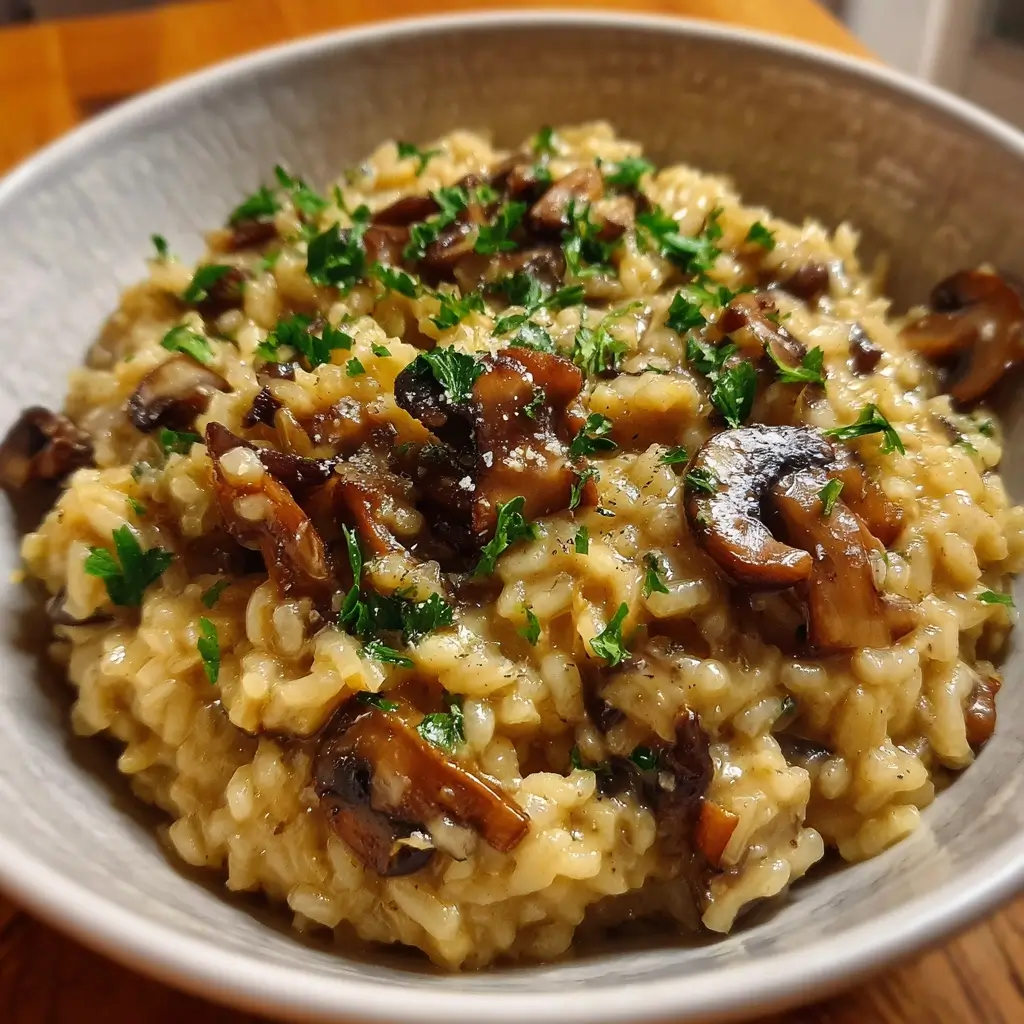
Of all the dishes that have graced my family’s dinner table, few have caused such a delightful stir as this Vegan Creamy Mushroom Risotto. I remember the first time I made it, a certain skepticism hung in the air. “Risotto… without cheese or butter? How can it possibly be creamy?” my husband asked, a doubtful look on his face. My kids, ever the picky eaters, eyed the mushrooms with suspicion. An hour later, the scene was transformed. The silence was punctuated only by the clinking of spoons against bowls, each one being scraped clean. My husband looked up, completely stunned, and declared it was one of the richest, most satisfying risottos he’d ever had. The kids? They were asking for seconds, the mushrooms suddenly becoming “earthy treasures.” This recipe isn’t just a plant-based alternative; it’s a culinary revelation. It achieves a level of velvety, umami-packed decadence that rivals, and in my humble opinion, surpasses its traditional counterparts. It’s the dish I make for special occasions, for cozy nights in, and for anyone who believes that vegan food can’t be indulgent. This risotto is pure comfort, a warm hug in a bowl, and proof that with the right techniques and ingredients, you can create magic in the kitchen.
Ingredients
This recipe relies on high-quality, simple ingredients to build its incredible depth of flavor. Each component plays a crucial role in creating the final, luxurious dish.
- For the Cashew Cream:
- 1 cup raw cashews: These are the secret to the dairy-free creaminess. Soaking them makes them incredibly soft and easy to blend into a silky-smooth cream.
- 1/2 cup water: Use fresh, filtered water for blending. You may need slightly more or less depending on your blender.
- For the Risotto:
- 2 tablespoons olive oil: A good quality extra virgin olive oil provides a fruity, flavorful base for sautéing the aromatics.
- 1 large yellow onion, finely chopped: Provides a sweet, aromatic foundation that is essential for any good risotto.
- 2 cloves garlic, minced: Adds a pungent, savory note that complements the mushrooms perfectly.
- 1.5 pounds (about 24 oz) mixed mushrooms, sliced: A blend of cremini, shiitake, and oyster mushrooms offers a complex, earthy flavor and a variety of textures.
- 1 ½ cups Arborio rice: This Italian short-grain rice is non-negotiable for authentic risotto. Its high starch content is what releases to create the signature creamy texture. Do not rinse it!
- ½ cup dry white wine: A crisp wine like a Sauvignon Blanc or Pinot Grigio deglazes the pan and adds a crucial layer of acidity and complexity.
- 6-8 cups warm vegetable broth: Using a high-quality, flavorful broth is key. Keeping it warm ensures the rice cooks evenly without dropping the temperature of the pan.
- ¼ cup nutritional yeast: This deactivated yeast is a vegan pantry staple, providing a savory, cheesy, umami flavor that mimics Parmesan.
- 1 teaspoon dried thyme (or 1 tablespoon fresh thyme): Adds a classic, earthy, and slightly minty flavor that pairs beautifully with mushrooms.
- Salt and freshly cracked black pepper to taste: Essential for seasoning and bringing all the flavors together.
- 2 tablespoons fresh parsley, chopped: For a fresh, bright garnish at the end.
Instructions
Making risotto is a labor of love that requires patience and attention, but the process itself is simple. Follow these steps methodically for a perfect result every time.
- Prepare the Cashew Cream: Begin by preparing the creamy base. If you don’t have a high-speed blender, you’ll need to soak the cashews. Place the raw cashews in a bowl and cover them with boiling water. Let them soak for at least 30 minutes (or up to 2 hours). If you have a high-powered blender like a Vitamix, you can skip the long soak and just soak them for 10 minutes in hot water. Drain the cashews and add them to your blender along with ½ cup of fresh water. Blend on high speed until completely smooth and silky, scraping down the sides as needed. This may take 2-4 minutes. The consistency should be like heavy cream. Set aside.
- Warm the Broth: Pour your vegetable broth into a medium saucepan and place it over low heat. It’s crucial that the broth is warm to hot (but not boiling) when you add it to the rice. This maintains an even cooking temperature and allows the rice to absorb the liquid properly.
- Sauté the Mushrooms: In a large, heavy-bottomed pot, Dutch oven, or wide skillet, heat 1 tablespoon of the olive oil over medium-high heat. Once shimmering, add the sliced mushrooms. Arrange them in a single layer as much as possible and let them cook without stirring for 3-4 minutes to get a nice brown sear. This develops their deep, umami flavor. Then, stir and continue to cook until they have released their liquid and are beautifully browned and tender, about 8-10 minutes total. Season the mushrooms with a pinch of salt and pepper, then remove them from the pot and set them aside in a bowl.
- Build the Aromatic Base: In the same pot, add the remaining 1 tablespoon of olive oil. Reduce the heat to medium and add the finely chopped onion. Sauté, stirring frequently, until the onion is soft and translucent, about 5-7 minutes. Be careful not to let it brown. Add the minced garlic and dried thyme and cook for another minute until fragrant.
- Toast the Rice: Add the Arborio rice to the pot. Stir constantly for about 2 minutes, ensuring every grain is coated in the oil and aromatics. The edges of the rice grains should become translucent, and you’ll smell a slightly nutty aroma. This step, called the tostatura, is vital for helping the grains retain their shape and absorb liquid gradually.
- Deglaze with Wine: Pour in the dry white wine. The pan will sizzle and steam. Stir continuously, scraping up any browned bits from the bottom of the pot. Cook until the wine has been almost completely absorbed by the rice. The sharp smell of alcohol should cook off, leaving behind a subtle, complex flavor.
- The Gradual Broth Addition: Now, begin the classic risotto process. Add one ladleful (about 1 cup) of the warm vegetable broth to the rice. Stir gently and continuously until the liquid is almost fully absorbed. The motion of stirring is what encourages the rice to release its starches, creating the creamy texture. Once the broth is absorbed, add another ladleful. Repeat this process, adding one ladle of broth at a time and stirring until it’s absorbed before adding the next.
- Continue and Taste: Continue this patient process of adding broth and stirring for about 20-25 minutes. After about 18 minutes, start tasting the rice. You are looking for a texture that is al dente—cooked through but still with a slight bite or chew in the center. The overall consistency of the risotto should be fluid and creamy, like a thick porridge. It should gently spread when you spoon it onto a plate, not hold its shape in a stiff mound. You may not need to use all of the broth.
- Finish with Creaminess and Flavor: Once the rice is cooked to your liking, turn off the heat. Stir in the sautéed mushrooms you set aside earlier, the prepared cashew cream, and the nutritional yeast. Stir vigorously for one minute to combine everything. This final, vigorous stir helps to emulsify the starches, fat, and liquid into a perfectly velvety sauce.
- Season and Serve: Taste the risotto and season generously with salt and freshly cracked black pepper. Remember that the broth was already salted, so taste before you add too much. The final dish should be rich and flavorful. Ladle the risotto into warm bowls, garnish with fresh chopped parsley, and serve immediately.
Nutrition Facts
This dish is as nourishing as it is delicious, offering a well-rounded profile of macronutrients and essential vitamins.
- Servings: 4-6 main course servings
- Calories: Approximately 450-550 kcal per serving (based on 6 servings)
- Healthy Fats: This risotto is rich in monounsaturated fats from olive oil and cashews. These fats are beneficial for heart health and help create a feeling of satiety, keeping you full and satisfied.
- Plant-Based Protein: With protein from both the cashews and mushrooms, this dish provides a solid foundation for a plant-based meal, essential for muscle repair and overall bodily function.
- Dietary Fiber: The mushrooms and onions provide a good source of dietary fiber, which is crucial for digestive health, regulating blood sugar levels, and maintaining a healthy gut microbiome.
- Complex Carbohydrates: The Arborio rice provides slow-releasing complex carbohydrates, offering sustained energy rather than a quick spike and crash.
- B Vitamins: Nutritional yeast is a powerhouse of B vitamins, including B12 in fortified versions. These vitamins are vital for energy metabolism, brain function, and the creation of red blood cells.
Preparation Time
While risotto requires active cooking time, the overall preparation is straightforward and well worth the effort.
- Prep Time: 20 minutes (includes soaking cashews, chopping vegetables)
- Cook Time: 45 minutes
- Total Time: 1 hour 5 minutes
This recipe is an exercise in mindfulness. Put on some music, pour a glass of that white wine, and enjoy the calming, meditative process of stirring your way to a perfect meal.
How to Serve
Serving this Vegan Creamy Mushroom Risotto is all about enhancing its inherent elegance and comforting nature. It can stand alone beautifully or be paired with simple sides.
- Classic Garnishes:
- Fresh Herbs: A generous sprinkle of finely chopped fresh parsley is essential for a pop of color and freshness. Fresh thyme leaves or chives also work wonderfully.
- Cracked Black Pepper: A few grinds of a high-quality black pepper just before serving adds a touch of spice and aroma.
- A Drizzle of Oil: For an extra touch of luxury, a very light drizzle of high-quality extra virgin olive oil or, for a truly decadent treat, truffle oil, can elevate the dish to new heights.
- Vegan Parmesan: Sprinkle with a store-bought or homemade vegan Parmesan (often made from cashews, nutritional yeast, and garlic powder) for more cheesy flavor.
- Toasted Nuts or Seeds: Toasted pine nuts or pumpkin seeds can add a delightful crunch and textural contrast.
- Perfect Pairings:
- Simple Green Salad: A crisp salad with a sharp lemon vinaigrette is the perfect counterpoint to the risotto’s richness. Arugula, with its peppery bite, is an excellent choice.
- Steamed or Roasted Greens: Serve alongside simple steamed asparagus with a squeeze of lemon or roasted Brussels sprouts. The slight bitterness of the greens cuts through the creaminess beautifully.
- Crusty Bread: A slice of warm, crusty sourdough or ciabatta is perfect for soaking up every last bit of creamy sauce from the bowl.
- Wine Pairing: This risotto pairs exquisitely with the same type of dry white wine you used in the recipe, such as a Sauvignon Blanc, Pinot Grigio, or an unoaked Chardonnay.
- Serving Occasions:
- Elegant Dinner Party: Serve in smaller portions as a stunning first course (primo piatto) or as the main event for a sophisticated vegetarian dinner.
- Cozy Weeknight Meal: Despite its gourmet feel, this is a one-pot meal that is perfect for a comforting and satisfying weeknight dinner.
- Romantic Dinner for Two: The luxurious texture and rich flavors make this an ideal dish for a special date night at home.
Additional Tips
Mastering risotto is about technique. These eight tips will help you achieve a perfect, restaurant-quality result every time.
- Use Hot Broth, Always: This is the golden rule of risotto. Adding cold or room-temperature broth to the hot pan will cool everything down, shocking the rice and hindering the even release of starch. Keep your broth in a separate pot on a low simmer throughout the cooking process.
- Never Rinse Your Rice: The creamy texture of risotto comes from the starch on the surface of the Arborio grains. Rinsing the rice would wash away this precious starch, resulting in a much less creamy final dish.
- Embrace the Stir: While you don’t need to stir maniacally for 30 minutes straight, consistent, gentle stirring is key. This agitation is what coaxes the starches out of the rice to create the creamy sauce. It also prevents the rice from sticking to the bottom of the pot and burning.
- Variety is the Spice of Mushrooms: Don’t stick to just one type of mushroom. Using a blend—like earthy cremini, meaty shiitake, and delicate oyster mushrooms—creates a much more complex and profound mushroom flavor. If you can find them, adding a few rehydrated dried porcini mushrooms (and a splash of their soaking liquid) will add an incredible depth of umami.
- Make Your Cashew Cream Flawless: For the ultimate creamy texture, ensure your cashew cream is perfectly smooth. If you don’t have a high-speed blender, soaking the cashews in boiling water for an hour is non-negotiable. Blend it longer than you think you need to, until there is absolutely no graininess left.
- Storing and Reheating: Risotto is notoriously best when eaten immediately. As it cools, the starches seize up, and it can become thick and gummy. To reheat, add the leftover risotto to a pan over low heat with a generous splash of vegetable broth or water. Stir gently until it loosens up and becomes creamy again.
- Feel Free to Add Greens: This recipe is a fantastic base. For extra nutrients and color, you can stir in a few large handfuls of fresh spinach or chopped kale during the last 2-3 minutes of cooking. The residual heat will wilt them perfectly into the risotto. Frozen peas are also a classic addition; stir them in at the same time.
- The Final “Mantecatura”: In traditional risotto, the mantecatura is the final step where cold butter and Parmesan are vigorously beaten into the rice off the heat. Our vegan version mimics this with the cashew cream and nutritional yeast. Don’t just gently fold them in. Turn off the heat and stir vigorously for a full minute to create a beautiful, emulsified, and velvety sauce that coats every grain of rice.
FAQ Section
Here are answers to some common questions you might have about making this Vegan Creamy Mushroom Risotto.
1. Can I make this recipe nut-free?
Absolutely. If you have a nut allergy, you can create a similar creamy texture using other methods. The best substitute is a “cream” made from silken tofu blended until smooth, or a store-bought, unsweetened soy or oat cream. You could also blend cooked white beans with a little water for a creamy, protein-rich alternative.
2. What if I can’t find Arborio rice? Can I use another kind?
While Arborio is the gold standard, you can substitute it with other high-starch, short-grain Italian rice varieties like Carnaroli (often called the “king” of risotto rice) or Vialone Nano. In a pinch, a Spanish paella rice like Bomba can work. Avoid using long-grain rice like basmati or jasmine, as they don’t have enough starch and will result in a sticky, separated dish rather than a creamy one.
3. Do I have to use white wine? What’s a good substitute?
The wine adds a critical layer of acidity and depth, but you can definitely make the risotto without it. To substitute, simply deglaze the pan with an equal amount of vegetable broth mixed with a teaspoon of white wine vinegar or lemon juice to replicate the acidity.
4. Is the nutritional yeast essential for the flavor?
For that classic cheesy, umami flavor, nutritional yeast is highly recommended. It’s what really mimics the role of Parmesan cheese. If you don’t have it, you can omit it, but the risotto’s flavor will be less complex. You could try adding a small amount of white miso paste (stir it in at the very end with the cashew cream) to add a different but equally delicious savory depth.
5. How do I know for sure when the risotto is done cooking?
The visual cue is a creamy, wavy consistency that isn’t too thick or too soupy. The definitive test is to taste it. The rice grains should be soft and tender on the outside but still have a slight, firm bite in the very center—this is known as al dente. If it’s crunchy, it needs more cooking time and liquid. If it’s completely soft and mushy, it’s slightly overcooked (but will still be delicious!).
6. Can I freeze leftover risotto?
It’s generally not recommended to freeze risotto. The freezing and thawing process severely damages the texture of the rice, causing the grains to break down and become mushy and grainy upon reheating. It’s best enjoyed fresh or stored in the refrigerator for up to 3 days and reheated gently on the stovetop.
7. What is the best type of pan to use for making risotto?
A wide, heavy-bottomed pot, such as a Dutch oven or a large, deep skillet, is ideal. The wide surface area helps the rice cook in a relatively shallow layer, promoting even cooking. A heavy bottom ensures excellent heat distribution and retention, preventing the rice from scorching in hot spots.
8. My risotto isn’t creamy. What went wrong?
There are a few common culprits. First, you may have used the wrong type of rice (e.g., long-grain). Second, you might have rinsed the rice, washing away the starch. Third, you might not have stirred enough to release the starches. Finally, you may have added the broth too quickly instead of one ladle at a time. The slow, gradual addition of warm liquid combined with steady stirring is the magic formula for creaminess.
Vegan Creamy Mushroom Risotto
Ingredients
This recipe relies on high-quality, simple ingredients to build its incredible depth of flavor. Each component plays a crucial role in creating the final, luxurious dish.
- For the Cashew Cream:
- 1 cup raw cashews: These are the secret to the dairy-free creaminess. Soaking them makes them incredibly soft and easy to blend into a silky-smooth cream.
- 1/2 cup water: Use fresh, filtered water for blending. You may need slightly more or less depending on your blender.
- For the Risotto:
- 2 tablespoons olive oil: A good quality extra virgin olive oil provides a fruity, flavorful base for sautéing the aromatics.
- 1 large yellow onion, finely chopped: Provides a sweet, aromatic foundation that is essential for any good risotto.
- 2 cloves garlic, minced: Adds a pungent, savory note that complements the mushrooms perfectly.
- 1.5 pounds (about 24 oz) mixed mushrooms, sliced: A blend of cremini, shiitake, and oyster mushrooms offers a complex, earthy flavor and a variety of textures.
- 1 ½ cups Arborio rice: This Italian short-grain rice is non-negotiable for authentic risotto. Its high starch content is what releases to create the signature creamy texture. Do not rinse it!
- ½ cup dry white wine: A crisp wine like a Sauvignon Blanc or Pinot Grigio deglazes the pan and adds a crucial layer of acidity and complexity.
- 6–8 cups warm vegetable broth: Using a high-quality, flavorful broth is key. Keeping it warm ensures the rice cooks evenly without dropping the temperature of the pan.
- ¼ cup nutritional yeast: This deactivated yeast is a vegan pantry staple, providing a savory, cheesy, umami flavor that mimics Parmesan.
- 1 teaspoon dried thyme (or 1 tablespoon fresh thyme): Adds a classic, earthy, and slightly minty flavor that pairs beautifully with mushrooms.
- Salt and freshly cracked black pepper to taste: Essential for seasoning and bringing all the flavors together.
- 2 tablespoons fresh parsley, chopped: For a fresh, bright garnish at the end.
Instructions
Making risotto is a labor of love that requires patience and attention, but the process itself is simple. Follow these steps methodically for a perfect result every time.
- Prepare the Cashew Cream: Begin by preparing the creamy base. If you don’t have a high-speed blender, you’ll need to soak the cashews. Place the raw cashews in a bowl and cover them with boiling water. Let them soak for at least 30 minutes (or up to 2 hours). If you have a high-powered blender like a Vitamix, you can skip the long soak and just soak them for 10 minutes in hot water. Drain the cashews and add them to your blender along with ½ cup of fresh water. Blend on high speed until completely smooth and silky, scraping down the sides as needed. This may take 2-4 minutes. The consistency should be like heavy cream. Set aside.
- Warm the Broth: Pour your vegetable broth into a medium saucepan and place it over low heat. It’s crucial that the broth is warm to hot (but not boiling) when you add it to the rice. This maintains an even cooking temperature and allows the rice to absorb the liquid properly.
- Sauté the Mushrooms: In a large, heavy-bottomed pot, Dutch oven, or wide skillet, heat 1 tablespoon of the olive oil over medium-high heat. Once shimmering, add the sliced mushrooms. Arrange them in a single layer as much as possible and let them cook without stirring for 3-4 minutes to get a nice brown sear. This develops their deep, umami flavor. Then, stir and continue to cook until they have released their liquid and are beautifully browned and tender, about 8-10 minutes total. Season the mushrooms with a pinch of salt and pepper, then remove them from the pot and set them aside in a bowl.
- Build the Aromatic Base: In the same pot, add the remaining 1 tablespoon of olive oil. Reduce the heat to medium and add the finely chopped onion. Sauté, stirring frequently, until the onion is soft and translucent, about 5-7 minutes. Be careful not to let it brown. Add the minced garlic and dried thyme and cook for another minute until fragrant.
- Toast the Rice: Add the Arborio rice to the pot. Stir constantly for about 2 minutes, ensuring every grain is coated in the oil and aromatics. The edges of the rice grains should become translucent, and you’ll smell a slightly nutty aroma. This step, called the tostatura, is vital for helping the grains retain their shape and absorb liquid gradually.
- Deglaze with Wine: Pour in the dry white wine. The pan will sizzle and steam. Stir continuously, scraping up any browned bits from the bottom of the pot. Cook until the wine has been almost completely absorbed by the rice. The sharp smell of alcohol should cook off, leaving behind a subtle, complex flavor.
- The Gradual Broth Addition: Now, begin the classic risotto process. Add one ladleful (about 1 cup) of the warm vegetable broth to the rice. Stir gently and continuously until the liquid is almost fully absorbed. The motion of stirring is what encourages the rice to release its starches, creating the creamy texture. Once the broth is absorbed, add another ladleful. Repeat this process, adding one ladle of broth at a time and stirring until it’s absorbed before adding the next.
- Continue and Taste: Continue this patient process of adding broth and stirring for about 20-25 minutes. After about 18 minutes, start tasting the rice. You are looking for a texture that is al dente—cooked through but still with a slight bite or chew in the center. The overall consistency of the risotto should be fluid and creamy, like a thick porridge. It should gently spread when you spoon it onto a plate, not hold its shape in a stiff mound. You may not need to use all of the broth.
- Finish with Creaminess and Flavor: Once the rice is cooked to your liking, turn off the heat. Stir in the sautéed mushrooms you set aside earlier, the prepared cashew cream, and the nutritional yeast. Stir vigorously for one minute to combine everything. This final, vigorous stir helps to emulsify the starches, fat, and liquid into a perfectly velvety sauce.
- Season and Serve: Taste the risotto and season generously with salt and freshly cracked black pepper. Remember that the broth was already salted, so taste before you add too much. The final dish should be rich and flavorful. Ladle the risotto into warm bowls, garnish with fresh chopped parsley, and serve immediately.
Nutrition
- Serving Size: one normal portion
- Calories: 550