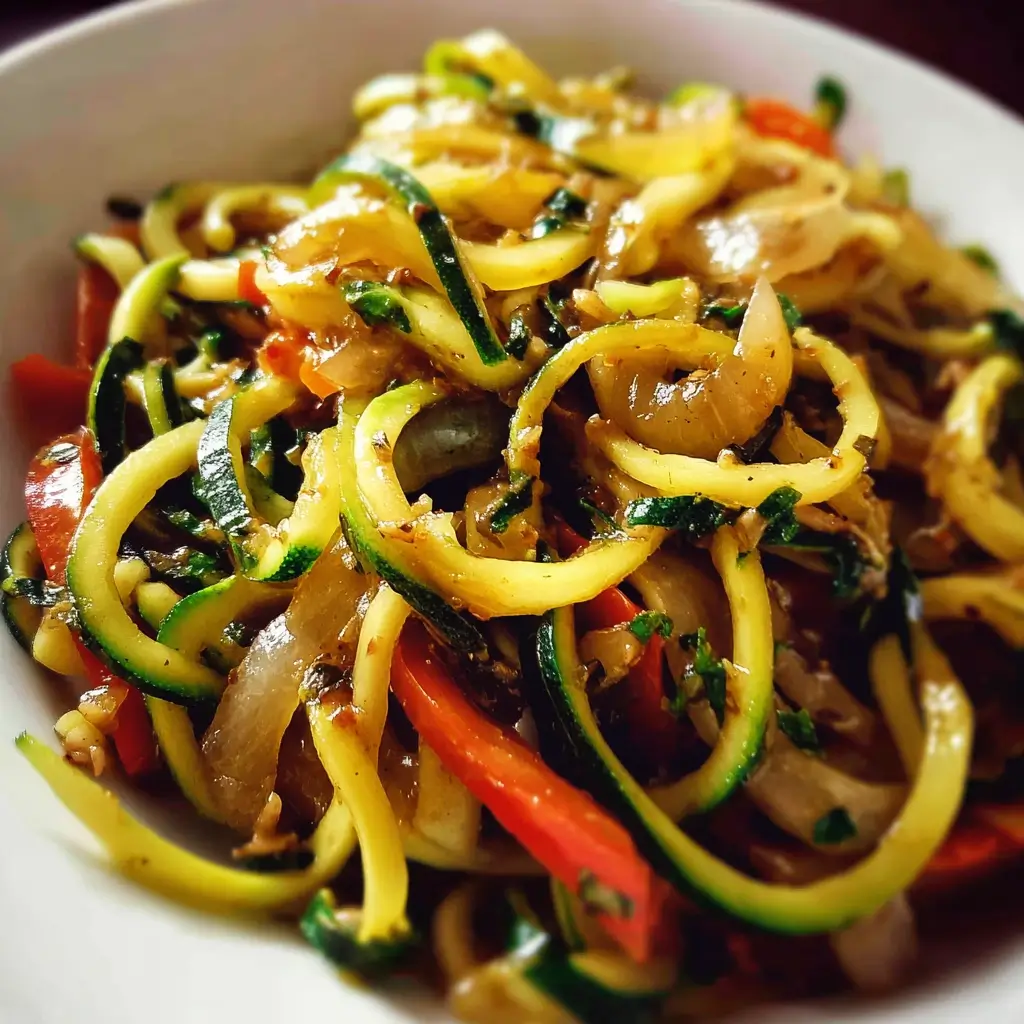
It started on a Tuesday, one of those evenings where the day’s fatigue settles deep in your bones and the thought of a complicated dinner is simply out of the question. I was craving something vibrant, healthy, and packed with flavor, but my energy levels were demanding something quick and easy. My family, on the other hand, was skeptical. The moment I mentioned “Zucchini Noodles,” I saw the familiar look of doubt creep across their faces. They are staunch lovers of traditional pasta, and the idea of replacing it with a vegetable felt like a culinary betrayal. I promised them a meal so delicious they wouldn’t even miss the carbs. With that challenge set, I delved into creating what has now become our household’s most requested weeknight meal: the Zucchini Noodle Vegetarian Stir Fry. The kitchen quickly filled with the fragrant aroma of sizzling garlic, ginger, and a rainbow of fresh vegetables. The savory, slightly sweet sauce bubbled away, promising a flavor explosion. Twenty minutes later, I presented heaping bowls of this colorful masterpiece. The first bite was met with silence, followed by wide-eyed surprise. The “noodles” were tender yet had a delightful bite, the vegetables were perfectly crisp-tender, and the sauce coated everything in a glossy, umami-rich glaze. It was a resounding success. My family didn’t just tolerate it; they adored it, asking for seconds and already planning when we could have it again. This recipe proved that healthy eating doesn’t mean sacrificing flavor or satisfaction. It’s a celebration of fresh ingredients, a testament to the magic of a good stir-fry, and a guaranteed way to win over even the most stubborn of palates.
Ingredients
This recipe is divided into two main components: the vibrant stir fry ingredients and the rich, savory sauce that brings it all together.
For the Stir Fry:
- 1 tablespoon sesame oil: This provides a nutty, aromatic base for sautéing the vegetables, infusing the entire dish with its signature flavor.
- 1 tablespoon avocado oil or other high-heat neutral oil: Used alongside the sesame oil to prevent it from burning while still allowing for a high-heat sear on the vegetables.
- 1 red bell pepper, thinly sliced: Adds a sweet, crisp texture and a beautiful splash of crimson color.
- 1 yellow bell pepper, thinly sliced: Complements the red pepper with its milder sweetness and a burst of sunshine yellow.
- 1 cup broccoli florets, cut into small, bite-sized pieces: These little trees are perfect for soaking up the sauce and adding a substantial, nutritious crunch.
- 1 cup shredded carrots: Provides a subtle sweetness and a fine texture that weaves throughout the zoodles.
- 1 cup snow peas: Adds a delicate, snappy crunch and a fresh, green flavor.
- 3 cloves garlic, minced: An essential aromatic that builds the foundational flavor of the stir fry.
- 1 tablespoon fresh ginger, grated: Lends a warm, zesty, and slightly spicy kick that brightens up the entire dish.
- 4 medium zucchinis (about 2 lbs), spiralized: The star of the show! These become our healthy, low-carb “noodles.”
- Optional for garnish: Toasted sesame seeds, sliced green onions, fresh cilantro, red pepper flakes.
For the Stir Fry Sauce:
- 1/2 cup low-sodium tamari or soy sauce: This is the umami backbone of the sauce. Use tamari for a certified gluten-free option.
- 2 tablespoons maple syrup or honey: Adds a touch of sweetness to balance the salty and sour elements. Use maple syrup to keep the recipe strictly vegan.
- 1 tablespoon rice vinegar: Provides a mild acidity that cuts through the richness and brightens the flavors.
- 1 teaspoon sriracha or other chili garlic sauce (optional): For those who enjoy a little heat. Adjust the amount based on your spice preference.
- 1 tablespoon arrowroot starch or cornstarch: This is the key to a thick, glossy sauce that clings perfectly to every noodle and vegetable.
Instructions
Follow these steps carefully for a perfect, non-soggy, and incredibly flavorful stir fry. The key is to work quickly and have all your ingredients prepped and ready to go (mise en place).
Step 1: Prepare the Sauce
In a small bowl, whisk together all the sauce ingredients: the low-sodium tamari (or soy sauce), maple syrup (or honey), rice vinegar, optional sriracha, and the arrowroot starch (or cornstarch). Continue whisking until the starch is fully dissolved and there are no lumps. This is crucial for a smooth, velvety sauce later on. Set the bowl aside.
Step 2: Prepare the Zucchini Noodles
Using a spiralizer, turn your four medium zucchinis into noodles. If you don’t own a spiralizer, you can use a julienne peeler or a mandoline with a julienne blade to create long, thin strips. Once spiralized, lay the zucchini noodles on a clean kitchen towel or a layer of paper towels. Sprinkle them lightly with a pinch of salt. Let them sit for about 10-15 minutes. The salt will draw out excess moisture, which is the secret to preventing a watery stir fry. After they’ve “sweated,” gently pat them dry with another towel. Set aside.
Step 3: Sauté the Hardy Vegetables
Place a large wok or a wide, heavy-bottomed skillet over medium-high heat. Add the sesame oil and avocado oil. Once the oil is shimmering, add the sliced bell peppers and broccoli florets. Stir-fry for 3-4 minutes, moving them constantly. You want them to become crisp-tender—cooked through but still retaining a slight bite and their vibrant color.
Step 4: Add the Aromatics and Softer Vegetables
Add the shredded carrots and snow peas to the wok. Continue to stir-fry for another 2 minutes. Now, create a small well in the center of the vegetables and add the minced garlic and grated ginger. Sauté the aromatics in the center for about 30-45 seconds until they become incredibly fragrant. Be careful not to let them burn. Once fragrant, toss everything together to combine.
Step 5: Cook the Zucchini Noodles
Add the patted-dry zucchini noodles to the wok with the rest of the vegetables. Using tongs, gently toss everything together for 1-2 minutes. The goal here is to just heat the zoodles through, not to cook them until they are soft. Overcooking is the primary cause of mushy zucchini noodles. They should be warmed but still have an al dente texture.
Step 6: Add the Sauce and Finish
Give your prepared sauce a final quick whisk to ensure the starch hasn’t settled at the bottom. Pour the sauce all over the contents of the wok. Continue to toss gently and consistently. The heat of the pan will activate the starch, and the sauce will begin to thicken almost immediately, coating every single strand and vegetable in a beautiful, glossy glaze. This process should only take about 1 minute.
Step 7: Serve Immediately
As soon as the sauce has thickened, remove the wok from the heat. Divide the zucchini noodle stir fry among serving bowls. Garnish generously with toasted sesame seeds, thinly sliced green onions, and fresh cilantro for a final burst of flavor and texture. Serve hot and enjoy immediately.
Nutrition Facts
- Servings: 4
- Calories per serving: Approximately 250 kcal
- Low in Calories and Carbohydrates: Thanks to the use of zucchini noodles instead of traditional grain-based pasta, this dish is exceptionally light on calories and carbs, making it a fantastic choice for weight management, low-carb lifestyles, and diabetic-friendly diets.
- High in Vitamin C: The colorful bell peppers and broccoli are packed with Vitamin C, a powerful antioxidant that is essential for a healthy immune system, skin health, and collagen production.
- Rich in Fiber: Loaded with a variety of vegetables, this stir fry is an excellent source of dietary fiber, which aids in digestion, promotes a feeling of fullness, and helps regulate blood sugar levels.
- Source of Key Minerals: Zucchini provides potassium, which is important for heart health and blood pressure regulation, while other vegetables contribute essential minerals like manganese and folate.
- Naturally Gluten-Free (with one swap): By using tamari instead of standard soy sauce, this recipe is entirely gluten-free, making it a safe and delicious option for individuals with celiac disease or gluten sensitivity.
Preparation Time
This meal is designed for efficiency, making it perfect for busy weeknights.
- Total Time: Approximately 30 minutes
- Prep Time: 15 minutes (This includes washing and chopping all the vegetables, spiralizing the zucchini, and whisking the sauce).
- Cook Time: 15 minutes (The active stir-frying process is very quick, ensuring vegetables stay crisp and fresh).
How to Serve
Presentation can elevate this simple stir fry into a restaurant-worthy meal. Here are some ideas on how to serve it:
- In a Bowl:
- Serve in wide, shallow bowls to showcase the vibrant colors of the dish.
- Use tongs to create a nest of zucchini noodles at the bottom, then artfully arrange the colorful vegetables on top.
- Drizzle a little extra sauce over the top before adding garnishes.
- Garnish Generously: Garnishes aren’t just for looks; they add crucial layers of flavor and texture.
- For Crunch: Toasted white or black sesame seeds, chopped peanuts, or cashews.
- For Freshness: A generous sprinkle of freshly chopped cilantro or thinly sliced green onions (both the green and white parts).
- For Heat: A pinch of red pepper flakes or a few thin slices of fresh red chili.
- For a Twist: A lime wedge on the side to be squeezed over the top for a bright, zesty finish.
- Protein Boosters: While delicious on its own, you can easily add a protein source.
- For a Plant-Based Boost: Top with pan-fried firm tofu, tempeh, or a handful of edamame or chickpeas.
- For a Heartier Meal: Serve alongside grilled chicken, shrimp, or thinly sliced beef that has been cooked separately and added at the end.
- Family-Style Platter:
- Arrange the entire stir fry on a large platter for a beautiful, shareable presentation. This allows everyone to serve themselves and is perfect for a casual dinner party.
Additional Tips
Master this recipe and make it your own with these eight professional tips.
- Don’t Skip Patting the Zoodles Dry: This is the most important tip. Zucchini is over 90% water. Salting and patting the noodles dry removes excess moisture, ensuring your stir fry sauce stays thick and flavorful instead of becoming a watery soup.
- High Heat is Your Friend: Stir-frying is a high-heat cooking method. Ensure your wok or skillet is properly preheated before you add any ingredients. This allows the vegetables to sear quickly, locking in their flavor and crisp texture without becoming soggy.
- Master Your Mise en Place: This French term means “everything in its place.” Because stir-frying happens so fast, you won’t have time to chop vegetables or mix the sauce once you start cooking. Have every single ingredient prepped, measured, and ready within arm’s reach before you turn on the stove.
- Don’t Crowd the Pan: If you’re doubling the recipe, it’s better to cook in two separate batches. Overcrowding the pan lowers the temperature, causing the vegetables to steam rather than fry. This leads to a soft, mushy texture. Give your ingredients plenty of space to sizzle.
- Customize Your Vegetables: This recipe is incredibly versatile. Feel free to swap in your favorite vegetables or use whatever is in season. Mushrooms, bok choy, asparagus, or snap peas would all be fantastic additions. Just be mindful of cooking times—add harder vegetables first and softer ones later.
- How to Spiralize Without a Spiralizer: No spiralizer? No problem. You can still make “zoodles.” A julienne peeler is an inexpensive tool that creates thin, spaghetti-like strands. Alternatively, you can use a standard vegetable peeler to create wide, fettuccine-like ribbons, or a mandoline with the julienne attachment.
- Make the Sauce in Advance: The stir-fry sauce can be mixed together and stored in an airtight container in the refrigerator for up to a week. This makes weeknight prep even faster. Just remember to give it a good shake or whisk before using it, as the starch will settle.
- Balance the Flavors: A great stir-fry sauce hits all the right notes: salty (tamari), sweet (maple syrup), acidic (rice vinegar), and spicy (sriracha). Taste your sauce before you add it to the pan and adjust it to your liking. Want it sweeter? Add a bit more syrup. Craving more tang? A splash more vinegar.
FAQ Section
Here are answers to some of the most common questions about making zucchini noodle stir fry.
1. My Zucchini Noodle Stir Fry was watery. What did I do wrong?
This is the most common issue and usually has two causes. First, you may not have removed enough moisture from the zucchini noodles. Be sure to salt them and let them “sweat” for at least 10-15 minutes, then pat them thoroughly dry. Second, you may have overcooked the zoodles. They only need 1-2 minutes in the hot pan to warm through. Any longer, and they will start to break down and release all their water.
2. Can I make this recipe ahead of time for meal prep?
While the stir fry is best enjoyed fresh, you can prep components ahead of time. You can chop all the vegetables and store them in an airtight container in the fridge. The sauce can also be made and stored separately. However, it’s best to spiralize and cook the zucchini noodles right before serving to avoid sogginess. For meal prep, you could cook the vegetable and sauce mixture and store it, then simply heat it up and toss with freshly cooked zoodles.
3. How do I store leftovers?
Store any leftovers in an airtight container in the refrigerator for up to 2 days. Be aware that the zucchini noodles will soften and release more water upon reheating. The flavor will still be good, but the texture will be much softer than when it was freshly made. Reheat gently in a skillet over medium heat rather than in the microwave for the best results.
4. Is this Zucchini Noodle Stir Fry recipe vegan?
Yes, it can be! The recipe is vegetarian as written. To make it 100% vegan, simply ensure you are using maple syrup instead of honey as the sweetener in the sauce. All other ingredients are plant-based.
5. Can I use frozen vegetables for this stir fry?
You can, but fresh is highly recommended for the best texture. If using frozen vegetables, do not add them to the pan frozen. Thaw them completely first, then pat them very dry with paper towels to remove as much excess moisture as possible. Add them to the pan and cook until heated through, keeping in mind they will likely have a softer texture than fresh vegetables.
6. I don’t like zucchini. What other noodles can I use?
If zucchini noodles aren’t for you, this stir fry is delicious with many other types of noodles. For a gluten-free option, try rice noodles or soba (buckwheat) noodles. For a more traditional approach, whole wheat spaghetti or linguine also works beautifully. Cook the noodles according to package directions, drain them, and toss them in at the end with the sauce.
7. How can I add more protein to this vegetarian dish?
There are many excellent plant-based protein options. You can press a block of extra-firm tofu to remove water, cube it, and pan-fry it until golden brown before you start the vegetables. Set it aside and toss it back in with the sauce. Other great options include adding a cup of cooked edamame, chickpeas, or pan-seared tempeh.
8. How can I make the stir fry spicier?
For more heat, you have several options. You can increase the amount of sriracha or chili garlic sauce in the sauce itself. For a different kind of heat, you can add a thinly sliced fresh chili, like a jalapeño or a red Thai chili, to the pan along with the garlic and ginger. Finally, a generous sprinkle of red pepper flakes as a garnish will give it a nice kick.