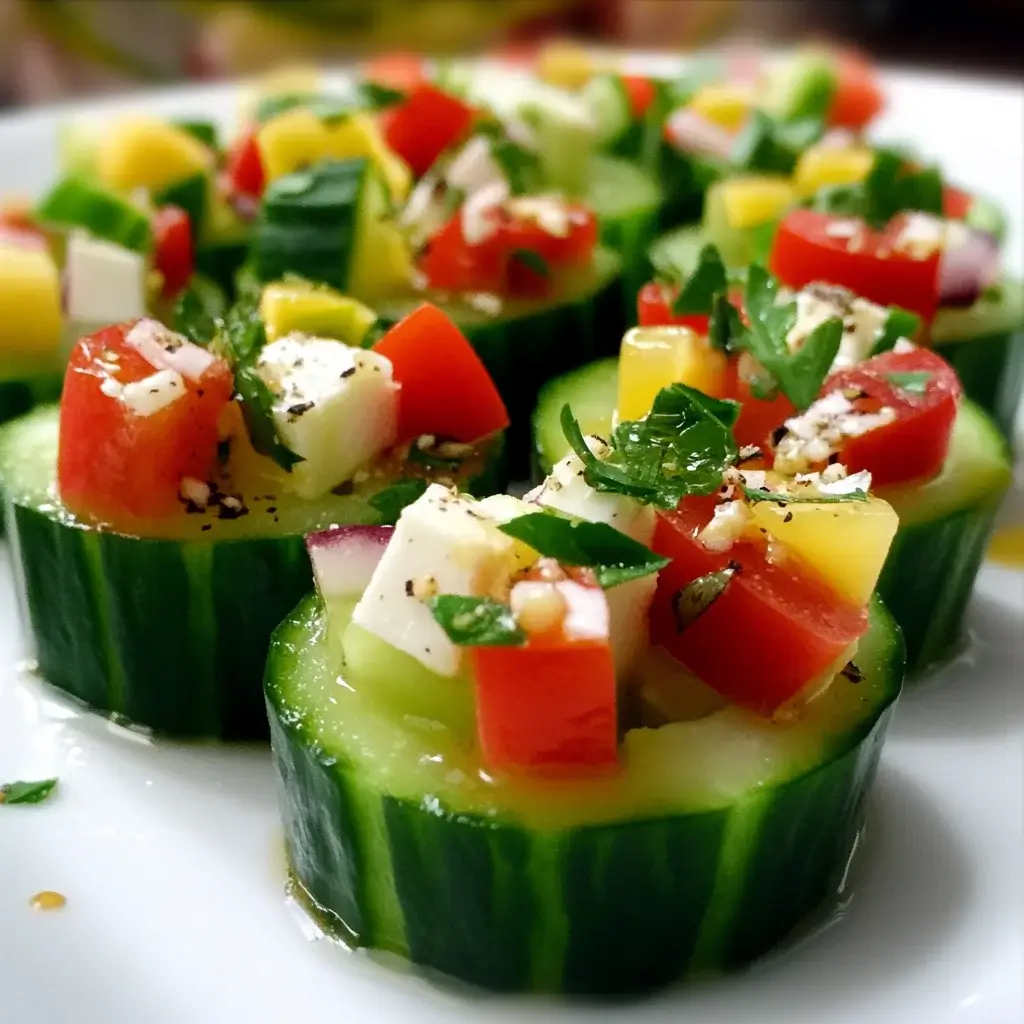
The first time I made these Greek Salad Cucumber Cups, it was for a summer barbecue we were hosting. I wanted something light, refreshing, and visually appealing to kick things off before the main grilling extravaganza began. Honestly, I wasn’t sure how they’d go over – sometimes healthy appetizers get overlooked next to chips and dip. But the reaction was immediate and overwhelmingly positive! My kids, who can be picky about vegetables, were drawn in by the cute “cup” shape and ended up loving the fresh, tangy filling. My husband declared them the “perfect bite” – crisp, cool cucumber giving way to that classic, vibrant Greek salad flavour explosion. Friends were asking for the recipe before the first burger even hit the grill. Since then, these little cups have become a staple in our house, not just for parties but also for light lunches or healthy afternoon snacks. They manage to be elegant yet simple, healthy yet satisfying, and that’s a combination I absolutely adore. They bring the bright, sunny flavours of the Mediterranean to the table in such a fun, easy-to-eat format.
Ingredients
Here’s what you’ll need to create these delightful Greek Salad Cucumber Cups:
- English Cucumbers (2 large): These serve as the crisp, edible base for our salad. English cucumbers are ideal due to their thin skin (no peeling needed), minimal seeds, and straight shape, making them easier to cut into uniform cups. Their mild flavour doesn’t overpower the filling.
- Roma Tomatoes (3 medium): Providing sweetness, acidity, and vibrant red colour. Roma tomatoes are preferred here because they have less water content and fewer seeds than other varieties, helping to keep the filling from becoming too soggy.
- Red Onion (1/4 cup, finely diced): Adds a pungent, slightly spicy kick that cuts through the richness of the feta and olives. Fine dicing ensures it incorporates evenly without overpowering individual bites.
- Kalamata Olives (1/2 cup, pitted and chopped): These brine-cured olives offer a distinct fruity, salty, and slightly bitter flavour that is quintessential to Greek salad. Ensure they are pitted for easy chopping and eating.
- Feta Cheese (1/2 cup, crumbled): The star of the show! Provides a tangy, salty, and creamy element. Use a block of feta packed in brine for the best flavour and crumble it yourself; pre-crumbled feta can sometimes be dry.
- Fresh Dill (2 tablespoons, chopped): Adds a unique, slightly feathery, herbaceous note that complements the cucumber and feta beautifully. Fresh is highly recommended over dried for its vibrant flavour.
- Fresh Mint (1 tablespoon, chopped, optional): Offers a cool, refreshing undertone that enhances the overall brightness of the salad. It’s optional but adds a lovely layer of complexity.
- Extra Virgin Olive Oil (3 tablespoons): Forms the base of the simple dressing, adding richness, fruity notes, and healthy fats. Choose a good quality olive oil for the best flavour.
- Red Wine Vinegar (1.5 tablespoons): Provides the necessary acidity to balance the olive oil and brighten the flavours of the vegetables and cheese.
- Dried Oregano (1 teaspoon): A classic Greek herb that adds a warm, earthy, and slightly peppery flavour. Even though we use fresh dill/mint, dried oregano holds its own well in this dressing.
- Salt (1/4 teaspoon, or to taste): Enhances all the other flavours. Adjust based on the saltiness of your feta and olives.
- Black Pepper (1/4 teaspoon, freshly ground): Adds a touch of spice and depth. Freshly ground pepper offers the most pungent flavour.
Instructions
Follow these steps to assemble your Greek Salad Cucumber Cups:
1. Prepare the Cucumber Cups:
Wash the English cucumbers thoroughly. Since we’re leaving the skin on for colour, texture, and nutrients, make sure they are clean.
Trim off both ends of each cucumber.
Cut each cucumber crosswise into sturdy, bite-sized rounds, approximately 1 to 1.5 inches thick. Aim for consistency so they stand evenly. You should get about 6-8 cups per cucumber, depending on its length.
Using a small spoon or a melon baller (a melon baller works exceptionally well for a clean scoop), carefully scoop out the centre of each cucumber slice, leaving a solid base and a rim about 1/4 inch thick. Be careful not to scoop all the way through the bottom. You are creating a small ‘cup’ to hold the salad filling.
Optional step for crispness: You can lightly salt the insides of the cucumber cups and let them sit upside down on a paper towel for 10-15 minutes to draw out excess moisture. Pat them dry before filling. This helps prevent the final dish from becoming watery, especially if making slightly ahead.
Arrange the hollowed-out cucumber cups on your serving platter or a tray.
2. Prepare the Greek Salad Filling:
Wash the Roma tomatoes. Cut them in half lengthwise and gently scoop out the seeds and excess pulp with a small spoon. This step is crucial to prevent a watery filling. Finely dice the remaining tomato flesh.
Finely dice the red onion. If you find raw onion too strong, you can soak the diced onion in cold water for 10 minutes, then drain thoroughly before adding it to the salad; this mellows its flavour.
Pit the Kalamata olives if they aren’t already pitted, and then give them a rough chop. You want small pieces, but not minced.
Wash and finely chop the fresh dill and mint (if using).
In a medium-sized bowl, combine the diced tomatoes, diced red onion, chopped Kalamata olives, crumbled feta cheese, chopped fresh dill, and chopped fresh mint (if using).
3. Make the Dressing:
In a small bowl or jar, whisk together the extra virgin olive oil, red wine vinegar, dried oregano, salt, and freshly ground black pepper.
Continue whisking until the dressing is well emulsified (combined and slightly thickened).
Taste and adjust seasoning if necessary. You might need more salt depending on your feta or a touch more vinegar for extra tang.
4. Combine Filling and Dressing:
Pour the prepared dressing over the vegetable and feta mixture in the medium bowl.
Gently toss everything together until the ingredients are evenly coated with the dressing. Be gentle to avoid mashing the feta cheese too much – you want distinct crumbles.
5. Assemble the Cucumber Cups:
Using a small spoon, carefully fill each hollowed-out cucumber cup with the Greek salad mixture. Mound the filling slightly for an attractive presentation.
Be careful not to overfill, as they might become difficult to eat neatly.
6. Chill and Serve:
For the best flavour and texture, cover the assembled cucumber cups loosely with plastic wrap and chill them in the refrigerator for at least 15-30 minutes before serving. This allows the flavours in the filling to meld and the cucumber cups to get nicely chilled.
Arrange on a platter and serve cool. Garnish with an extra sprinkle of fresh dill or a tiny mint leaf on top if desired.
Nutrition Facts
- Serving Size: Approximately 3-4 cucumber cups (can vary based on cucumber size and filling amount)
- Calories per Serving: Roughly 100-150 calories (estimated)
- Healthy Fats: Primarily from the extra virgin olive oil and feta cheese, these monounsaturated fats are beneficial for heart health and add satiety.
- Fiber: Contributions from the cucumber, tomatoes, onions, and olives support digestive health and help you feel full.
- Low in Carbohydrates: Makes this a fantastic option for those following low-carb or ketogenic diets, offering flavour without a heavy carb load.
- Vitamins & Minerals: Provides Vitamin K (from cucumber and herbs), Vitamin C (from tomatoes and onions), and Calcium (from feta cheese).
- Naturally Gluten-Free: Contains no gluten-containing ingredients, making it suitable for individuals with celiac disease or gluten sensitivity.
(Note: Nutritional values are estimates and can vary based on specific ingredient choices and portion sizes.)
Preparation Time
These Greek Salad Cucumber Cups are relatively quick to assemble. Expect a total preparation time of approximately 25-30 minutes. This includes washing and chopping the vegetables, preparing the cucumber cups, mixing the filling and dressing, and assembling the final bites. Chilling time is additional but requires no active effort. This makes them an excellent choice for a speedy appetizer or a healthy snack that doesn’t require hours in the kitchen.
How to Serve
These versatile Greek Salad Cucumber Cups can be served in numerous ways. Here are some ideas to inspire you:
- Appetizer Platter:
- Arrange them artfully on a clean white platter or a rustic wooden board for a beautiful presentation.
- Serve alongside other Mediterranean-inspired bites like hummus with pita bread, marinated olives, or dolmades (stuffed grape leaves).
- They are perfect as a light starter before a heavier meal, especially grilled meats or fish.
- Party Finger Food:
- Ideal for cocktail parties, potlucks, baby showers, or bridal showers where guests appreciate easy-to-handle finger foods.
- Their vibrant colours make any party spread look more appealing.
- Consider providing small napkins nearby as they can be a little juicy.
- Healthy Snack:
- Keep a batch prepped (cucumber cups and filling stored separately) in the fridge for a quick, healthy, and satisfying afternoon snack.
- They provide hydration from the cucumber and sustained energy from the healthy fats and protein (from feta).
- Light Lunch:
- Serve a larger portion (e.g., 6-8 cups) as a refreshing and light lunch, perhaps accompanied by a small portion of grilled chicken breast, shrimp, or a hard-boiled egg for added protein.
- Side Dish:
- Offer them as a cool and crunchy side dish alongside grilled kebabs, baked fish, or even a hearty soup. They provide a refreshing contrast to warmer, richer dishes.
- Brunch Addition:
- Add a pop of freshness and colour to a brunch buffet. They pair well with egg dishes, smoked salmon, and fruit platters.
Presentation Tips:
- Garnish: A tiny sprinkle of extra chopped dill, a small mint leaf, or a very thin sliver of red onion on top of each cup can enhance visual appeal. A tiny drizzle of extra virgin olive oil right before serving can also add shine.
- Platter Lining: Consider lining the serving platter with large lettuce leaves (like butter lettuce) for an extra layer of green and to catch any potential drips.
- Serving Tools: While intended as finger food, you could provide small appetizer forks for guests who prefer not to use their hands.
Additional Tips
Elevate your Greek Salad Cucumber Cups with these handy tips:
- Make-Ahead Strategy: For the best texture, especially crisp cucumber cups, prepare the components separately ahead of time. Store the hollowed-out cucumber cups in an airtight container lined with paper towels in the fridge (up to 24 hours). Store the prepared Greek salad filling (undressed or dressed) in a separate airtight container in the fridge (up to 24-48 hours, though fresher is better). Assemble the cups just before serving or up to an hour beforehand and keep chilled.
- Cucumber Selection Matters: While English cucumbers are recommended, if you must use regular garden cucumbers, peel them first as the skin can be thick and bitter. You’ll also need to scoop out more of the seedy core. Choose firm, relatively straight cucumbers for easier cup creation.
- Master the Hollowing: A melon baller (the smaller side) is truly the best tool for creating neat, uniform wells in the cucumber slices. If you don’t have one, a small, sturdy measuring spoon (like 1/4 or 1/2 teaspoon) or even a grapefruit spoon can work. Go slowly to avoid cracking the cucumber base or sides.
- Dressing Variations: Feel free to customize the dressing. Add a squeeze of fresh lemon juice along with or instead of the red wine vinegar for a brighter citrus note. A pinch of garlic powder or a finely minced fresh garlic clove can add depth. A dash of Dijon mustard can help emulsify the dressing and add a subtle tang.
- Ingredient Additions & Swaps: Get creative with the filling! Add finely diced bell peppers (green, yellow, or red) for extra crunch and colour. A handful of chickpeas (rinsed and drained) can boost protein and fiber. For a non-vegetarian version, finely shredded cooked chicken or tiny cooked shrimp could be incorporated. Swap red onion for milder shallots or green onions if preferred. Try different herbs like fresh parsley or oregano.
- Preventing Wateriness – Advanced: Beyond seeding tomatoes and potentially pre-salting cucumber cups, ensure all vegetables are patted dry after washing. If your filling still seems too wet, you can let the chopped tomato, onion, and cucumber (if adding extra cucumber bits) sit in a colander for 15-20 minutes after chopping to drain excess liquid before mixing with other ingredients and dressing.
- Feta Facts: Always opt for feta sold in blocks packed in brine over pre-crumbled varieties. The brine keeps the cheese moist and flavourful. Sheep’s milk feta tends to be tangier and creamier than cow’s milk feta, offering a more authentic Greek flavour profile. Crumble it yourself just before adding to the salad.
- Olive Options: While Kalamata olives are traditional and offer a robust flavour, you can substitute other brine-cured black olives or even green olives if that’s what you have or prefer. Ensure they are pitted and chopped appropriately. The flavour profile will change slightly but can still be delicious.
Frequently Asked Questions (FAQ)
Q1: Can I make Greek Salad Cucumber Cups ahead of time?
- A: Yes, partially. For optimal freshness and crunch, it’s best to prepare the cucumber cups and the Greek salad filling separately and store them in airtight containers in the refrigerator. The cups can be made up to 24 hours ahead (store with paper towels to absorb moisture), and the filling can also be made up to a day ahead (store dressed or undressed). Assemble the cups within an hour or two of serving for the best texture. If assembled too far in advance, the cucumbers may soften and release water.
Q2: How long will the assembled cucumber cups last in the fridge?
- A: Once assembled, Greek Salad Cucumber Cups are best enjoyed within a few hours. Leftovers can be stored in an airtight container in the fridge for up to 24 hours, but be aware that the cucumber cups will lose their crispness and may become watery over time as the filling releases moisture. They are definitely best served fresh.
Q3: Are these cucumber cups suitable for specific diets like gluten-free, vegetarian, or keto?
- A: Absolutely! These cucumber cups are naturally vegetarian and gluten-free. They are also very low in carbohydrates, making them an excellent choice for those following a keto or low-carb diet. They fit perfectly within a Mediterranean diet framework as well, emphasizing fresh vegetables, healthy fats, and lean protein (from the feta).
Q4: Can I use regular garden cucumbers instead of English cucumbers?
- A: You can, but with adjustments. Regular cucumbers typically have thicker, sometimes waxy or slightly bitter skin, so it’s recommended to peel them first. They also have larger, more watery seed cores, so you’ll need to scoop out more of the centre. Choose cucumbers that are firm and relatively uniform in shape. The flavour might be slightly less mild than English cucumbers.
Q5: I don’t have a melon baller. What else can I use to hollow out the cucumbers?
- A: No problem! A small, sturdy metal measuring spoon (like a 1/4 or 1/2 teaspoon) works well. Press the edge of the spoon into the cucumber centre and rotate to scoop out the flesh. A grapefruit spoon with its serrated edges can also be effective. In a pinch, a regular small teaspoon can work, but it might be slightly harder to get a clean, even scoop.
Q6: My Greek salad filling seems too watery. How can I fix or prevent this?
- A: Watery filling usually comes from the tomatoes or cucumbers. To prevent it: 1) Use Roma tomatoes and thoroughly deseed them. 2) Pat all washed vegetables completely dry. 3) Consider lightly salting the cucumber cups and letting them drain upside down before filling. 4) Let the chopped tomatoes and onions drain in a colander for 15-20 minutes before mixing. If your already-mixed filling is too watery, you can try gently draining off excess liquid using a fine-mesh sieve before filling the cups, being careful not to lose too much dressing or feta.
Q7: Can I add protein like chicken or chickpeas to the filling?
- A: Yes, definitely! To make them more substantial, you can add finely diced cooked chicken breast, small cooked shrimp, or rinsed and drained chickpeas (garbanzo beans) to the Greek salad filling. Adjust the seasoning and dressing amount slightly if adding a significant volume of extra ingredients. This transforms them from a light appetizer into a more filling snack or light lunch component.
Q8: What type of feta cheese and olives are best for authentic flavour?
- A: For the most authentic Greek flavour, use a block of sheep’s milk feta packed in brine. It offers a superior tangy flavour and creamy texture compared to cow’s milk feta or pre-crumbled varieties. For olives, Kalamata olives are the classic choice, known for their rich, fruity, and slightly smoky flavour. Look for those packed in brine or olive oil. Using these specific types will give your cucumber cups that signature Mediterranean taste.
Greek Salad Cucumber Cups
Ingredients
Here’s what you’ll need to create these delightful Greek Salad Cucumber Cups:
- English Cucumbers (2 large): These serve as the crisp, edible base for our salad. English cucumbers are ideal due to their thin skin (no peeling needed), minimal seeds, and straight shape, making them easier to cut into uniform cups. Their mild flavour doesn’t overpower the filling.
- Roma Tomatoes (3 medium): Providing sweetness, acidity, and vibrant red colour. Roma tomatoes are preferred here because they have less water content and fewer seeds than other varieties, helping to keep the filling from becoming too soggy.
- Red Onion (1/4 cup, finely diced): Adds a pungent, slightly spicy kick that cuts through the richness of the feta and olives. Fine dicing ensures it incorporates evenly without overpowering individual bites.
- Kalamata Olives (1/2 cup, pitted and chopped): These brine-cured olives offer a distinct fruity, salty, and slightly bitter flavour that is quintessential to Greek salad. Ensure they are pitted for easy chopping and eating.
- Feta Cheese (1/2 cup, crumbled): The star of the show! Provides a tangy, salty, and creamy element. Use a block of feta packed in brine for the best flavour and crumble it yourself; pre-crumbled feta can sometimes be dry.
- Fresh Dill (2 tablespoons, chopped): Adds a unique, slightly feathery, herbaceous note that complements the cucumber and feta beautifully. Fresh is highly recommended over dried for its vibrant flavour.
- Fresh Mint (1 tablespoon, chopped, optional): Offers a cool, refreshing undertone that enhances the overall brightness of the salad. It’s optional but adds a lovely layer of complexity.
- Extra Virgin Olive Oil (3 tablespoons): Forms the base of the simple dressing, adding richness, fruity notes, and healthy fats. Choose a good quality olive oil for the best flavour.
- Red Wine Vinegar (1.5 tablespoons): Provides the necessary acidity to balance the olive oil and brighten the flavours of the vegetables and cheese.
- Dried Oregano (1 teaspoon): A classic Greek herb that adds a warm, earthy, and slightly peppery flavour. Even though we use fresh dill/mint, dried oregano holds its own well in this dressing.
- Salt (1/4 teaspoon, or to taste): Enhances all the other flavours. Adjust based on the saltiness of your feta and olives.
- Black Pepper (1/4 teaspoon, freshly ground): Adds a touch of spice and depth. Freshly ground pepper offers the most pungent flavour.
Instructions
Follow these steps to assemble your Greek Salad Cucumber Cups:
1. Prepare the Cucumber Cups:
* Wash the English cucumbers thoroughly. Since we’re leaving the skin on for colour, texture, and nutrients, make sure they are clean.
* Trim off both ends of each cucumber.
* Cut each cucumber crosswise into sturdy, bite-sized rounds, approximately 1 to 1.5 inches thick. Aim for consistency so they stand evenly. You should get about 6-8 cups per cucumber, depending on its length.
* Using a small spoon or a melon baller (a melon baller works exceptionally well for a clean scoop), carefully scoop out the centre of each cucumber slice, leaving a solid base and a rim about 1/4 inch thick. Be careful not to scoop all the way through the bottom. You are creating a small ‘cup’ to hold the salad filling.
* Optional step for crispness: You can lightly salt the insides of the cucumber cups and let them sit upside down on a paper towel for 10-15 minutes to draw out excess moisture. Pat them dry before filling. This helps prevent the final dish from becoming watery, especially if making slightly ahead.
* Arrange the hollowed-out cucumber cups on your serving platter or a tray.
2. Prepare the Greek Salad Filling:
* Wash the Roma tomatoes. Cut them in half lengthwise and gently scoop out the seeds and excess pulp with a small spoon. This step is crucial to prevent a watery filling. Finely dice the remaining tomato flesh.
* Finely dice the red onion. If you find raw onion too strong, you can soak the diced onion in cold water for 10 minutes, then drain thoroughly before adding it to the salad; this mellows its flavour.
* Pit the Kalamata olives if they aren’t already pitted, and then give them a rough chop. You want small pieces, but not minced.
* Wash and finely chop the fresh dill and mint (if using).
* In a medium-sized bowl, combine the diced tomatoes, diced red onion, chopped Kalamata olives, crumbled feta cheese, chopped fresh dill, and chopped fresh mint (if using).
3. Make the Dressing:
* In a small bowl or jar, whisk together the extra virgin olive oil, red wine vinegar, dried oregano, salt, and freshly ground black pepper.
* Continue whisking until the dressing is well emulsified (combined and slightly thickened).
* Taste and adjust seasoning if necessary. You might need more salt depending on your feta or a touch more vinegar for extra tang.
4. Combine Filling and Dressing:
* Pour the prepared dressing over the vegetable and feta mixture in the medium bowl.
* Gently toss everything together until the ingredients are evenly coated with the dressing. Be gentle to avoid mashing the feta cheese too much – you want distinct crumbles.
5. Assemble the Cucumber Cups:
* Using a small spoon, carefully fill each hollowed-out cucumber cup with the Greek salad mixture. Mound the filling slightly for an attractive presentation.
* Be careful not to overfill, as they might become difficult to eat neatly.
6. Chill and Serve:
* For the best flavour and texture, cover the assembled cucumber cups loosely with plastic wrap and chill them in the refrigerator for at least 15-30 minutes before serving. This allows the flavours in the filling to meld and the cucumber cups to get nicely chilled.
* Arrange on a platter and serve cool. Garnish with an extra sprinkle of fresh dill or a tiny mint leaf on top if desired.
Nutrition
- Serving Size: one normal portion
- Calories: 150